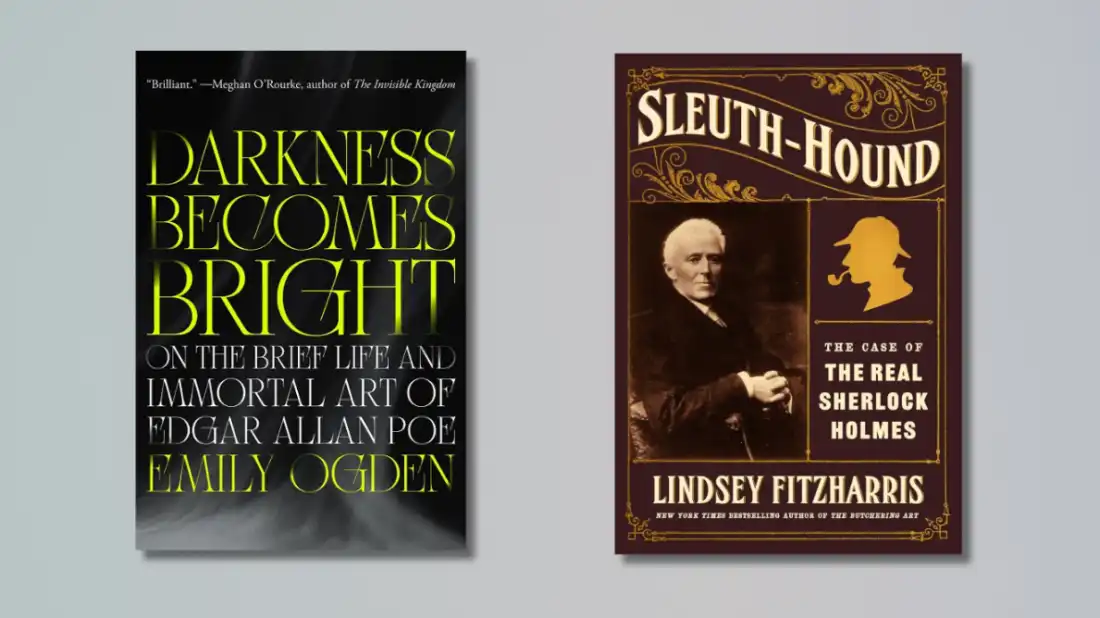
Edgar Allan Poe and Arthur Conan Doyle captivated and mystified generations. Edgar Allan Poe, often considered our Founding Literary Enigma, was born in Boston in 1809. Orphaned at a young age, the prosperous Allan family in Virginia took him in. Though his life was short and troubled, ending at age 40 under mysterious circumstances, his legacy endures through essays, eerie poems, and short stories. Notably, he invented the detective story. Unraveling the source of his talent remains a mystery, although his work’s influence on readers is unquestionable.
Emily Ogden, a professor at Poe’s alma mater, the University of Virginia, explores Poe’s influence in her book, Darkness Becomes Bright: On the Brief Life and Immortal Art of Edgar Allan Poe. She fell under Poe’s spell while teaching his work. Ogden claims that her book is not just about Poe but also about his followers and those drawn to darkness.
“This is a book about Edgar Allan Poe. But as much as it is about Poe himself, it is about Poe’s followers and fellow travelers: those of us who … have let him be our guide into the darkness.”
Ogden combines biography with an exploration of the obsession Poe inspired in others, like translator Charles Baudelaire. She interweaves her personal narrative with Poe’s influence on her thoughts. The book begins with an incident from the diary of John Sartain, a Philadelphia engraver and Poe’s friend. In 1849, Poe showed up at Sartain’s workshop, insisting on a “midnight ramble” to the Fairmount Water Works. Sartain spent hours keeping Poe from jumping off its heights.
Ogden illustrates how Poe’s creativity arose from personal torment. Sir Arthur Conan Doyle, renowned for detective fiction, regarded Poe as unsurpassable in the genre.Poe … was the father of the detective tale, and covered its limits so completely that I fail to see how his followers can find any fresh ground which they can confidently call their own.
Seeking to supplement his income, Doyle ventured into mystery writing and, in 1887, published A Study in Scarlet, his first Sherlock Holmes adventure. This led to 59 more tales. Holmes and Dr. Watson captivated readers to the extent that letters still arrive at 221B Baker Street.
While Doyle and his characters have been extensively studied, Lindsay Fitzharris, a medical historian, unearths new insights in Sleuth-Hound: The Case of the Real Sherlock Holmes. The book delves into the lives of Joseph Bell and Henry Duncan Littlejohn, who influenced Doyle during his time at Edinburgh’s Royal Infirmary. Bell, famous for his keen observational skills, inspired aspects of Sherlock Holmes. Fitzharris explores Bell’s collaboration with Littlejohn on notorious Scottish murder cases, including the rumored Jack the Ripper case.
Fitzharris offers brief histories of toxicology, anesthesiology, and public health to enrich these stories. The works of both Poe and Doyle reveal that, much like the detective story “The Purloined Letter,” significant details often hide in plain sight, waiting to be uncovered.
 Living in Assisted Care: A Sense of Community
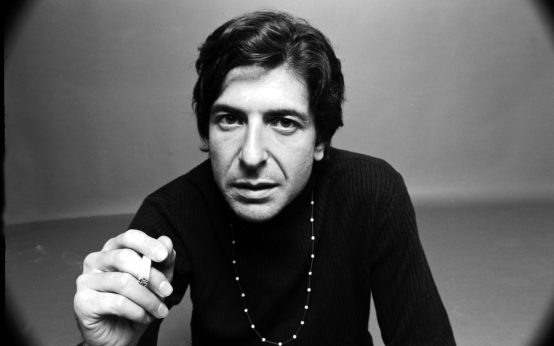 Leonard Cohen’s Enduring Influence: A Decade On
 Mark Jones’ Online Commentary and Controversial Persona
 A Comprehensive Look at Michael J. Fox’s Life and Legacy
 Anne Carson Wins 2026 Nobel Prize in Literature
 ‘The Big Money Show’ Debates Economic Messaging and Reddit’s Luxury Discussions