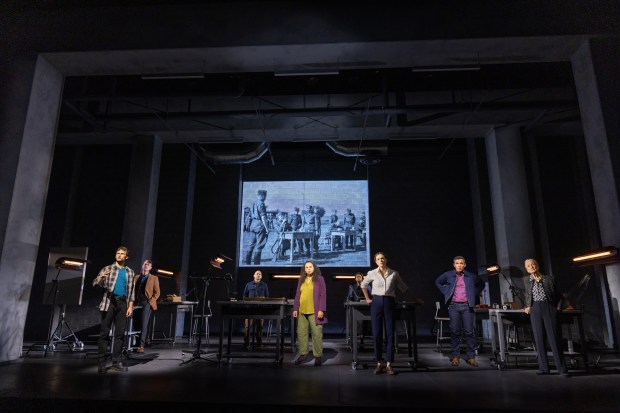
In 2007, the United States Holocaust Memorial Museum in Washington, D.C., received a significant artifact: a photo album belonging to Karl Höcker, an SS guard at Auschwitz concentration camp during its most deadly period between 1944 and 1945. This album held images of SS personnel and their families, depicting them in leisure activities close to the camp’s gas chambers and crematoria, which were simultaneously executing countless Jews from Hungary. Remarkably, no prisoners appear in these photos, suggesting an intentional omission of their existence.
The photos do not capture the typical imagery of Nazi rallies or salutes often depicted in films. Instead, they reveal family gatherings, casual conversations, and leisure time among the staff, underscored by the striking image of Auschwitz personnel eating blueberries. This scene gives the title to a unique Broadway docudrama, “Here There Are Blueberries,” created by Moisés Kaufman and Amanda Gronich.
This 90-minute performance, produced by Kaufman’s Tectonic Theater Project, employs a cast of eight to narrate the museum’s handling and interpretation of the album. The Tectonic Theater Project, active for 35 years, is a New York-based company known for creating new shows through detailed research and thoughtful exploration of artistic forms.
“Here There Are Blueberries” explores unsettling themes and raises profound questions about human compartmentalization. As viewers observe the archivist, portrayed by Delia Cunningham, grappling with the moral dissonance, they concurrently confront the frightening ease with which individuals led ordinary lives amidst genocide.
Moreover, the production probes deeper, looking past simple compartmentalization or fear of authority. The imagery suggests that those depicted, including young female assistants and secretaries from the League of German Girls, likely shared the same Nazi convictions as their male counterparts. The narrative candidly asserts their awareness and complicity.
Actor Conrad Ricamora portrays Tilman Taube, who recognizes his grandfather in these photographs. His character exposes that many Auschwitz workers escaped justice after the war, vanishing into civilian life. Michael Cerveris plays Peter Wirths, whose father served as Auschwitz’s chief doctor, further personifying the tight-knit Nazi community operating in the camp.
Audience members might leave the theater with an expanded view of Auschwitz’s scale and a deeper understanding of its systemic evil. Initially hesitant, the Holocaust Museum chose to highlight the album, understanding its potential to memorialize the victims through confronting the perpetrators’ reality.
A separate production of “Here There Are Blueberries” is set to appear at Northlight Theatre in Chicago next April, offering more audiences the chance to witness this compelling story.
For more information, visit the Barrymore Theatre at 243 W. 47th St., New York, or their website at herethereareblueberries.com.
 Rita Moreno and George Chakiris Celebrate Longevity and Friendship
 Charlamagne tha God Criticizes Dave Chappelle’s Joke on Charlie Kirk’s Death
 Bruce Springsteen Fan Club Shuts Down Amid Political Tensions
 Billy Joel’s Return to the Stage After Health Challenges
 U.S. Postal Service Plans New Stamp Collection Featuring Iconic Figures and Themes
 Sofia Franklyn Discusses Family Plans and Past Decisions