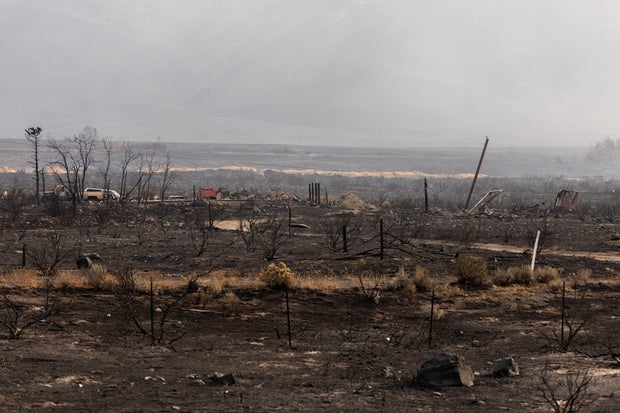
An uncontrolled wildfire wreaked havoc in northwest Reno, Nevada, on Sunday, destroying homes and causing injuries as it jumped over fire trucks, challenging firefighting efforts.
Intense Fire and Evacuation Orders
The fire, fueled by shifting winds, prompted the evacuation of around 90,000 people. Six people, including three first responders, were injured. Authorities identified the cause as human but did not elaborate on whether it was deliberate or accidental.
The Hawk Fire started on Saturday and quickly expanded to cover over 23 square miles in the Peavine Peak area of the Humboldt-Toiyabe National Forest. By Sunday, it lacked any containment. Around 42,000 residents were ordered to evacuate as the “GO NOW” zone extended toward the University of Nevada. Additionally, 45,000 people were in an adjacent warning zone.
“Please get out if you can right now,” urged Washoe County Sheriff Darin Balaam.
A Sunday evening update highlighted “extreme fire behavior” with flames advancing through dense fuels.
Personal Stories of Loss
One affected resident, Cari Kieffer, described her heartache after seeing a video of her completely burned home. “All my kids, they lost everything,” she lamented. Kieffer recounted the urgent evacuation, only able to grab a few items, leaving behind significant personal belongings.
Kieffer’s family had relied on an app to monitor the fire’s progress, but it lagged behind the fire’s actual location. Scrambling to save possessions and their pets, they faced intense smoke and advancing flames.
State Emergency and Broader Impact
Nevada Governor Joe Lombardo declared a state of emergency and mobilized the National Guard for aerial support, alongside 800 fire personnel. Almost 10,000 customers were without power on Sunday, down from 60,000 the previous day.
Major routes like U.S. Route 395 were closed. The Reno-Sparks Convention Center opened for evacuees, though pets were to be taken to other locations. University of Nevada remained just outside the evacuation zone. Two hospitals evacuated patients, and the county jail’s evacuation was monitored.
Firefighting efforts included helicopter support, but the fast-spreading fire impeded responders. By Sunday, some structures were damaged or destroyed, though numbers were unspecified.
Contributing Factors
Months of dry weather and a lack of snow created ideal wildfire conditions. Earlier this month, wildfires in Washington State and north of Reno forced thousands of evacuations.
Firefighters faced drastic changes in wind, causing unexpectedly rapid fire spread. Jaida Hargrove shared her grandfather’s experience of barely escaping with his dogs as firefighters struggled with flame containment on Peavine Mountain.
Community Response
Crowdfunding efforts are underway to support affected families. Ted Melden, a resident recently moved from South Carolina, recounted the frequency of natural disasters in the area and prepared for potential evacuation.
The Renowned region continues to grapple with fire threats amid a changing climate, highlighting a need for ongoing vigilance and preparedness.
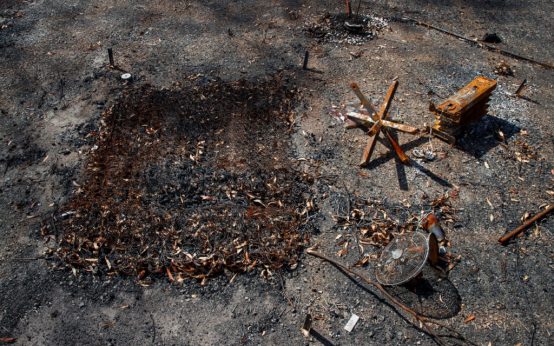 Rising Risks of Climate Change: From Fiction to Reality
  Wildfire Threatens Reno Neighborhoods, Residents Urged to Evacuate
  Growing Threat of Climate-Induced Disasters
  The Public Health Crisis on Our Roads
  Record Global Sea Surface Temperatures Amid Marine Heat Waves
  Public Transit as a Solution to Traffic and Pollution in Silicon Valley