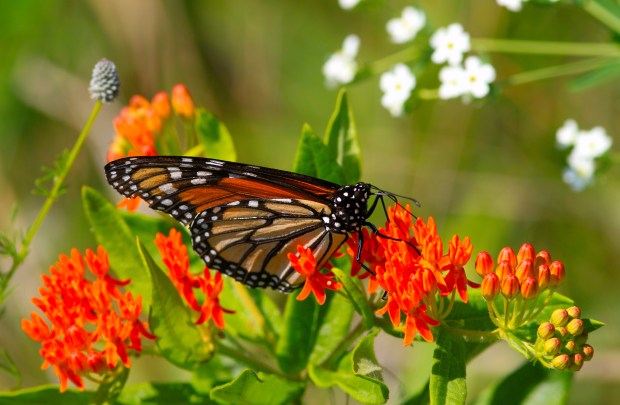
In November, the vibrant orange flowers of the butterfly milkweed are no longer visible. What remains are white, parachute-like wisps dangling from dried seed pods. Inside these wisps lie small, oval-shaped brown seeds. These seeds are so tiny that a total of 4,000 weigh less than an ounce. Their potential lies in their ability to germinate in the right conditions, transforming into blooms that attract monarch butterflies and native bee pollinators.
Throughout summer and fall, microscopic changes occur within the flowers. Insects, birds, and the wind aid in the pollination process by transferring pollen grains from the male to the female parts of the plant, resulting in seed formation. Many seeds develop protective coatings and become encased in pods or similar structures. The next step is seed dispersal, which is currently happening.
In my yard, American goldfinches participate in this dispersal by scattering the seeds of gray-headed coneflowers. They perch atop flower heads, consuming seeds either by cracking them open or swallowing them whole. During feeding, they may inadvertently deposit seeds into the soil or spread them through their droppings. Recently, I gently squeezed a seed-filled gray-headed coneflower head to release seeds, which I then distributed in sunny spots, hoping some will survive winter to germinate.
The scent of the seed head is a soft, minty aroma, more pleasant than any manufactured fragrance.
In summer, butterfly milkweed flowers attract monarchs. Various agents, such as humans, wind, water, air, and animals, help disperse seeds. A notable example is jewelweed seeds, which burst into the air when touched. During the maturation of green pods, the cells inside are like coiled springs. A slight touch causes the pods to snap open, propelling the seeds 4 to 6 feet away. Jewelweed is also known as touch-me-not and is related to the impatiens often planted in gardens.
Milkweed seeds are particularly fascinating. Over summer, the butterfly milkweed develops 3-inch-long, narrow, pale green seed pods. As these pods turn brown, they split open to release dozens of seeds. Each seed has silky white hairs acting as parachutes, allowing the wind to carry them elsewhere. When thrown into the air, these parachutes transport seeds to new locations. Once in the soil, seeds remain dormant over winter.
The natural freezing and thawing of winter soften seeds’ coatings, preparing them for growth. Spring rains further aid by swelling seeds, breaking their coatings, and releasing stored nutrients. These nutrients are vital for the growth and division of cells within the seed. This process leads to ‘radical emergence,’ where a microscopic root pierces through the seed coat and into the soil, eventually sprouting above ground with the first leaves.
All these processes occur quietly beneath our feet, unnoticed until they visibly manifest. Imagining this natural wonder in winter is a comforting thought.
Sheryl DeVore has an extensive background as a reporter, editor, and photographer for the Chicago Tribune. She authored several books on nature and co-authored “Birds of the Midwest” with Steven D. Bailey, releasing in April 2027. Contact her at [email protected] for story ideas and thoughts.
 Senate Advances Permitting Reform for Energy Projects
 U.N. Climate Summit in Turkey Focuses on Global Warming Challenges
 Smog Engulfs New Delhi After Diwali, Heightening Pollution Crisis
 Residents Debate Over the Proposed ComEd Substation in Lakeview
 Reevaluating Flood Risks: Beyond Federal Maps
 SS United States’ Final Role as an Artificial Reef