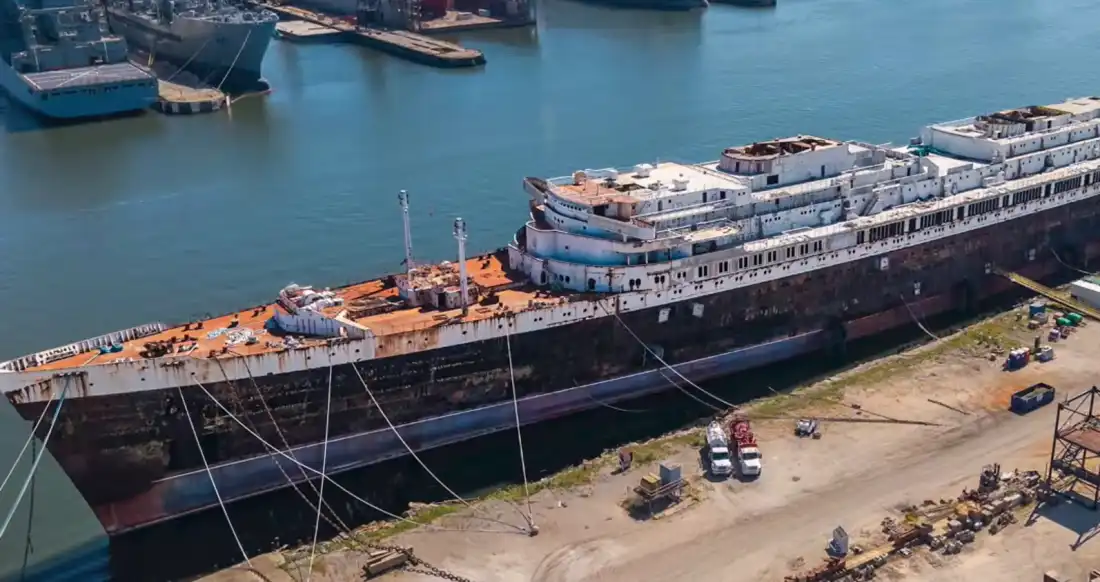
The SS United States, once the fastest passenger liner, crossed the Atlantic in less than four days. On Wednesday, it sank within five hours near Okaloosa County, Florida, marking a significant transformation into an artificial reef.
The Historical Significance of the SS United States
Launched in 1951 and longer than the Titanic, the ship transported four U.S. Presidents, the Mona Lisa, and numerous 20th-century movie stars. Throughout the years, it rusted away as it awaited a future beyond the scrapyard. A strategic deal shifted its fate into one of potential economic value. The conversion into an artificial reef reflects ongoing efforts to invigorate local tourism economically.
“For those of us who love shipwrecks and ships in general, it was way more tragic to see it rusting away than being part of the ocean environment,” expressed Karen Flynn, wreck diver and maritime enthusiast.
Flynn’s Maryland-based club, the Atlantic Wreck Divers, planned a trip as soon as the sinking was scheduled. This sinking, or ‘deployment’, adds yet another dive site to their visited locations worldwide.
Economic Effects and Tourism Potential
Okaloosa County anticipates a tourism boost from divers seeking novel experiences. The county, already rich in artificial reefs, aims to capitalize on this new attraction. Tourism director Jennifer Adams highlighted that the SS United States, nearly 1,000 feet in length, now serves as the jewel of its aquatic collection. Artificial reefs currently produce around $10 to $12 million annually, with expectations to surpass this following the liner’s transformation.
The sinking location was carefully chosen to appeal to divers, marine life, and regulators by removing toxic materials and ensuring appropriate placement nearby Destin’s beaches. The ship’s upper decks lie within recreational diving limits.
A Broader Context of Artificial Reefs in Florida
The SS United States has joined other prominent artificial reefs in the area, including the USS Oriskany off Pensacola. These sites underline Florida’s extensive history of creating artificial reefs—over 4,000 since 1940.
A National Oceanic and Atmospheric Administration analysis showed that a few such reefs contributed nearly a billion dollars annually in economic benefits. University of Florida economist Andrew Ropicki highlighted the concentration of shipwreck tourism in Okaloosa, mentioning the risks of overinvestment leading to diminishing returns.
Okaloosa plans several new reefs to continue attracting tourists. The unique SS United States aims to draw visitors by its sheer grandeur underwater.
Reflecting on the Maritime Legacy
Thoughts and feeligs toward the sinking are complex for Susan Gibbs, head of the SS United States Conservancy. Her grandfather, William Francis Gibbs, was instrumental in the liner’s creation. To her, the sinking is a dignified outcome compared to being scrapped.
“We felt that reefing was by far the more dignified solution,” she said.
Karen Flynn concurs, believing that even beneath the waves, the vessel maintains its majesty. “There’s something about a ship from these eras that continues to impress,” she said.
 Pro-Palestinian Protesters Hold ‘Day of Rage’ in New York City
 Stalemate in Russia-Ukraine Conflict Despite Talks and Frontline Maps
 Former NFL Coach Rex Ryan Arrested in Nashville After Alleged Hit-and-Run
 South Carolina Infant Rescued from Burial, Father Arrested
 Pope Leo XIV Returns to Peru in Celebrated Homecoming
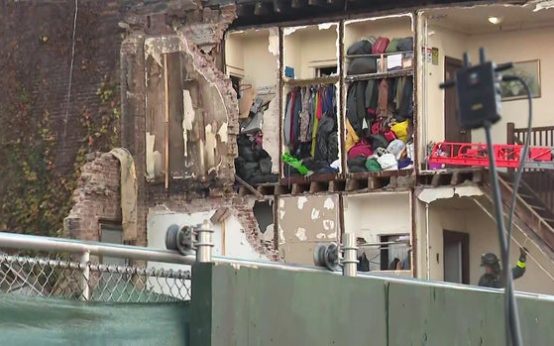 Brooklyn Building Collapse Claims Lives and Injures Many