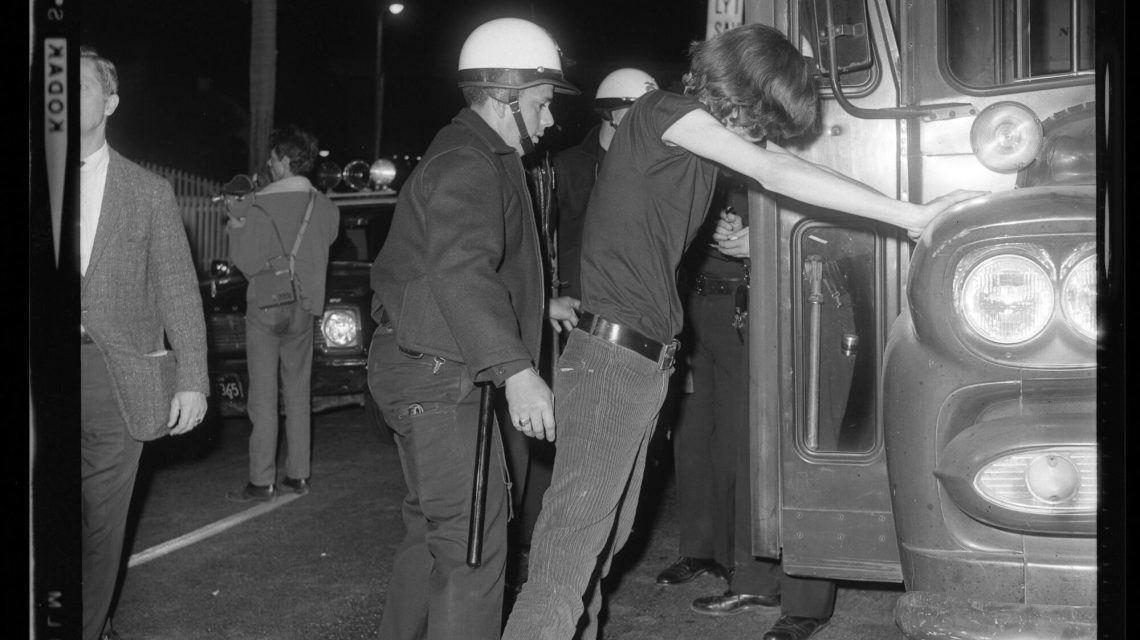
On the evening of November 12, 1966, over 1,000 teenagers gathered on the Sunset Strip to protest the closure of Pandora’s Box, a beloved all-ages music venue. This event marked the beginning of what became known as the ‘Sunset Strip riots.’ Among the crowd were iconic figures such as Cher and Sonny Bono, Dennis Hopper, and Jack Nicholson. Pamela Des Barres, a Hollywood author, recalls how traffic was halted as protesters took to the streets, reflecting a peaceful yet powerful demonstration of unity until law enforcement intervened.
This unrest highlighted the cultural emergence of the Sunset Strip. Fast forward 60 years, and the area finds itself at a pivotal moment of reinvention. Many music venues have shuttered, and the counter-culture spirit that once defined the area has dwindled. Now, the strip seeks to preserve its historic charm amid the rise of luxury developments.
One of today’s prominent venues is a sleek nightclub called Sunset, situated in the basement of West Hollywood Edition hotel. Laura Biery, West Hollywood’s director of economic development, emphasizes the city’s commitment to evolving in sync with the changing business landscape.
“As a city, we’re making sure that as our businesses are evolving, and the times are evolving, that we are evolving as well,” says Biery.
A significant change is on the horizon for the Viper Room, a venue with a storied past. It will be demolished and integrated into a new luxury hotel’s basement, reflecting a broader trend of upscale transformation across the strip. Longtime fans may lament the shift from a gritty music scene to more sophisticated establishments. However, the challenges stem from technological advances, changing cultural tastes, and the impact of social media.
The digital age has revolutionized music discovery, shifting it from the stages of Sunset Strip to online platforms. Stars like Justin Bieber and Billie Eilish gained fame through digital channels, rather than traditional club performances. The influence of social media extends to nightlife, as private venues now navigate the balance between privacy and modern cultural norms.
Despite these changes, some icons remain. The Whisky a Go Go stands resilient amid the evolving landscape. Historians and residents recall a time when the strip was synonymous with wild antics, from rock legends like Led Zeppelin to club scenes in the ’80s. Stories of grand escapades, like John Bonham’s rumored motorcycle ride through a hotel, contribute to the strip’s enduring lore.
Throughout the decades, transformations have continued. As file-sharing platforms emerged in the late 1990s, music consumption shifted, leading to the closure of traditional music stores, including Sunset’s famed Tower Records. Today, the site hosts Supreme, a trendy streetwear brand, reflecting a shift in consumer interests.
West Hollywood aims to retain the strip’s historic character while embracing new cultural trends. Gen Z audiences seek out experiences focused on art, wellness, and community over traditional nightlife. Places like Skims, the brand helmed by Kim Kardashian, now grace the strip, indicative of the shift toward upscale offerings.
Meanwhile, the strip’s legacy endures with venues such as the Saddle Ranch, the Comedy Store, Rainbow Bar & Grill, the Roxy, and Whisky a Go Go. These places create a blend of historic charm and modern retail and hospitality spaces, appealing to both longtime locals and newcomers drawn by its unique cultural tapestry.
 Exploring the History of American Profanity
 Discovering Fellow Book Lovers on a Late Fall Day
 Martin Luther King Jr.’s Speech Draft Displayed in Atlanta
 Preserving History: The Sixth Floor Museum at Dealey Plaza
 Historical Events on November 20 in Chicago
 Dearborn Residents Advocate for Embracing Diversity Amid Demographic Changes