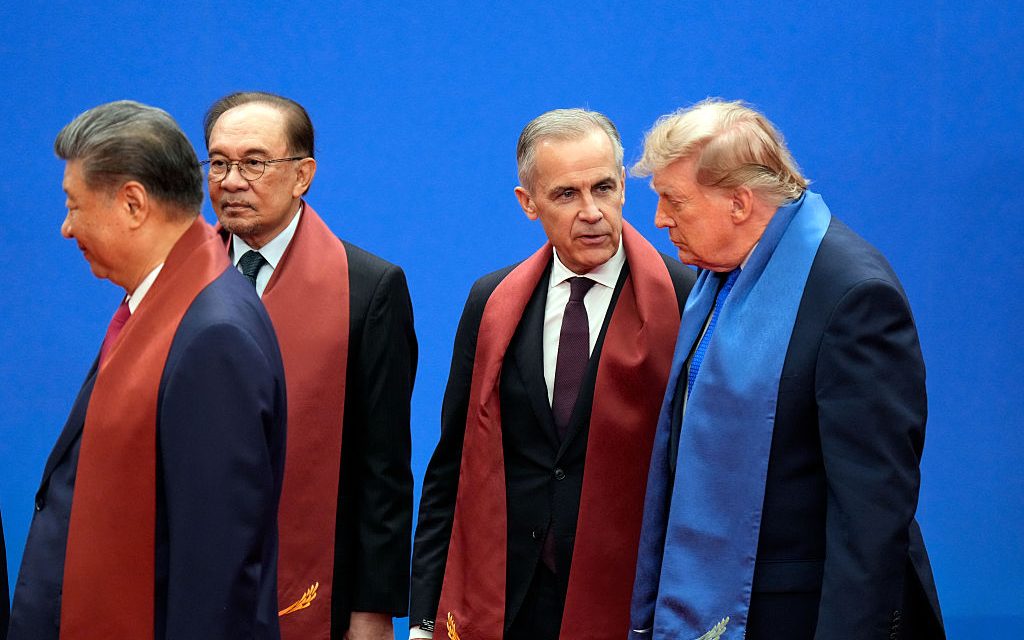
Canadian Prime Minister Mark Carney is prioritizing revitalizing relations with China to enhance international trade and lessen dependency on the U.S., particularly during the ongoing trade disputes with the U.S. For three months, trade tensions have persisted between Canada and the U.S.
During talks with the New York Times via remote interview from Shenzhen, China, where he attended the Asia-Pacific Economic Cooperation (APEC) summit, Carney spoke about Canada’s global trade strategy. Carney highlighted that many countries are eager to engage in trade with Canada. He remarked, “Our cards are that everyone else in the world wants to deal with us. If the U.S. doesn’t want to do the deal, we’re busy.”
Previously, U.S. President Donald Trump stated that the U.S. held significant leverage after trade negotiations failed in August, leading to retaliatory tariffs on both sides. Carney met with Trump at APEC, reaching an agreement to keep negotiations ongoing without making major strides.
However, Carney’s meeting with Chinese President Xi Jinping resulted in a more favorable outcome. Canada and China announced a trade agreement focusing on easing tariffs on Canadian agricultural products and extending tariff exemptions on Chinese steel and aluminum for two more years.
As part of Carney’s “Canada Strong” vision, he emphasized the potential benefits the expanded trade relationship with China could bring to Canadians, describing it as a path to economic resilience. He praised China’s professional negotiation approach.
Carney’s tour through Europe and Asia reflects his strategy to diversify economic ties, moving away from reliance on the U.S., which remains Canada’s largest trade partner. Experts suggest that strengthening ties with China challenges Trump’s belief that the U.S. holds major leverage in trade talks.
“Part of the Trump Administration’s [belief] is that everybody needs the U.S. more than anything else,” said Jennifer Hillman of Georgetown University. “What this is clearly saying is that Canada can afford to be less willing to give the U.S. whatever it asks for [in negotiations], because they have other options.”
China ranks behind only the U.S. in terms of economic size, making it a significant prospective market for Canadian goods. Professor Lori Turnbull emphasized the importance of Canada’s trade relationship with China given its economic scale.
Carney’s efforts with China date back to January when he endorsed a “new strategic partnership” to facilitate trade, allowing up to 49,000 Chinese electric vehicles under reduced tariffs and receiving lowered tariffs on Canadian agricultural exports in return.
Despite Carney’s vision, Trump’s response was critical, expressing concerns over potential negative impacts on Canadian businesses and society. Experts warn of potential conflicts with the U.S. from Canada’s agreement on tariff exemptions for Chinese products.
In the steel and aluminum sector, previous U.S.-Canada negotiations faced deadlocks in part due to tariff disputes. Carney reassured that the growing Canada-China trade relationship was not a major concern over Trump’s priorities.
Canadian officials are divided regarding China ties. Ontario Premier Doug Ford urged a focus on protecting local auto workers against increased Chinese car imports. Meanwhile, Conservative lawmaker Michael Chong voiced security concerns regarding the partnership.
In 2025, the Canadian government identified China as a key foreign interference threat. Ahead of his trip, Carney committed to discussing interference concerns with Xi, emphasizing the importance of non-interference in Canada’s affairs.
Carney clarified Canada’s trade focus with China centers on commodities, such as agriculture and energy, not sensitive technologies.
“We are exporting canola, we are exporting pork, and halibut,” Carney noted, indicating key Canadian export areas.
Experts highlight the need for Canada to pursue international cooperation in sectors unsuitable for China engagement, like defense and technology.
In September, the European Union proposed Canada as an “associate member” of the bloc, aiming for deeper collaboration in advanced technologies. The E.U.-Canada summit in Montreal advanced this intent.
During the ASEAN summit in Manila, Philippines, Carney announced two free trade agreements, aimed at increasing Canada’s integration into Asian supply chains. This included a deal with the ASEAN bloc and another with the Philippines projected to triple exports by 2035.
Experts caution that while new agreements are beneficial, they cannot match the scale of Canada-U.S. trade, which amounted to 683.3 billion Canadian dollars in exports in 2025.
Carney indicated Canada’s refusal to accept U.S. trade terms that impact its auto industry. Speaking with the New York Times, he underscored U.S. demands as a core blockage in negotiations.
Carney suggested that if U.S. talks fail, Canada may turn towards European and Asian, including Chinese, automakers to forward its auto sector goals.
While some Canadian lawmakers voice objections, experts argue there are logistical challenges due to the deep North American integration of the auto industry.
Carney noted that auto parts frequently cross the U.S.-Canada border, emphasizing their interdependent supply chains.
Washington criticized Carney’s openness to Chinese auto partnerships, potentially increasing leverage on Canada-U.S. negotiations.
Trade adviser Peter Navarro questioned Carney’s approach on social media, reiterating concerns over Chinese competition.
Despite these challenges, the potential for Canada utilizing foreign manufacturers may influence negotiations, maintaining Canada’s strategic choices in global trade discussions.
 Pentagon Releases Declassified UFO Files with Intriguing Plans and Reports
 Sinaloa Violence Erupts After Capture of Cartel Leader
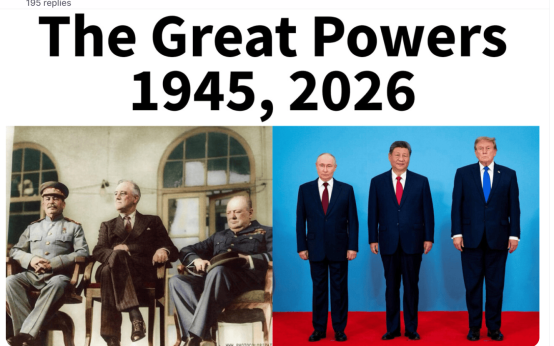 Trump, Xi, and Putin’s Shenzhen Meeting Echoes Historic Yalta Conference
 Trump Urges Nvidia to Reinstate Huang Amid Controversy
 Countering China Without Neglecting the Rohingya
 Unveiling Bigfoot: Government Documents Shed Light on Folklore