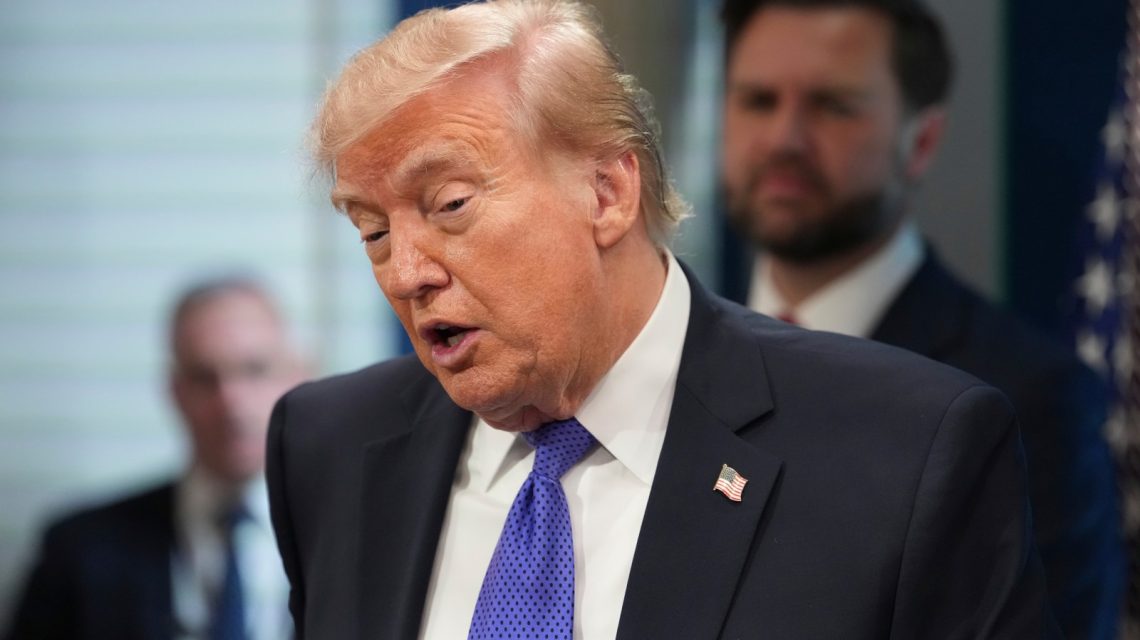
President Donald Trump suggested that his administration might achieve more once Democrats assume control of Congress in January. The statement came during a press conference held after his four-day Asia trip, where Trump engaged with Chinese President Xi Jinping and Russian President Vladimir Putin, and attended the Asia-Pacific Economic Cooperation summit. While Trump focused on the trip’s achievements, he also addressed queries on domestic politics, the incoming Democratic Congress, technology issues, and other administrative challenges.
Trump has previously voiced disappointment about the Republican midterm losses, claiming the party would’ve succeeded if he were on the ballot. Despite this, he indicated a willingness to collaborate with Democrats after their transition to control. When questioned about the incoming Democratic leadership, including U.S. Representative Hakeem Jeffries as a potential House Speaker, and Senators Chuck Schumer and Chris Van Hollen competing to guide the Senate Democrats, Trump mentioned he had initiated communication with Democrats ahead of the change.
Despite the likelihood of a divided government, Trump hinted that the shift could foster bipartisan agreements. He spoke about how his power to veto Democratic legislation could potentially lead both parties to negotiate. Trump stated, “So, they’re going to send things my way, and I’m going to veto them. And they’re going to send more things and I’m going to veto them. They could go two years and one month, because that’s what we have…but I think, after a month or so, they’re going to send things, and I’m going to say I’m going to veto unless you want to do this and this and this.”
Trump expressed his belief that both Jeffries and Schumer were intelligent individuals. Newsweek attempted to contact Jeffries’ and Schumer’s offices for a response on Friday afternoon. “If they want to get things done, I want to get things done, too,” Trump remarked about the Democratic majority. He noted that more might get accomplished due to some Republicans being difficult to negotiate with.
Disagreements with Republicans like Thomas Massie, a Kentucky Republican often at odds with Trump before losing to a Trump-endorsed candidate, were highlighted. But Massie isn’t alone; other GOP lawmakers have also opposed Trump on issues ranging from judicial nominations to transparency regarding files linked to Jeffrey Epstein. An instance of intraparty disagreement surfaced when Republican Senator John Cornyn blocked one of Trump’s judicial nominees, showcasing internal GOP tensions.
Still, Trump seemed hopeful about negotiating with Democrats under the new leadership. “Because of the power of the veto, there’s a real possibility that we’re going to get a lot of great things done, especially on healthcare,” he stated. Trump indicated he was open to improving healthcare, stipulating it must reflect a collaborative goal rather than solely Democratic intentions. Democrats prioritize affordable healthcare, with Jeffries noting plans to cut costs, secure coverage access, and enhance the healthcare system—a critical topic during the midterm House races.
Trump used the Motion Picture, Television, and Entertainment Revitalization Act as an example of possible bipartisan collaboration. This proposed federal tax incentive aims to boost U.S. film and television production. The legislation, introduced in September by a bipartisan group including Democratic Senator Adam Schiff and Republican Senator Tim Scott, has seen significant cross-party support according to Trump.
Immigration could challenge Trump’s willingness to collaborate with Democrats. Although immigration enforcement has been a hallmark of his presidency, Trump recently showed a readiness to consider broader immigration reforms, potentially aiding undocumented immigrants residing and working in the U.S. for years.
Democrats must take final steps before Congress convenes in January, including solidifying leadership as Schumer and Van Hollen vie for Senate majority roles. It remains uncertain if Trump’s optimism will lead to bipartisan agreements on healthcare and immigration or result in legislative stagnation over the subsequent two years.
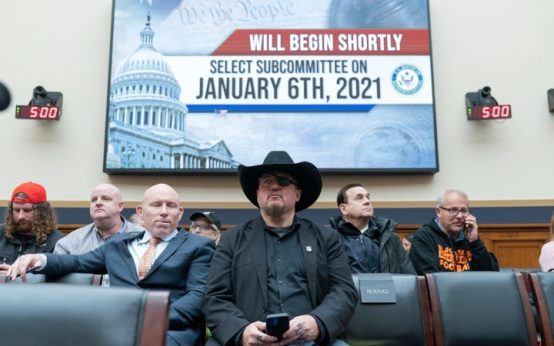 Stewart Rhodes’ Break with Trump and Plans to Rebuild Oath Keepers
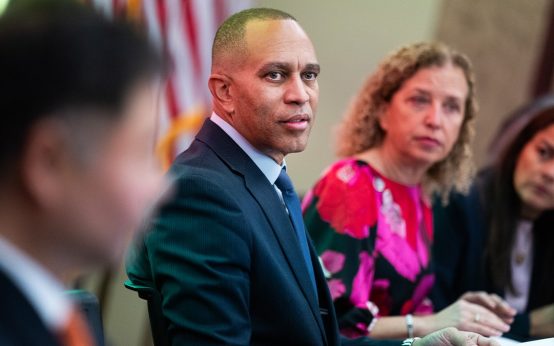 Progressive Democrats Push for Bold Agenda Amid Internal Party Tensions
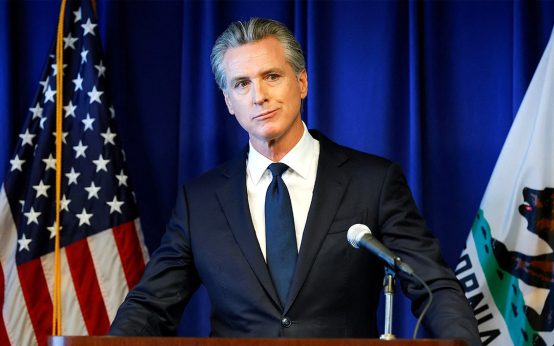 California Governor Faces Lawsuit Over Death Sentence Commutations
 Allegations of Anti-Jewish Discrimination at CUNY School
 School Choice and the Texas Education Debate
 Trump’s Cryptocurrency Ventures and Their Impact on Supporters