A spacecraft has reached Mercury after an eight-year journey through the solar system. This marks a key milestone in a significant European and Japanese mission aimed at studying the planet closest to the Sun. BepiColombo arrived at Mercury on November 21 and began its orbit around the planet.
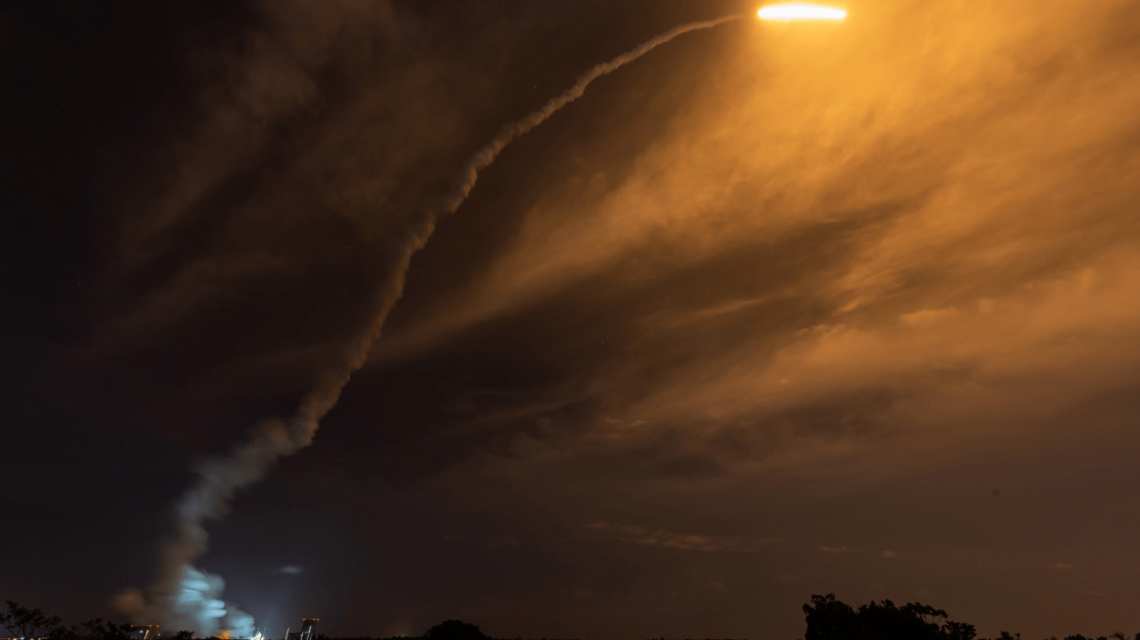
The mission includes two spacecraft that will eventually orbit Mercury separately, conducting studies simultaneously. Led by the European Space Agency (ESA) alongside the Japan Aerospace Exploration Agency (JAXA), the mission launched from Europe’s Spaceport in Kourou, French Guiana, aboard an Ariane 5 rocket on October 20, 2018.
BepiColombo’s route through the inner solar system was long and meticulously planned. It avoided a straight path to Mercury; instead, it flew past Earth once, Venus twice, and Mercury six times. By utilizing the gravity of these planets, the spacecraft adjusted its speed and direction efficiently while conserving fuel. According to ESA, the spacecraft traveled about 10.2 billion kilometers, an extensive path through the solar system.
Challenges of Reaching Mercury
Traveling to Mercury poses unique difficulties. Although closer to Earth than many planets, it involves moving deeper into the Sun’s gravitational influence. Therefore, the spacecraft must decelerate sufficiently for Mercury’s weaker gravity to capture it. Without this, the spacecraft would risk speeding past or falling into the Sun. ESA highlights that reaching an orbit around Mercury demands more energy than venturing to distant Pluto.
To mitigate this, BepiColombo completed multiple gravitational flybys past Earth, Venus, and Mercury. These maneuvers were essential for adjusting its trajectory. It also used ion propulsion engines, providing a gentle yet continuous push over time to change speed. As it approached Mercury, BepiColombo fired four small engines to decelerate, allowing Mercury’s gravity to pull it into an orbit. It initially maintained an elliptical path, ranging from 590 kilometers to over 11,000 kilometers above Mercury.
This achievement is significant because Mercury is among the least explored planets. Its proximity to the Sun results in a harsh environment for spacecraft. JAXA notes that Mercury’s proximity subjects spacecraft to intense sunlight, about ten times stronger than around Earth. The planet’s surface temperatures reach about 430 degrees Celsius, enough to melt lead.
The Objective of BepiColombo
BepiColombo stands out as it involves two scientific spacecraft on one mission. ESA’s Mercury Planetary Orbiter (MPO) focuses on the planet, examining its surface and interior. At the same time, JAXA’s Mercury Magnetospheric Orbiter, Mio, studies the magnetic field and surrounding environment.
Operating two spacecraft provides a unique opportunity to collect data from different locations concurrently. JAXA explains that this approach enables researchers to discern whether observed changes stem from Mercury or the solar wind, the flow of particles from the Sun. Combining data from MPO and Mio enhances understanding of Mercury’s magnetic field and internal structure, ultimately shedding light on the planet’s origin and evolution. Insights could also inform scientists about the formation of rocky planets like Earth.
Next Steps for BepiColombo
Entering Mercury’s orbit does not mean BepiColombo’s scientific mission begins immediately. The two spacecraft are still joined. ESA plans to separate MPO and Mio on December 9-10, marking the first mission with two spacecraft orbiting Mercury simultaneously.
Post-separation, each spacecraft will assume its individual orbit. MPO will spend subsequent months refining its path until ready to start scientific operations by March 2027. The primary research phase for both spacecraft begins by April 2027, focusing on unraveling mysteries of one of the solar system’s smallest and hottest planets.
 Brussels Sprouts: The Transformation of a Disliked Vegetable
 Developments in Bar-tailed Godwit’s Migration, Trump-Cornyn Dispute, and Measles Resurgence
 November’s Beaver Moon: A Celestial Event to Watch
 AI Claims Breakthrough in Solving the Riemann Hypothesis
 AI and Human Mathematicians Clash over Riemann Hypothesis
 Developing Stories: Legal Troubles, TV Series, Fall Salads, Prison Closures, and More