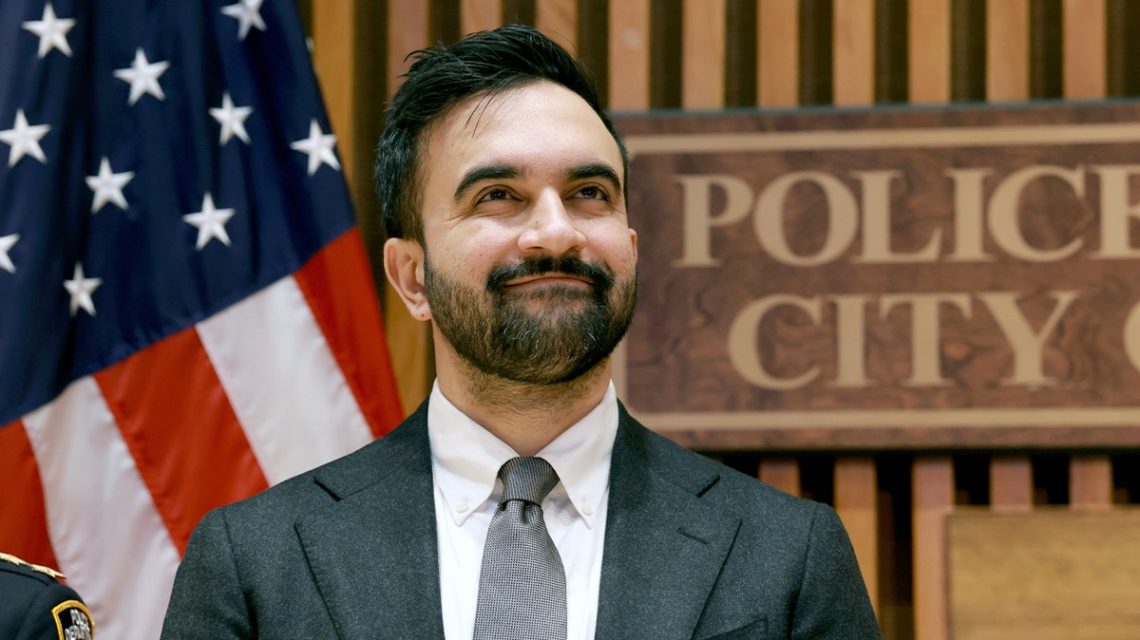
New York City’s Mayor, Zohran Mamdani, intends to remove the city’s tactical police unit, a move two former high-ranking NYPD officials are skeptical about. They claim the initiative is a political maneuver where officers will be rebranded instead of being completely disbanded, as initially promised by the mayor.
Former NYPD Chief John Chell stated, “The problem is…day-to-day New Yorkers don’t understand all this gas lighting, and they feel the angst of it. But at the end of all that, this is nothing more than smoke and mirrors.” Chell argues that the plan merely involves renaming the unit rather than dismantling it, prompting suspicion about Mayor Mamdani’s actual intentions.
The plan to dissolve the Strategic Response Group (SRG) and create a civilian dialogue team was one of Mamdani’s campaign goals. Retired NYPD inspector Paul Mauro shares Chell’s concerns, believing the change is a strategic rebranding. According to Mauro, the unit’s renaming will allow continued handling of mass protests, major crimes, and counterterrorism under a different guise.
Mauro mentioned, “Mamdani did add…that there will be uniformed police standing by to take more forceful enforcement if necessary. So what really changed? He changed the name of that unit and inserted this civilian unit between those uniformed cops and the protesters.” This new civilian-led Community Dialogue and De-escalation Division (CDDD) is designed to mediate between protesters and police at large events.
Chell and Mauro believe relying on civilians for crowd management can delay police intervention during violent protests. Chell commented, “Once a cop, wherever they’re assigned, becomes reactive versus proactive — public safety suffers.” Mauro added, “If the civilians try to talk, and by the time they request police help, it may be too late.”
The SRG traditionally received information from NYPD’s Intelligence and Counterterrorism Bureau, which helped manage potentially dangerous demonstrations. Their training included crowd management and de-escalation techniques. SRG’s bicycle crowd management was a standard tactic, allowing officers to form barricades for crowd control.
Mauro explained, “The purpose of the SRG was to ensure highly-trained officers could diffuse or control protests getting out of hand. That’s why they were only deployed in about 6% of instances.” Despite the criticism, the SRG was typically used only when protests turned violent.
The ACLU’s New York affiliate and other SRG critics argue the unit’s methods are inherently violent. They claim it disregards First Amendment rights while suppressing protesters. The training manual distinguishes between different protester categories: “peaceful/compliant” and “violent/non-compliant.” It also categorizes protesters as “everyday citizen,” “professional,” and “anarchist.”
Despite the SRG’s closure, Mamdani’s plan necessitates police presence at larger demonstrations. A new civilian-led group aims to de-escalate tensions at these events. Additionally, Mamdani has announced the creation of a First Amendment Support Team (FAST), a 30-officer unit intended to help in crowd de-escalation until the civilian team is operational.
Chell, who plans to run for mayor in 2029, doubts the new plans will be effective before 2028, if at all. He expressed concerns over the mayor’s approach, stating, “If they get everything they want, we’re gonna be a third world city and I don’t know if we can ever get it back.”
 Highlights from Recent News Stories
 Former Press Secretary Criticizes GOP’s Election Strategies
 Trump and Cornyn Clash Over Judicial Nomination
 Ted Cruz and James Talarico Discuss Texas Space Academy Proposal
 Newly Proposed Legislation Aims to Ease Family Travel
 Trump Open to Bipartisan Health Care Plan with Democrats