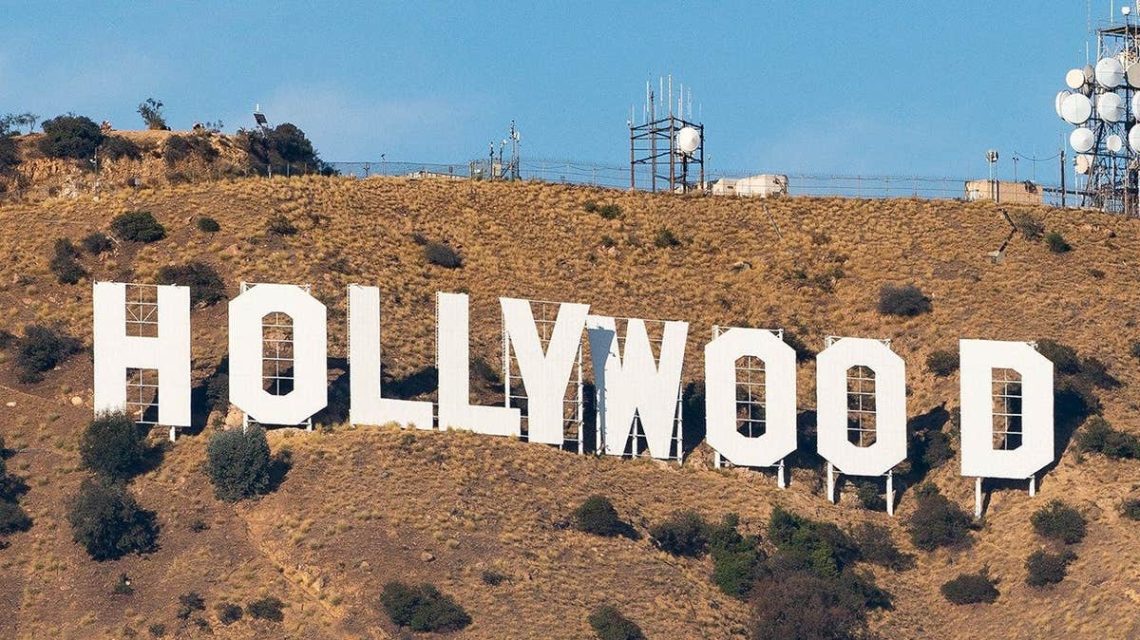
California’s entertainment industry is facing significant challenges. Increasingly, productions are relocating to other states like Georgia and New Jersey. These locations offer more attractive incentives. The difficulty and complexity of filming in California contribute to this trend.
Recent efforts by President Donald Trump aim to reverse this shift. He has emphasized keeping film and television production in the United States. His campaign to “Make Hollywood Great Again” focuses on creating incentives for productions to remain domestic.
Production Migration
Industry experts highlight a concerning trend. Film and television productions are moving away from California to minimize costs and access better tax incentives. Jonathan Handel, an entertainment lawyer, noted Hollywood’s dwindling presence. “Hollywood doesn’t mean Hollywood anymore,” he remarked.
President Trump is working across party lines to address this issue. He has garnered support from unexpected allies, like Sen. Adam Schiff, to draft the Motion Picture, Television, and Entertainment Revitalization Act. This legislation aims to make the U.S. more competitive as a production hub.
Incentives and Competitiveness
California offers tax credits capped at $750 million, though Gov. Gavin Newsom suggested increasing this to $1 billion. However, states like Georgia offer uncapped credits. New York and New Jersey provide larger or more flexible structures, eliminating competition for limited funds. This attracts major studios looking for financial efficiency.
Jason Fisher, CEO of Stagerunner, explained the situation: “The truth is, they work.” Other countries and states have successfully implemented incentive programs, drawing productions away from traditional hubs like California and New York.
The Federal Response
An ambitious federal production incentive aims to offer a 20% benefit for films. Handel noted that countries like Ireland already have national incentives, making them appealing destinations for production. The proposed national incentive could stack with state incentives to enhance competitiveness.
The Trump administration is committed to maintaining Hollywood as a cultural pillar. It sees this federal incentive as crucial to revitalizing domestic production.
Rising Competition from Other States
Outside of global competition, California contends with rival states like New Jersey. The state has seen significant investments from giants like Netflix and Lionsgate, aided by an aggressive tax incentive strategy.
New Jersey’s tax rebate stands at 35%, including above-the-line expenses, making it highly competitive. Productions attracted by these incentives find the financial landscape advantageous, leading to increased investment in infrastructure.
Fisher emphasized the hurdles present in California: “Filling out the application process in California, it is a gigantic hassle.” States offering uncapped incentives give producers certainty, thus attracting more projects.
Structural Shifts
As other states offer better incentives, studios build new infrastructure in places like New Jersey, Texas, and Georgia. The consequence: California’s influence in the film industry continues to wane.
Infrastructure developments—like sound stages and trained crew—further discourage maintaining production roots in California. When states provide comprehensive facilities and incentives, the incentive to remain diminishes significantly.
For film and television to thrive again in California, structural and policy changes seem necessary. Enhanced incentives could reinvigorate the state’s role as a filming hub.
 Debate Erupts Over Holocaust Jokes Amid NFL Controversy
 Ronny Hallin, Actress from ‘Laverne & Shirley’, Passes Away at 88
 Controversy Arises Over ‘Madden’ Film Portrayal of Al Davis
 Taylor Swift’s Note to Megan Moroney at the CMA Awards
 Sammy Kershaw Addresses Criticism Over 2026 CMA Awards Attendance
 Oprah’s Support for Meghan Markle: A Boost but Not a Guarantee