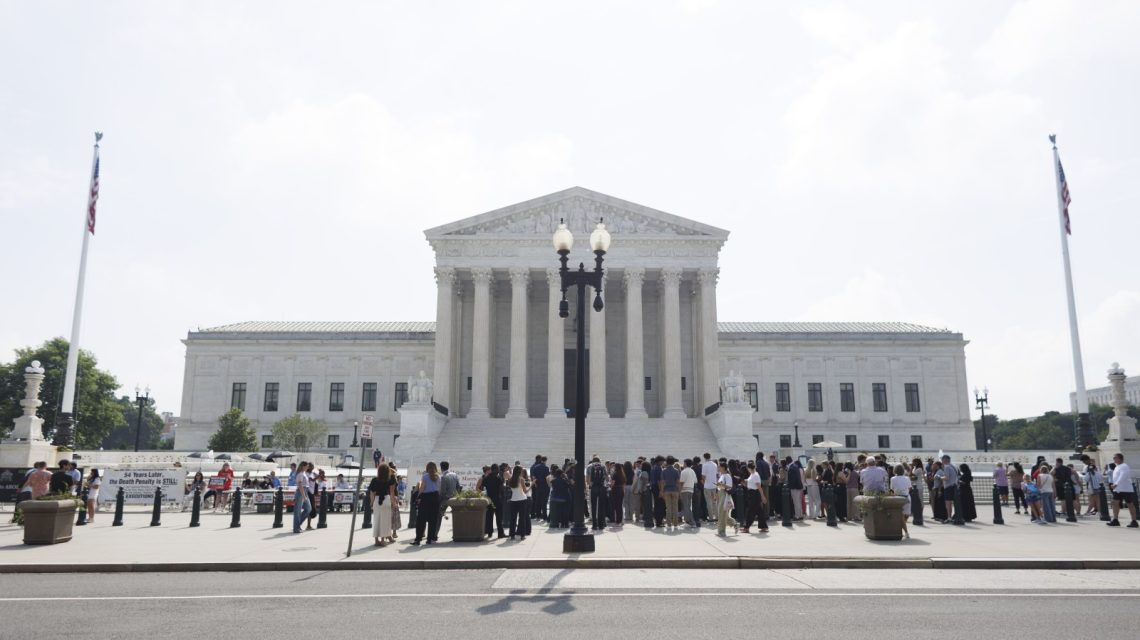
The conversation surrounding court reform has resurfaced in the political arena following the midterm elections. Proposals from certain factions on the left suggest significant changes to the U.S. Supreme Court’s structure. These proposals stem from dissatisfaction with recent Court decisions that have not aligned with particular political aims. Critics have accused the justices of partisanship; reform suggestions include new ethics rules, term limits, and court-packing to alter current Court dynamics.
Understanding the Supreme Court’s Role
The U.S. Constitution’s framers never envisioned the Supreme Court as a political body swayed by public opinion or the ruling party’s ideologies. The Court’s duty is to interpret the Constitution, even if outcomes are unpopular. The necessity of an independent judiciary is rooted in the founders’ awareness that unrestrained democracy can lead to oppression. The separation of powers, designed to protect individual liberties and uphold certain fundamental rights regardless of political tides, underscores this.
The independence of the judiciary is crucial within this framework.
As we approach America’s 250th birthday, it is important to reflect on the significance of this system.
The Court’s Function and Legitimacy
The Supreme Court’s legitimacy depends on its adherence to constitutional interpretation rather than political satisfaction. While Congress enacts laws, the Court’s role is to interpret them when disputes arise. Decisions are not to be judged by expected political outcomes. Judges diverging from constitutional principles to achieve desired results would compromise their impartiality, aligning them with political actors rather than upholding the law.
If court reform becomes a tool of political retribution, each shift in power could threaten to further politicize the judiciary. The idea of expanding the Court to counter unpopular decisions could undermine the rule of law, regardless of political affiliation.
Recent Supreme Court Term Insights
During the 2025-2026 term, the Court decided 56 cases, with only 13 prominently following ideological lines. These figures challenge claims that the Court operates chiefly as a partisan entity. In 71% of cases, decisions showed varied voting patterns, disproving a simplistic conservative-liberal dichotomy.
Judicial legitimacy should be grounded in the quality of constitutional reasoning, not the political alignment of appointing presidents. The Constitution is a fixed legal framework, not a conduit for current political preferences. Judicial interpretation should be consistent with its original meaning.
The Real Danger and Safeguarding the System
The true threat to the republic lies not in a Court delivering unpopular verdicts but in an inclination to weaken institutions that challenge personal political aims. The U.S. constitutional design aims to check power, preventing its redistribution based on transient political majority shifts.
Kelly Shackelford, speaking as president and chief counsel for the First Liberty Institute, emphasizes the importance of upholding judicial independence to safeguard the nation’s legal system.
The opinions presented in this article reflect those of the author.
 Challenges and Perspectives on Welfare and Municipal Responsibility in Chicago
 AI Manipulation and Human Vulnerability
 The Double Standard in Discussions of Race
 The Perils of Intraparty Division: A Look at Democratic Infighting
 Fiona the Hippo’s Death Sparks Outrage and Debate
 A Memorial Celebration for Gloria Steinem