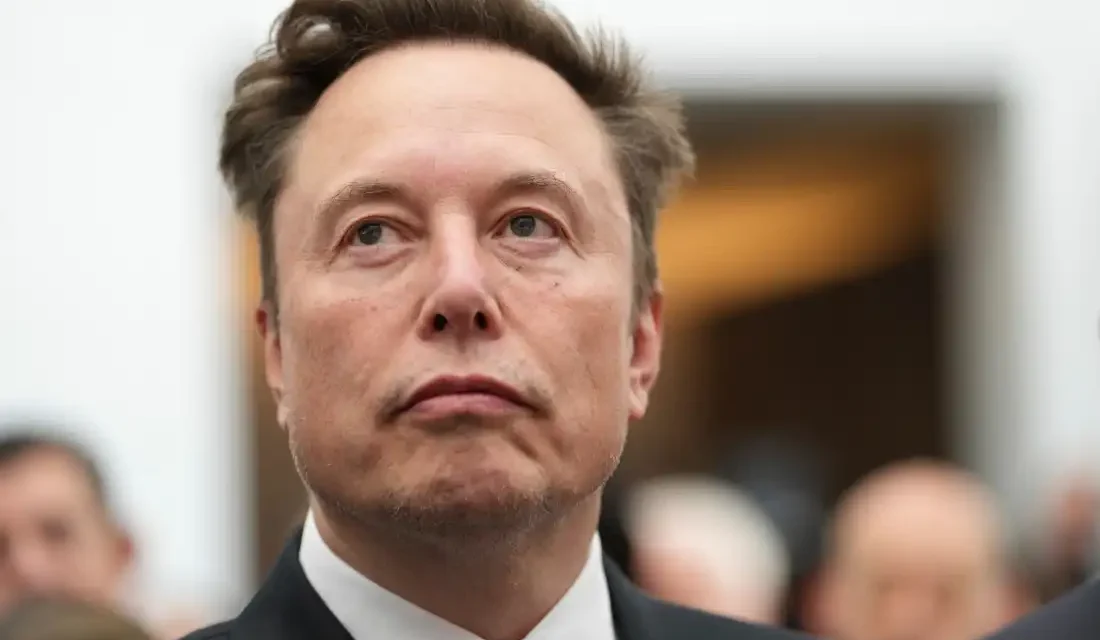
Elon Musk, alongside President Donald Trump, attended an event at the U.S. Institute of Peace on October 8, 2026. During this period, SpaceX received permission from the Trump administration to launch 1 million satellites. Their goal: creating data centers in space. This initiative has sparked both skepticism and concern among scientists.
The U.S. Federal Communications Commission (FCC) described the decision as a monumental first amid the growing competition in artificial intelligence. The FCC endorsed SpaceX’s plan, emphasizing that the satellite network, termed “Starmind,” will process significant data for Earth applications. The aim is to utilize solar energy effectively.
FCC Chairman Brendan Carr described the approval as opening “a bold new frontier,” reinforcing America’s lead in the super intelligence era. The FCC’s detailed order requires SpaceX to deploy at least “one authorized space station” by 2033, gradually increasing through 2040.
Elon Musk reacted positively on social media, reiterating his long-term vision of solar-powered space data centers benefiting AI operations on Earth. Nevertheless, experts point out the daunting technical, financial, and environmental challenges faced by the project.
Astrophysicist Adam Becker criticized the plan as “a fantasy,” expressing doubts about its feasibility. The idea of solar-powered data centers in space seems appealing, potentially reducing the strain on terrestrial power grids. However, challenges like high costs, technical limitations, and environmental hazards make it complex.
Becker explained that space, while cold, is a vacuum where heat can trap, complicating the heat dissipation of numerous satellites. The potential costs and difficulty in sending necessary materials are significant concerns. He also highlighted the risks of atmospheric pollution, launch reentry complications, and potential space collisions, which could result in a chain reaction of space debris.
The FCC assured compliance with orbital debris regulations in SpaceX’s Starmind project. Despite receiving numerous public comments, including petitions to deny the project, the commission justified its approval by emphasizing the public interest. They, however, avoided topics beyond their jurisdiction, like environmental issues.
Organizations such as the American Astronomical Society (AAS), Viasat, and Amazon-owned Kuiper Systems urged the FCC to reject the proposal. The AAS expressed disappointment, claiming that SpaceX’s satellite constellation would threaten astronomical research and the public’s ability to observe the night sky.
The AAS stated that larger, brighter satellites would be visible longer, impacting the visual purity of the night sky. Becker supported this concern, warning about potential “pollution of the night sky.” Despite requests for comment from Viasat, Amazon, SpaceX, and the FCC, there were no immediate responses.
 The Impact of Perception on AI and Policy
 U.S. Intelligence Examines Alice Huang’s Connections Amid Security Concerns
 Nvidia Faces Potential Credit Downgrade Amid Governance Concerns
 White House Alleges South Korea’s Unfair Treatment of U.S. Tech Firms
 Understanding Remus Stealer and Protecting Your Gmail
 AI Enhances Retail Efficiency for Black Friday and Cyber Monday