
A young Canadian medical student has died suddenly, raising questions about the circumstances surrounding her death. Bérengère Deveaux-Cattino, a 24-year-old from Montreal, passed away in Istanbul while celebrating her graduation from medical school. Initially reported to be due to food poisoning, her family challenges this claim, suggesting other causes.
Trip to Turkey Ends in Tragedy
Deveaux-Cattino and her friends arrived in Istanbul for a celebratory trip. The journey was filled with excitement as they explored tourist spots. However, after consuming a meal consisting of chicken casserole, Turkish tea, and baklava, the group fell gravely ill. Laurie, a travel companion using a pseudonym, described the sudden onset of vomiting among the group.
“We were taking turns running to the bathroom until we realized that this wasn’t just going to pass,” Laurie explained.
Bérengère contacted her sister, Éléonore, via FaceTime, triggering concerns within the family. Attempts to reach Istanbul by Bérengère’s sister and father led to heart-wrenching news during a layover in Paris. Éléonore recalls pleading for information about her sister, only to learn of her tragic passing.
Unanswered Questions and Family’s Quest for Truth
The Deveaux-Cattino family repatriated Bérengère’s body, yet her death remains shrouded in mystery. A Quebec coroner’s investigation did not confirm food poisoning as the cause, citing a lack of intestinal irritation, a typical symptom.
Parallel cases involving the Böcek family, who similarly fell ill and died shortly after visiting Istanbul, fueled suspicions of another cause. Experts suspect aluminum phosphide, a potent pesticide, as a potential culprit. This substance, known for emitting harmful phosphine gas, has been linked to numerous poisoning cases in Turkey since 2023.
The Dangers of Aluminum Phosphide
Aluminum phosphide, illegal in urban areas, releases a toxic gas upon exposure to air. It is sometimes used to combat bedbug infestations, despite its lethal risks. In the investigation involving the Böceks, fumigation in an adjacent hotel room caused their demise.
Turkish forensic pathologist Sebnem Korur Fincancıs, after reviewing Bérengère’s autopsy, doubted food poisoning as the cause, citing metabolic acidosis as indicative of phosphine exposure.
She noted, “It’s the pesticide poisoning. There’s the metabolic acidosis, a main finding of such cases.”
Efforts to Uncover the Truth
Journalist Ayse Adanali and CBC found evidence suggesting phosphine poisoning in dozens of Turkish cases. The hotel where Bérengère stayed reportedly had pest control measures in place, yet denied using harmful pesticides. Despite this, undercover inquiries revealed practices involving sealing rooms for extended periods, commonly associated with phosphine gas deployment.
Bérengère’s sister, Éléonore, remains determined to uncover the truth. She speaks out on her sister’s behalf, driven by the loss and the mystery surrounding Bérengère’s untimely death.
“I’ll never let her go,” Éléonore asserts, committed to finding answers.
 Ukraine’s Escalating Drone Attacks on Russian Assets
 El-Sayed Criticizes Ethno-States, Emphasizes Democracy for Israel
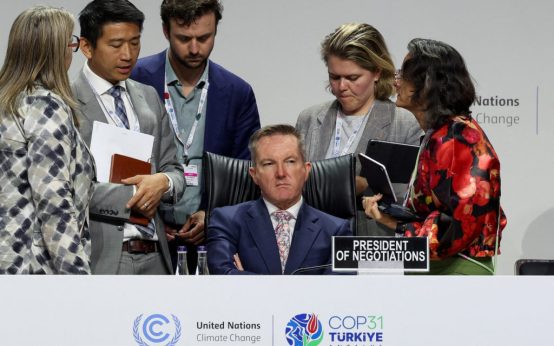 Negotiators Struggle to Agree at UN Climate Talks in Turkey
 Trump Announces US Navy’s Blockade in Strait of Hormuz
 Mass Shooting at Private Concert in Tulare County: Nine Injured
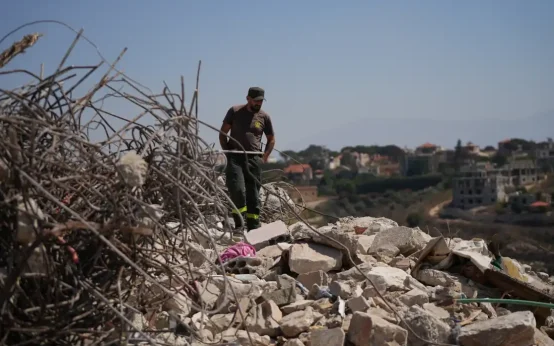 A Family’s Struggle Amid Devastation in Zawtar al-Gharbiyah