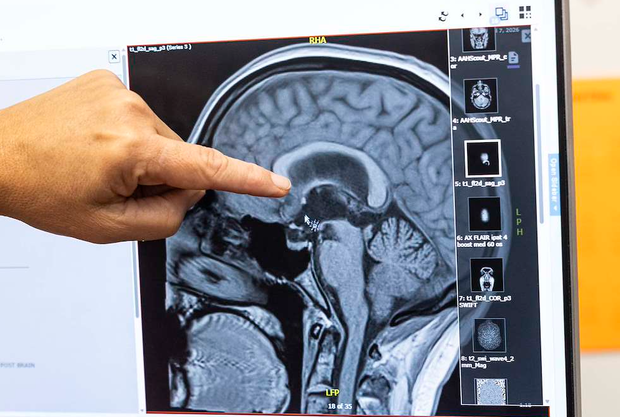
Niko Pitinii, a communications student at the University of Pittsburgh, anticipated celebrating his 21st birthday with family in Las Vegas. Unexpectedly, upon arrival, he found himself overwhelmed with fatigue. This was an early indication of a health issue.
In the following weeks, his condition worsened. Pitinii experienced extreme tiredness, significant weight loss, and even fainted in the shower. His initial visit to the emergency room showed no alarming results, and he attributed these symptoms to minor causes.
As he continued his routine, balancing studies and his role as a student equipment manager for the Pittsburgh Panthers football team, he experienced another fainting episode at practice. This prompted his supervisor to insist on urgent medical evaluation.
I think they thought it was my heart.
At the hospital, a CT scan revealed a sizable brain tumor obstructing a ventricle, leading to hydrocephalus. Dr. Pranay Soni, a skull base surgeon at the Cleveland Clinic, informed Pitinii of the tumor blocking spinal fluid, causing his symptoms. An initial procedure provided temporary relief, but further surgery was necessary.
Before the scheduled operation, Dr. Amy Smith, soon to be Pitinii’s oncologist, delivered unexpected news. A blood test showed elevated beta-hCG levels, indicating a rare brain tumor known as germinoma. This type of tumor secretes the hormone typically seen in pregnancy, leading to initial confusion.
Pitinii’s diagnosis confirmed a treatable cancer with a high cure rate, yet the news was unsettling. The sudden need for brain surgery compounded with a cancer diagnosis was overwhelming.
The surgery went well, allowing Pitinii to spend Christmas at home. The new year began his rigorous cancer treatment. The tumor biopsy identified it as a germinoma, leading to four chemotherapy cycles and subsequent radiation therapy. Despite the exhausting ordeal, Pitinii relied on the Cleveland Clinic’s mental health support throughout his treatment.
A significant milestone came after an MRI on July 7 revealed he was cancer-free. Two days later, Pitinii rang the hospital’s “Bravery Bell” to mark the completion of his cancer treatment. He received a surprising gift: a 3-D printed model of his tumor.
Returning to university proved challenging. Nominated for the Courage Award, Pitinii now focuses on maintaining his health with regular check-ups. While the chance of cancer recurrence is low, he will continue follow-up care to manage side effects.
The academic journey resumes with anticipation. Although appetite stimulants impact his sleep, he remains committed. Future aspirations include a social work master’s degree to assist others facing similar challenges.
Pitinii acknowledges the road to recovery will require time and patience, with his focus firmly set on graduating next year.
 Sheila Fallon Brings Thanksgiving Joy to Michigan Families
 Understanding Cognitive Side Effects of Medications
 Warren Buffett’s Lifestyle and Longevity
 Navigating H-4 Visa Challenges and Triumphs in the U.S.
 Cub’s Impact on Families at Masonic Children’s Hospital
 Jimbo Covert Reflects on Mike Ditka’s Legacy and Revie Sorey’s Impact