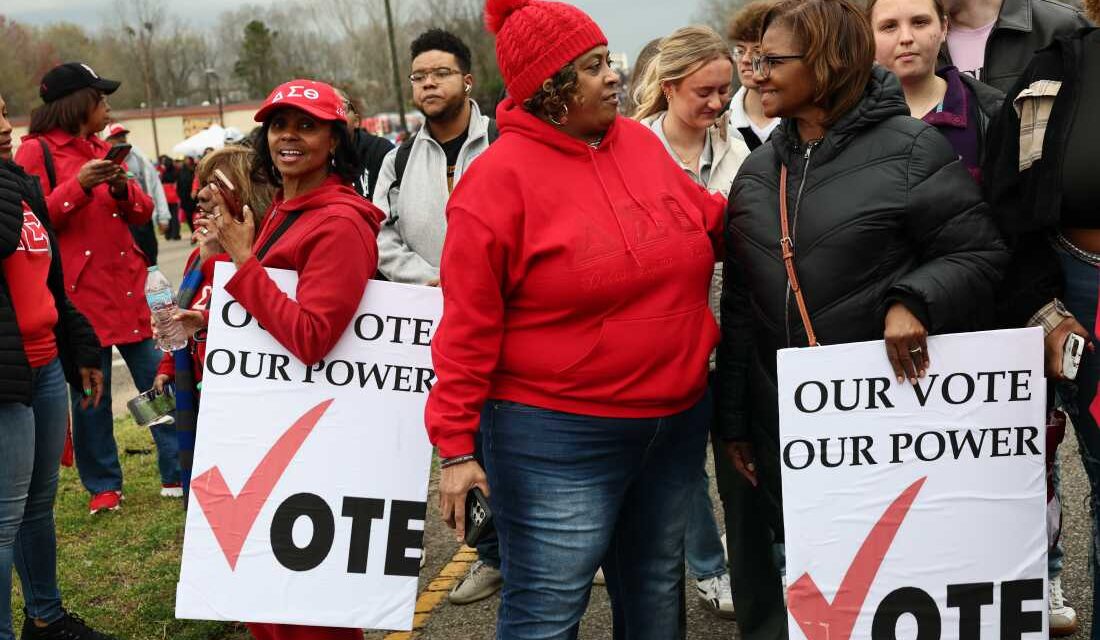
In 2025, Delta Sigma Theta sorority members and other participants gathered in Selma, Alabama. They commemorated the 60th anniversary of the Bloody Sunday march, which played a pivotal role in the passage of the Voting Rights Act. This backdrop highlights current changes in voting rights protections.
After a recent U.S. Supreme Court decision weakened the Voting Rights Act’s protections against racial discrimination, attention shifted to local levels. The decision impacts at least 17 voting maps or election systems for state and local governments.
The Changing Legal Landscape
The high court’s decision in Louisiana v. Callais reinterpreted Section 2 of the Voting Rights Act. The focus now is on intentional racial discrimination, a challenging standard to meet. Legal experts worry this change might reduce minority representation and increase partisan gerrymandering.
Rodney Pierce, a North Carolina state representative, expressed disappointment. He noted, “there is no longer a path open to us to protect the voting rights of Black citizens.”
Regional and Local Implications
Most affected cases come from the South. However, lawsuits also involve Latino voters in Washington and Pennsylvania, and Native American voters in North Dakota.
Michael Li, a redistricting expert, explains that Section 2 historically helped to break down political strongholds. This allowed racial minorities to elect candidates of their choice. Li notes that new limits might let majority populations retain power.
Future of Voting Systems
Challenging a voting map now requires separating race from partisan preference. This adds complexity, especially where local partisan data is scarce.
Gilda Daniels, a law professor, highlights a trend toward at-large voting systems. These systems typically favor majority populations, reducing minority representation.
Local Challenges Ahead
In Fayette County, Tennessee, the local NAACP branch recently saw a new voting map allowing more balanced representation. Unlike previous all-white leadership, three out of 10 districts now have Black majorities. But local leaders watch for potential challenges to these gains.
Future redistricting cases could further test the Voting Rights Act. The advocacy groups Fair Fight Action and Black Voters Matter Fund warn that up to 200 legislative seats in Southern majority-Black districts might be at risk.
 Noncitizens Charged with Voter Fraud in the U.S.
  Penn State Fraternity Members Charged in Cocaine Ring Bust
  Nevada Attorney General Faces Questions Over Clemency Support for Convicted Killer
  Family Seeks Investigation After Grandmother’s Assisted Death in Canada
  Trump Administration Announces Major ACA Marketplace Fraud Crackdown
  Changes in Chicago’s Leadership: City Hall Legal and Administrative Shifts