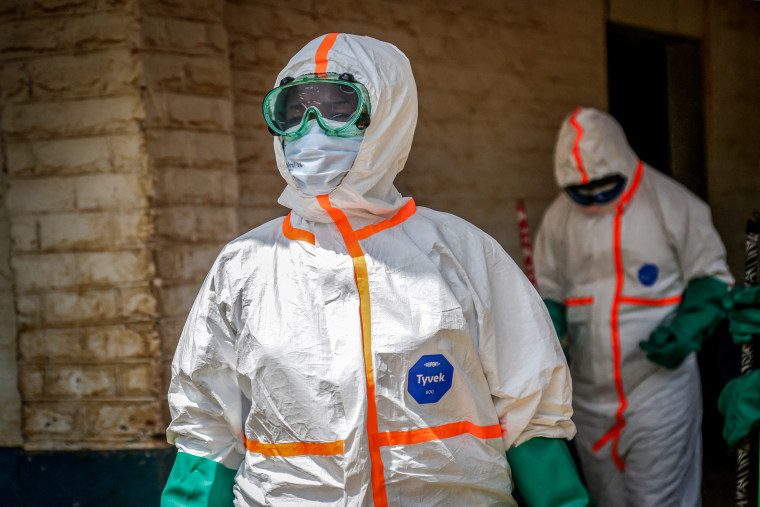
In the Democratic Republic of the Congo, doctors battling Ebola in the northeastern province of Ituri face increasing challenges. Shortages of essential supplies and recent attacks on health facilities hinder their efforts as the virus spreads swiftly. Three incidents have recently targeted medical centers, allowing patients to escape, exacerbating the situation.
The Mongbwalu General Referral Hospital endured attacks twice over the weekend, permitting more than twenty patients to flee. Health workers at this hospital, equipped with protective gear, worked to sanitize the isolation area for Ebola patients. These disruptions echo past violence against health facilities during the 2018-2020 outbreak in eastern Congo, which claimed over 25 health workers’ lives. Hostility stemmed from civilians’ frustrations over burial practices and skepticism about the authenticity of the outbreak.
“There is denial of the disease within the population, with some members wanting to claim the bodies of suspected and/or confirmed cases,” said Dr. Richard Lokodu, the hospital’s medical director.
The World Health Organization has classified the current Ebola outbreak, caused by the Bundibugyo strain, as the third-largest in history. WHO declared the outbreak a public health emergency of international concern. As of Sunday, there were over 900 suspected cases, with 101 confirmed infections.
Dr. Tedros Adhanom Ghebreyesus, WHO’s chief, stated on Monday that there have been 220 suspected deaths due to the outbreak. Delays in case detection require responders to accelerate their efforts.
At Mongbwalu General Referral Hospital, 18 patients fled on Saturday when tents provided by Médecins Sans Frontières were torched. Four lab tests returned, showing three negative and one positive result. Consequently, a confirmed Ebola case now evades detection in the community.
On Sunday, the hospital faced multiple attacks provoked by relatives of a religious leader who succumbed to Ebola. Seven patients escaped as police and military intervened. During the chaos, a critically ill patient died attempting to flee. Attackers demanded the release of Ebola victims’ bodies for burial, although such burials can cause further transmission, given the bodies’ infectious nature.
Historical data indicates that during the 2013-2016 outbreak in West Africa, health workers encountered violence from mobs blaming them for spreading the virus. The 2018-2020 outbreak in eastern Congo saw frequent attacks, some orchestrated by militias pursuing political or financial benefits amid regional instability and distrust toward authorities.
The present outbreak, originating in Ituri, extends to North and South Kivu provinces, areas under M23 rebels’ influence, reaching Uganda’s borders. Uganda recently confirmed two more cases, raising their total to seven.
 The Impact of Private Equity on Hospital Operations
  Microplastics in the Great Lakes: A Growing Concern
 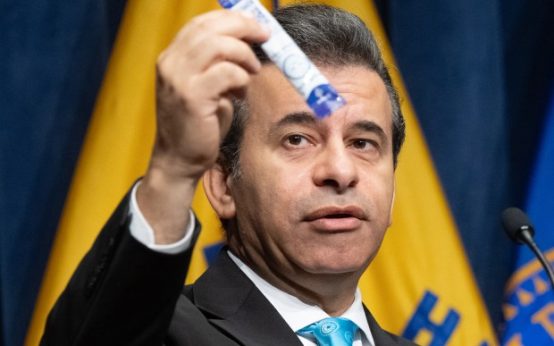 Federal Proposal Affects 7-OH Sales in Illinois Amid Rising Concerns
  Arrest of Several Men in Gloucestershire on Explosives Charges
  Hungary’s Political Transformation: Challenges and Alliances
 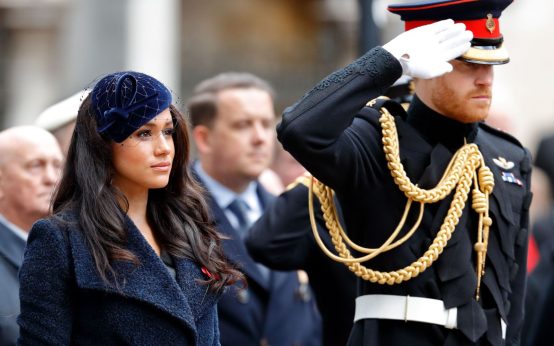 Upcoming Events and Challenges for Prince Harry and Meghan Markle in the U.K.