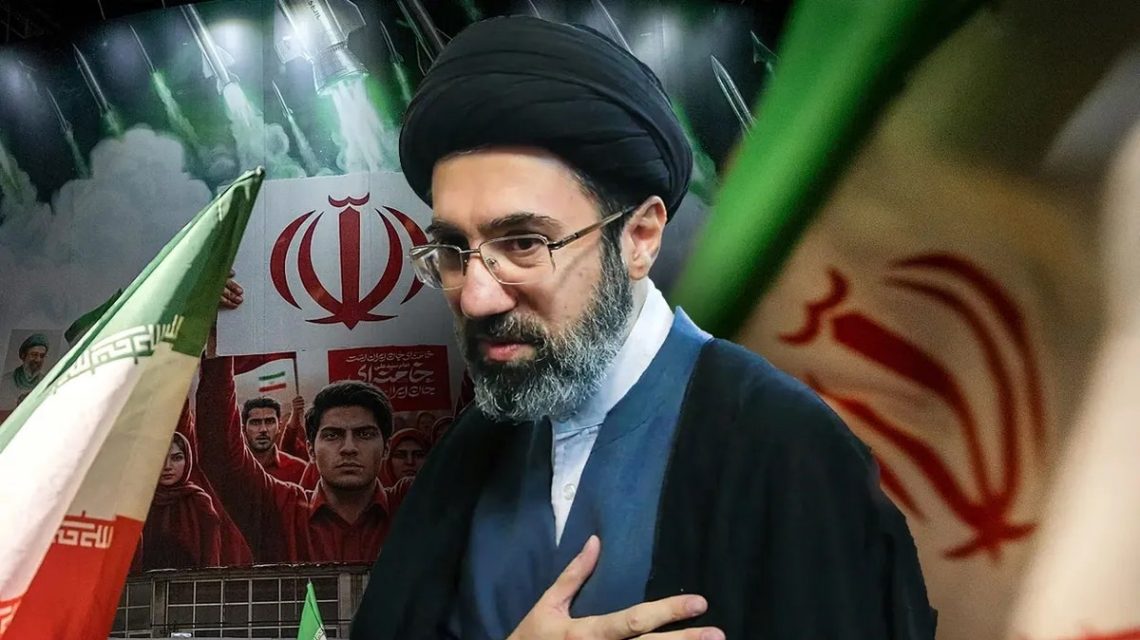
IRGC Commander Ahmad Vahidi is reportedly playing a key role in Iran’s negotiation strategy. Analysts often describe him as a radical hardliner. Fox News correspondent Jeff Paul examines Vahidi’s emergence during the Iran-Iraq War and his alleged connections to multiple terror attacks. These include the 1983 Beirut bombing and the 1994 attack in Argentina, which raise concerns about the true controllers of Iran’s military decisions.
Recently, Iranian Supreme Leader Mojtaba Khamenei appointed six senior military commanders. This move marks a strategic reshuffle as Tehran rebuilds its command structure, affected by repeated U.S. and Israeli strikes. These appointments, announced by Khamenei’s office and circulated on social media, span positions within Iran’s armed forces, the Islamic Revolutionary Guard Corps (IRGC), and the Basij paramilitary force. A counterterrorism expert notes that this timing and the language used in the decrees hint that Tehran is bracing for continued confrontation rather than a settlement with the United States.
“Strategically, the announcements were issued in English on social media while Iranian and Omani negotiators finalize a proposed shipping route through the Strait of Hormuz. This sequence appears deliberate,” Dr. Omar Mohammed from the Antisemitism Research Initiative at George Washington University’s Program on Extremism told Fox News Digital.
Reports suggest Tehran is solidifying its command structure on the ground before entering any agreements.
The phrase used in formal state documents, “Zionist-American enemy,” officially declares the United States as a co-belligerent. Khamenei has appointed Ali Abdollahi as the chief of staff of the armed forces and Kioumars Heydari as his deputy. Ahmad Vahidi has been promoted as the commander-in-chief of the IRGC, attaining the rank of major general. Mostafa Izadi was named deputy IRGC commander, Ali Azmaei as commander of the IRGC Navy, and Hossein Taeb as commander of the Basij.
Vahidi is to maintain readiness for “powerful offensive operations against the enemy,” as directed by the Supreme Leader. Meanwhile, Abdollahi will focus on integrating the General Staff into the Khatam al-Anbiya wartime joint command. Contrary to states exiting a conflict and dismantling wartime command arrangements, Iran is now institutionalizing its command framework, indicating preparation for a prolonged engagement rather than a resolution.
Several of the newly appointed commanders have dealt with U.S. or European sanctions, facing accusations related to terrorism and violent crackdowns. Vahidi remains subject to an Interpol Red Notice requested by Argentina for alleged involvement in the 1994 AMIA Jewish community center bombing in Buenos Aires, which resulted in 85 deaths.
Hossein Taeb, formerly head of the IRGC Intelligence Organization and a former Basij commander, is listed on the U.S. Treasury Department’s sanctions register. The U.S. first sanctioned him in 2010 over serious human rights abuses after Iran’s contested 2009 presidential election. The U.S. Treasury Department sanctioned Heydari in 2022 for publicly acknowledging his forces’ role in the violent response during Iran’s November 2019 protests that left hundreds dead. The European Union has imposed sanctions on him as well.
This reshuffle happens as Iran continues its political and military leadership rebuilding following U.S. and Israeli strikes that eliminated senior figures within the regime. Ayatollah Ali Khamenei, the supreme leader from 1989, was killed in a February strike at the war’s onset. Mojtaba Khamenei was selected as the new supreme leader in March. Other significant figures, including Ali Larijani and Gholamreza Soleimani, were killed in March strikes.
Recent appointments spark inquiries about Mojtaba Khamenei’s health, who has seldom appeared publicly since his appointment in March. Iranian President Masoud Pezeshkian recently stated he had a nearly seven-hour discussion with Khamenei. This is only the second publicly disclosed meeting since the new supreme leader took office, as reported by Iran International.
Pezeshkian mentioned that the discussions touched on economic situations, sanctions, and other domestic challenges, with Khamenei emphasizing the significance of “unity and cohesion.” Despite this, Iran’s intelligence apparatus has not been entirely restructured. The IRGC Intelligence Organization still lacks official chiefs, and Iran has no permanent defense or intelligence ministers.
According to Dr. Mohammed, “The appointments entail assigning responsibility for counterintelligence failures that allowed the February strike.” He suggests that whoever prevails—whether the supreme leader’s close circle or the Guard’s institutional leadership—will likely control Iran.
Emma Bussey reports on breaking news for Fox News Digital. Prior to joining Fox, she contributed to The Telegraph, covering areas such as foreign affairs, politics, news, sports, and culture.
 Biden Administration’s Role in Gaza Examined
  Arrest of Several Men in Gloucestershire on Explosives Charges
  Hungary’s Political Transformation: Challenges and Alliances
  Upcoming Events and Challenges for Prince Harry and Meghan Markle in the U.K.
  U.S. Navy Confirms Increase in Injured Troops from Iran Conflict
  Major Incident Declared Near British Airbase