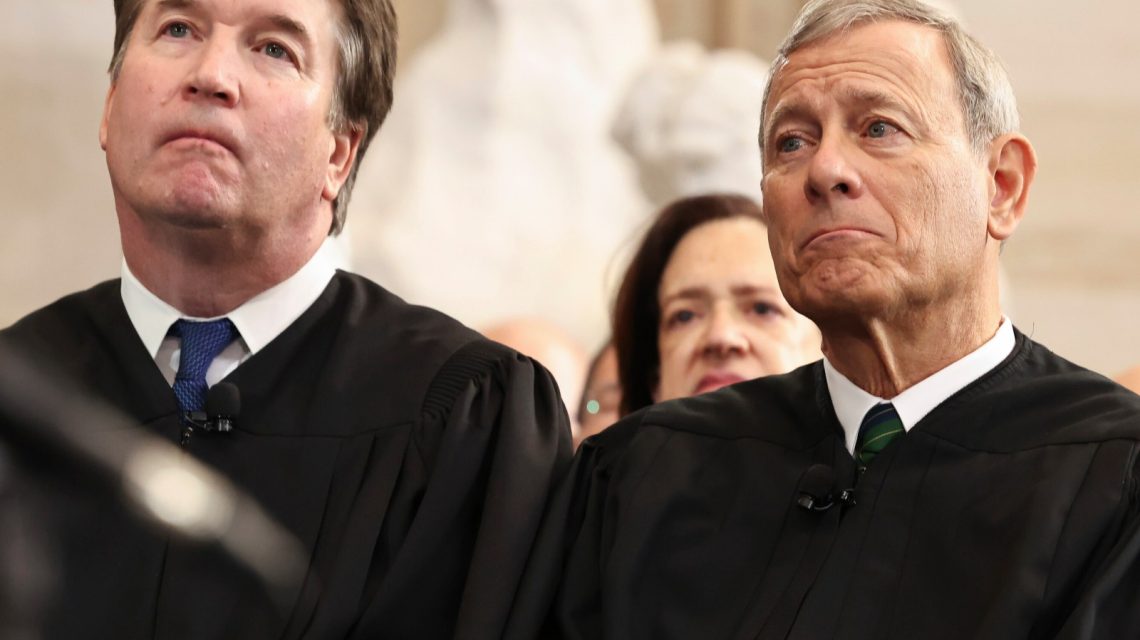
The Supreme Court ruled on Thursday that Terry Pitchford, a Black Mississippi death row inmate, can renew his challenges to his conviction. Chief Justice John Roberts and Justice Brett Kavanaugh joined the court’s liberal wing for a 5-4 decision. This ruling underscores differing views within the conservative-majority court on addressing racial bias in jury selection. It also reinforces the precedent against discrimination toward Black jurors.
This decision reopens a long-standing legal battle for Pitchford and remands his case to lower courts. There, his conviction and death sentence might be reconsidered. Joseph Perkovich, Pitchford’s representative at the Supreme Court, stated, “Mr. Pitchford is now entitled to a fair trial in the state court.”
A Fractured Conservative Block Over Racial Bias
The central question was whether prosecutors improperly excluded Black prospective jurors in Pitchford’s 2006 capital murder trial. During this trial, Pitchford received a death sentence for the robbery and killing of grocery store owner Reuben Britt in northern Mississippi. Prosecutors removed four out of five eligible Black jurors, leaving a panel with only one Black member. Defense attorneys claimed these actions were racially motivated.
The court relied on the 1986 decision in Batson v. Kentucky, which bans excluding jurors solely based on race and requires courts to evaluate the prosecution’s reasons for such actions. Pitchford’s legal team argued they were not granted a proper chance to challenge these explanations. A federal district judge in 2023 agreed and overturned his conviction, a decision later reversed by the 5th U.S. Circuit Court of Appeals. The Supreme Court’s decision rebuffs this reasoning, allowing Pitchford’s claims to be reevaluated.
Writing for the majority, Kavanaugh stated, “The trial court did not afford Pitchford’s counsel a sufficient opportunity to rebut the prosecutor’s proffered race-neutral reasons … and never determined whether the prosecutor’s stated reasons were pretextual.” He further noted the breakdown in the process during jury selection.
Conversely, Justice Neil Gorsuch’s dissent mentioned, “The record showed prosecutors offered legitimate, race-neutral reasons for striking the jurors.” He argued that the majority opinion did not adequately consider these reasons. Gorsuch cited examples like one juror’s tardiness and mental health concerns and others with familial criminal ties or no opinion on the death penalty.
Return of Doug Evans and Connection to Flowers v. Mississippi
This case parallels Flowers v. Mississippi, a 2019 decision involving the same prosecutor, Doug Evans. In Flowers, the justices overturned the conviction due to efforts to exclude Black jurors, a point highlighted by Justice Kavanaugh.
Evans also prosecuted Pitchford, with Joseph Loper presiding as the trial judge in both instances.
Who is Terry Pitchford?
Terry Pitchford, now 40, participated in the 2004 robbery leading to Britt’s death when he was 18. His involvement resulted in capital charges, while his accomplice, under 18, was not eligible for the death penalty. In 2006, a jury found Pitchford guilty and sentenced him to death, sparking years of appeals questioning racial bias in his jury selection.
Pitchford has spent nearly two decades on death row at Mississippi State Penitentiary, pursuing claims that racial bias impacted his trial. His case highlights broader trends in Mississippi involving racial bias allegations. His legal focus aimed at determining if courts sufficiently assessed racial bias by allegedly cutting short defense efforts.
This article includes reporting by the Associated Press.