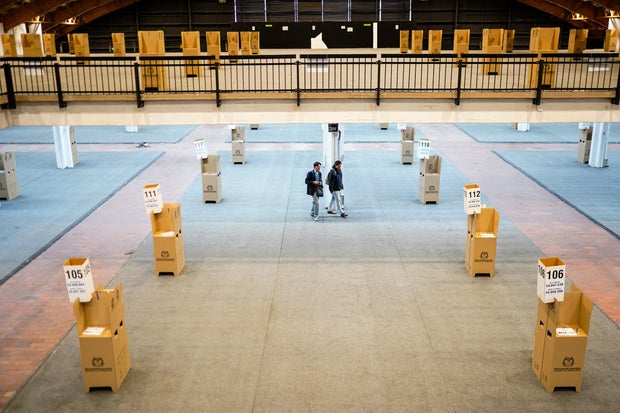
On Sunday, millions in Colombia will vote in a presidential election with high stakes. A new president might be chosen, but no candidate is likely to achieve the 50% needed to win immediately. A runoff on June 21 appears likely between two leading candidates.
Out of 14 candidates, polls indicate a narrow race among three. Iván Cepeda of the Pacto Histórico party represents the far left. He aims to continue President Gustavo Petro’s policies. Abelardo de la Espriella, a lawyer with Trump-like rhetoric, stands at the far right. Paloma Valencia is a center-right senator backed by former President Álvaro Uribe.
An AtlasIntel poll surveyed 4,531 people. It showed Cepeda leading with 38.7%, slightly ahead of de la Espriella at 37.3%, and Valencia trailing at 14.3%. Former Medellin mayor Sergio Fajardo trails significantly. All three front-runners would defeat Cepeda in a runoff, according to the poll.
Cepeda and de la Espriella are expected to face off in a runoff, offering starkly contrasting visions for Colombia’s future.
End violence is a primary concern. Colombia’s citizens, living in poverty near coca fields, endure increased danger from failed peace talks. Over 50 massacres occurred this year, including recent conflicts between guerilla factions resulting in around 50 deaths.
Reports suggest Petro’s peace policies have strengthened armed criminals. The campaign period experienced assassination, bombings, and kidnappings. Security is a top voter concern, second only to healthcare. Candidates offer different solutions to Colombia’s security issues.
Far-right candidate De la Espriella uses pyrotechnics at campaign events. He proposes bombing drug trafficker camps and building maximum-security private prisons. He plans to resume aerial glyphosate fumigation and destroy drug transportation methods.
De la Espriella, inspired by Bukele, dismisses human rights concerns, claiming the left favors criminals over victims. Conversely, Cepeda advocates negotiations with guerillas and cartels. Opponents accuse him of FARC ties, which he denies. He emphasizes a softer approach.
Valencia pushes for increased military and drone surveillance and renewed coca crop fumigation. She criticized de la Espriella’s tactics as a “circus.” Her approach is described as balanced, favoring softer treatment for coca farmers but stronger measures against criminals.
Crime isn’t the sole issue at the polls. Business owners await decisions on minimum wage changes. Voting security remains vital, with documented intimidation by armed groups in rural areas.
In a press conference, Cepeda denounced armed group pressure on voters. He emphasized neutrality despite perceived threats from violent actors linked to right-wing hardliners.
A new president may align with or oppose U.S. operations against narcotics. The Trump administration has conducted strikes against smugglers and collaborated with allies like Ecuador. A right-wing win would bolster U.S. efforts in the region.
Historically, Colombia collaborated with the U.S. on counternarcotics and trade. Relations soured under Petro, facing visa revocation, sanctions, and investigations for alleged trafficker meetings.
Despite record drug seizures claimed by Petro, the U.N. reports increased cocaine production. Mr. Trump threatened action in 2025, citing Colombia’s failed narcotics commitments. Tensions eased following a White House meeting between Trump and Petro.
This election decides Colombia’s path. Republican Senator Bernie Moreno emphasized potential impacts on Latin America. A wrong turn could lead to increased undesirable actor influence, creating regional instability.
 President Trump Praises UK Law Enforcement for Averting Terror Plot
  Senator John Fetterman Discusses Democratic Party and Support for Israel
  Trump’s Public Appearance at the Presidents Cup
  The Impact of Tibet-Nepal Floods and China’s Role
  Concerns Over U.S. Reliability Among Allies
  Pope Leo XIV Calls for End to Medically Assisted Suicide During Lourdes Pilgrimage