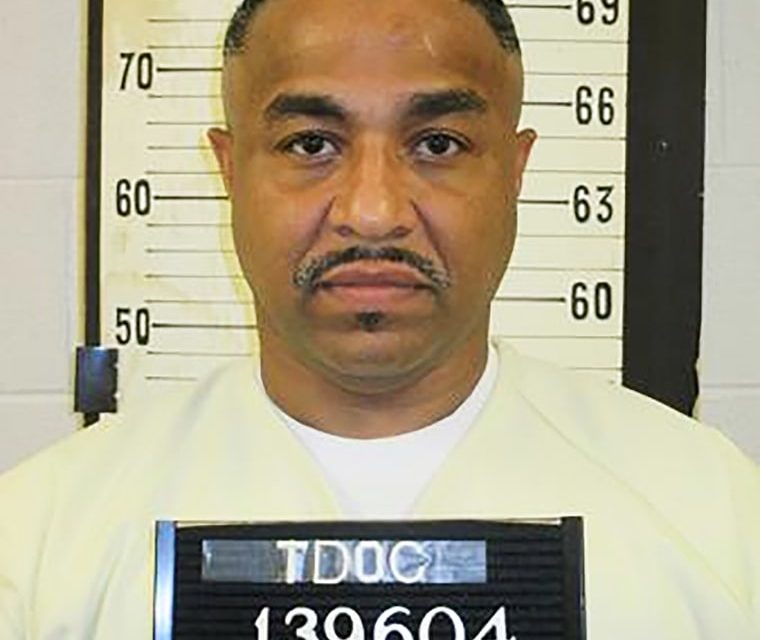
Execution Postponed
The scheduled execution of Tony Carruthers was halted after officials faced difficulties establishing a backup intravenous line. The Tennessee Department of Corrections could successfully place a primary IV line, but struggled with the backup, as required by protocol.
Governor Bill Lee granted Carruthers a one-year reprieve. The Tennessee Department of Correction stated failed attempts to find both a secondary IV and a central line.
Emergency Legal Action
Before the execution was called off, Carruthers’ legal team sought an emergency stay. They raised concerns about difficulties in setting an IV line for the lethal injection. Amy Harwell, a federal defender, confirmed to NBC News that Carruthers was being medically assessed after having left the execution gurney.
Melanie Verdecia, along with the ACLU, criticized the procedures, emphasizing Carruthers’ claim to innocence and the alleged injustice of the process.
Concerns Over Drug Use
Lawyers worried that TDOC might utilize expired drugs in the execution. Despite repeated requests, the department did not confirm whether the drugs were expired. Tennessee resumed executions last year after a three-year pause, following issues with drug testing for purity and potency.
An independent review previously found untested drugs prepared for seven inmates in 2018.
Execution Secrecy
Procedures surrounding executions in Tennessee remain confidential. Difficulties persist in procuring pentobarbital due to objections from pharmaceutical manufacturers. This has led states to buy the drugs at high prices. Documents revealed Tennessee spent $650,000 on related expenses after the moratorium ended. The Attorney General’s office declined to make remarks.
Case Background
Carruthers was convicted in 1996 of the 1994 kidnap and murder of Marcellos Anderson, his mother, and Frederick Tucker. He maintains his innocence, challenging the lack of physical evidence and unreliable informant testimony used in his conviction.
The victims’ buried bodies were found in a Memphis cemetery. Investigators connected Carruthers and Montgomery brothers through informant leads. A blood-stained cloth was among the evidence. The state claimed the kidnapping intended to rob Anderson. Carruthers’ co-defendant, Jonathan Montgomery, died before trial.
Legal Appeals and DNA Testing
Carruthers had several defense attorneys before representing himself, which his current legal team labels ineffective due to alleged mental illness. His representation led to an overturned conviction and a new trial for co-defendant James Montgomery.
Montgomery sought DNA testing, finding no match to Carruthers or Montgomery. A robust male profile not matching the suspects was found on a blanket from the crime scene.
Despite a denied request for DNA testing for Carruthers, Montgomery accepted a plea in 2015, reducing his charges and leading to his release.
 Luis Uribe Convicted for Crimes Against Sex Workers
  Former Cornell Student Files Lawsuit Against University for Alleged Sexual Assault
  Fatal Car Crash Involving Undocumented Immigrant in Grand Rapids
  Prosecutors Oppose Kohberger’s Appeal in Idaho Student Murders Case
  Former Bank CEO Sentenced for Fraud and Sanctions Evasion
  Ohio Murder Trial: Investigators’ Search for Missing Gun