
In 2011, Wisconsin encountered a significant budget deficit. Despite previous tax increases, the state struggled to balance its finances. Governor Scott Walker, a Republican, proposed a strategy to cut funding for local governments and school districts.
A substantial portion of the state’s budget supported these entities. The idea was that local governments, equipped with their own taxing and spending powers, along with elected officials familiar with community needs, could manage more independently. This would enable the state government to control its expenditures.
This approach succeeded. Wisconsin balanced its budget without increasing state taxes or laying off workers. The reduction in state aid did not seem to adversely affect students. Compared to other states, Wisconsin students generally performed better. Since this policy was implemented, the state has maintained stronger fiscal stability.
Walker’s plan, which balanced the budget by cutting intergovernmental transfers, may offer a model for the federal government. However, replicating the entire strategy is unnecessary. Walker’s plan faced protests due to changes in collective bargaining and benefits contributions for government workers, but these issues do not pertain to federal transfers.
Most federal transfers fund programs already executed by states. Increasing state responsibility for these funds could enhance cost-effectiveness. Elected officials at the state level could better address the needs of their constituents.
In 2025, the federal government transferred $1.2 trillion to state governments, accounting for 17 percent of federal outlays. This figure has risen from around 5 percent in the 1950s. Programs from the Great Society era significantly contributed to this increase. Though President Ronald Reagan’s ‘New Federalism’ initiative cut intergovernmental transfers, aid to states grew again in the 1990s and has remained above 15 percent of outlays since 1995.
For fiscal 2024, 68.8 percent of federal grants to states were allocated for Medicaid, a state-administered program. Despite state and local responsibilities for schools, roads, and law enforcement under the 10th Amendment, they receive substantial federal funding.
Over time, Washington has expanded its fiscal influence over state and local activities. State politicians view federal funds as irresistible resources, which led to dependency on an imperfect national government. State revenue from federal funds increased from 22 percent in 1989 to 34 percent in 2024.
States have the authority to tax and issue debt, but both blue and red states treat the federal budget as a financial resource. In New York, ‘Medicaid’ has become a verb in budget discussions. Many states use ‘provider taxes’ to boost federal reimbursements, a strategy shared across the nation.
Congress often defers solutions. Reducing the federal deficit might be eased if states were asked to cover more expenses. While this would present challenges to states initially, astute governors and legislators could view it as a chance to improve local governance. By cutting federal involvement, states could tailor policies to meet local needs more effectively. A decentralized system could calm national politics and empower citizens to govern themselves, aligning with the founders’ vision.
Currently, many states are financially stable, with increased federal aid during the COVID pandemic and rising tax collections. Rainy-day funds are near record levels, and states have lowered income tax rates.
Increasing state responsibility supports long-term fiscal sustainability. States, unlike the federal government, cannot print money and are typically subject to balanced-budget requirements. Their comprehensive budgeting processes necessitate trade-offs, which contrast with the federal tendency to ignore them.
The present system, where the federal government taxes a state’s residents and redistributes funds through state programs, is inefficient. Empowering states would enforce stricter constitutional budgetary limits without requiring constitutional amendments.
 Democrat Gaining Traction in Texas Senate Race
  President Trump Creates ‘AI Force’ Amid Rising Concerns
 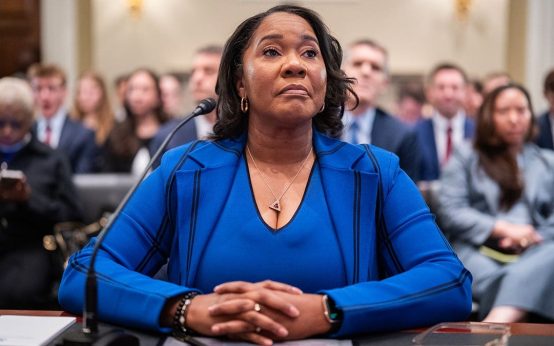 House GOP Continues ActBlue Investigation Over Alleged Foreign Donations
  U.S. and China to Discuss AI Transparency at Washington Summit
 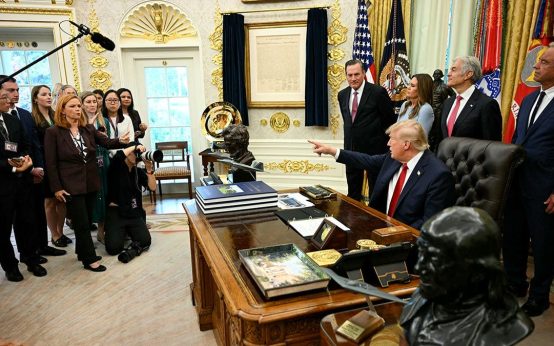 Media Pool Suspends Coverage of Trump After Banning CNN and Others
 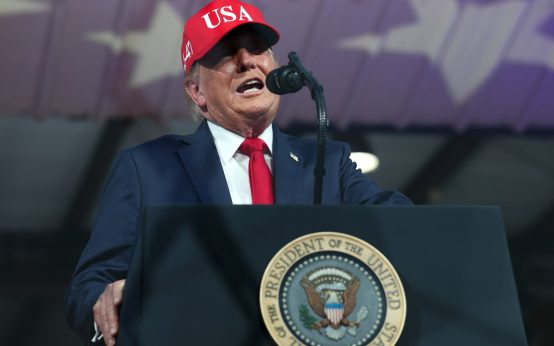 Gen Z Voters: Shifting Political Landscape Ahead of 2026 Midterms