
Neale Mahoney, economics professor, and Chad Maisel, executive director of Project 2029, explore the impact of daily challenges on American life.
Airline Refund Nightmare: A Personal Experience
Recently, we encountered a frustrating ordeal while attempting to secure a promised airline refund. The process involved yelling ‘refund’ into an AI system, enduring prolonged hold music, and navigating between a chatbot and a human agent. What should have been a simple task consumed an entire evening.
Democratic Solutions for Everyday Struggles
As Democrats gear up for presidential campaigns, they promise extensive policy reforms in housing, health care, and corruption. Yet, these leaders often overlook the daily inconveniences that deplete our time and energy.
The frustrations are familiar: extended wait times on hold, cumbersome insurance paperwork, spam communications, and growing transaction fees. We term this the “Annoyance Economy.” Politicians seeking solutions should address these day-to-day challenges.
Statistics Highlighting the Annoyance Economy’s Growth
Over the last two decades, the time Americans spend on hold for customer service has jumped by 60 percent. A study revealed that workers lose nearly $22 billion annually managing health insurance complexities. Undisclosed fees have infiltrated areas of life, from airline tickets to food delivery services.
Tackling Robocalls and Spam Texts
Phones, meant for personal connections, have become repositories for unsolicited messages. Policies should close loopholes allowing marketers and political groups to flood communications and mandate consent for incoming calls and texts. If we placed a man on the moon, tackling robocalls should be achievable.
Streamlining Health Care Paperwork
Health care drains time and energy when managing medical issues. Policymakers should enforce online acceptance of insurance forms and penalize companies failing to update directories. Prior authorizations for medical treatments need reformation, ensuring patients aren’t bouncing between providers for basic care.
Improving Customer Service Interactions
The battle with customer service often includes futile attempts to reach a live agent or escape unwanted subscriptions. Policymakers should simplify subscription cancellations and guarantee consumers can quickly access live assistance. Scheduled callbacks could ease these frustrations.
Confronting Junk Fees
Hidden fees inflate costs unexpectedly during purchases, creating unnecessary financial burdens. Transparency in pricing and banning non-essential charges could eliminate this pervasive issue.
Public Support for Reform
A YouGov poll conducted in 2024 shows high favorability for stricter regulations on robocalls and eliminating hidden fees, with bipartisan support from 77 percent of likely voters. Two-thirds demand congressional action, with half prioritizing it. These views align with widespread frustrations.
Leaders need not rely on focus groups to discern popular topics. Conversations with a few constituents will reveal pressing needs.
Presidential Actions Without Congress
Despite congressional gridlock, reforms can proceed under presidential authority. Companies profit from the Annoyance Economy, while politicians have sidelined it. Addressing these challenges presents an opportunity to demonstrate government’s potential in enhancing everyday life.
The Annoyance Economy’s rectification promises popularity and immediate implementation. It’s a practical, overdue initiative worthy of attention.
The authors’ opinions are their own.
 Trump’s Speech Targets Iran’s Nuclear Ambitions at U.N.
  Impact of Tariffs on Everyday Products
 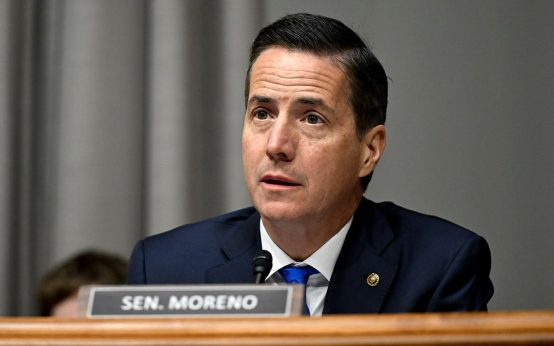 Senator Bernie Moreno Urges DOJ to Address Drug Policy Enabling Forced Abortions
  Karoline Leavitt Offers Insights on Trump’s Calls With Putin and Xi
  Curtis Pushes for Investigation into Trump Jr. and Biden
  Israeli Prime Minister’s Visit to the U.N. Amid Controversy