Juneau, Alaska (AP) — In the realm of Alaska politics, being accused of aligning with the Lower 48
serves as a potent insult. It implies that candidates are following directives from powerful entities in the contiguous United States, instead of advocating for the state’s interests. This theme is prominent in Alaska’s U.S. Senate race, a key contest in determining control of the chamber in the November elections.
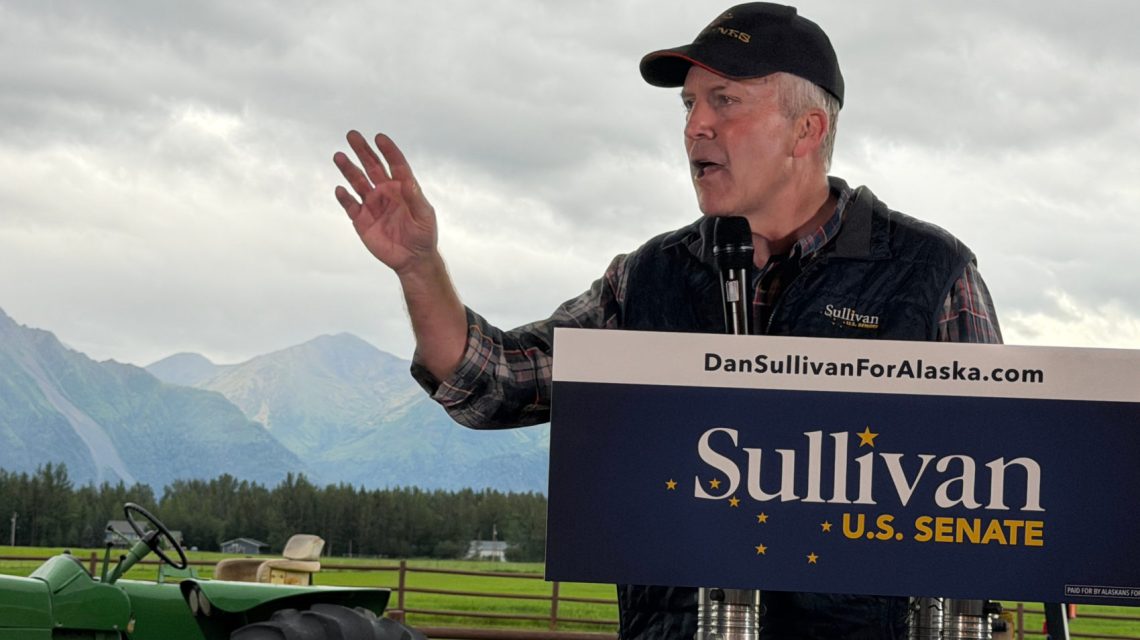
Republican Senator Dan Sullivan’s campaign has centered on this accusation against Democrat Mary Peltola, a former congresswoman. Sullivan categorizes her with Lower 48 liberals
who have opposed the expansion of oil and gas drilling, crucial industries for Alaska’s economy. Peltola, who is Alaska Native, counters that she has challenged then-President Joe Biden, a Democrat, to secure approval for the massive Willow oil project in 2023, which faced opposition from environmentalists. Peltola asserts her readiness to confront anyone, irrespective of party allegiance, who lacks understanding of Alaska’s needs.
Outside perceptions of Alaska as The Last Frontier
reflect its mystique. Alaska became a state less than 70 years ago and is known for its stunning natural beauty, wildlife, and expansive landscapes. Its remote nature fosters a sense of self-reliance among its inhabitants, many of whom hunt and fish to prepare for winter.
Oil and Federal Tensions
Alaska’s rich resources have fueled a complex relationship with the federal government, which controls around 60% of the state’s land. Tensions amplify under Democratic administrations that seek to limit logging, mining, and oil and gas activities due to environmental considerations. Policy shifts are frequent with changes in administration.
The Democratic Obama and Biden administrations have restricted leasing in about half of the National Petroleum Reserve-Alaska, a habitat for caribou, polar bears, and millions of migrating birds. Conversely, the Republican Trump administration rolled back these restrictions, favoring expanded oil and gas development. Efforts supporting lease sales in the Arctic National Wildlife Refuge are part of this initiative.
Federal limitations on road building and logging in locations like the Tongass National Forest, a rainforest in southeast Alaska, have sparked disputes dating back to the Clinton administration. Another point of contention involves Alaska’s share of royalty revenue from oil and minerals on federal land.
Despite a decline in oil production since its peak in the late 1980s, leaders highlight signs of revival, underlined by strong interest in recent lease sales in the petroleum reserve that houses the Willow project.
Economic Impact and Political Claims
Alaska communities suffered from fuel price spikes linked to the Iran war. Remote locations must transport fuel by air or barge before rivers freeze. For residents like Darryl Hugo in Anaktuvuk Pass, oil development remains a vital issue. He supports Sullivan due to oil revenue funding critical local services.
Both Senate campaigns, alongside third-party advocacy, attempt to portray themselves as authentic spokespeople for Alaska. Sewell, an independent voter from Juneau, views Lower 48
criticisms and Peltola’s distancing from national Democrats as efforts to claim legitimacy as Alaska’s true representative.
During her failed 2024 congressional campaign, Peltola withheld endorsement for Democratic presidential candidate Kamala Harris and did not support Trump. Prior to the August primary, Harris offered backing to Peltola, which her campaign declined, avoiding endorsements from Lower 48
figures.
In media appearances, Peltola emphasizes her support for the Willow oil project, stating her willingness to cooperate with Trump, who won Alaska each time he ran. Sewell, a Peltola advocate, accepts her association with Trump despite believing she disagrees with his broader policies.
Alaska Voter Sentiment
With roughly 43% of Alaskans native to the state, Peltola draws on her personal connection to local culture. Her background of fishing on the Kuskokwim River underscores her campaign slogan, Fish, Family, Freedom
, reflecting shared state values.
Sullivan, originally from Ohio, arrived in Alaska in the late 1990s. His career includes roles as Alaska’s attorney general, natural resources commissioner, and assistant secretary of state under President George W. Bush. His campaign emphasizes his dedication to maintaining Alaskan values against Lower 48 liberals
.
The Republican SLF PAC reinforces this theme, portraying Peltola as an outsider whose alignment diverges in Washington. Peltola’s campaign contends that Alaskans will not be swayed by such advertisements. Former lawmaker Halcro questions voters’ appetite for these debates, adding that they may prefer stability in their elected officials.
 Innovative Child Care Plans by Mayor-Elect Mamdani
  Challenges Facing President Trump: Nuclear Issues, Climate Crisis, and AI
  Key Developments in U.S. Politics and International Relations
  Art Collective Strikes with Game Console Installation on National Mall
  Democrats’ Path to Retaking Senate Majority in Red States
  Latest Developments in Politics and Policy