
The contest for Alaska’s lone U.S. House seat is heating up with four candidates set for the November face-off following the rank-choice primary. First-term incumbent Rep. Nicholas Begich III, a Republican from Alaska, is vying to retain his position. However, he is challenged by independent contender Bill Hill.
The Associated Press called the race early for both Begich and Hill. Begich led by 47.9% compared to Hill’s 29.5%. The two will proceed to the general election. Candidates Ed Goldfarb and Clay Strickland, both Republicans, Democrats Eric Hafner and Yaquelin Reynoso, Libertarian John Foddrill, and nonpartisan contenders David Ambrose, Lady Donna Dutchess, David Richey, and Melania Salazar also competed in the primary. William Schultz, a Democrat, withdrew due to financial issues but remained on the ballot.
Despite his withdrawal, Schultz held third place when the race was called. He was followed by Hafner, whom the Anchorage Daily News identifies as a “federal inmate and perennial candidate.” Ballotpedia indicates that Dutchess has frequently run for office with limited support. Hafner is serving a 20-year prison sentence for making false bomb threats and threatening judges and police officers, having been convicted in 2022.
Bill Hill distinguishes himself with his independent campaign. He raised over $1.3 million in 2026, primarily from individual donations. Historical examples show that special election victories do not guarantee long-term partisan changes, as demonstrated by Rep. Nick Begich III, who succeeded his Democratic predecessor Mary Peltola, a former special election winner.
Hill, a lifelong commercial fisherman and member of the Dena’ina Athabascan native Alaskan community, has resided in Anchorage and Fairbanks. He currently lives with his wife in Naknek, a small southwestern Alaskan town of 470 residents. His campaign embraces popular policies from both political spectrums, supporting the Second Amendment, tax cuts, and police, but also advocating for a woman’s right to choose and billionaire tax contributions.
In contrast, Begich has been active against a Biden administration rule limiting oil and gas exploration in the Arctic National Wildlife Refuge. His campaign emphasizes “unlocking Alaska’s resources,” reducing costs, creating jobs, protecting native communities, and border security. He also serves as the Executive Vice Chair of the Congressional Western Caucus.
 Senate Race Shifts Show Democratic Opportunities
  Rising Support for Medicare for All in the United States
  Los Angeles Councilmember Nithya Raman Criticizes Police Chief and Mayoral Opponent
  Trump Comments on French Student Protests
 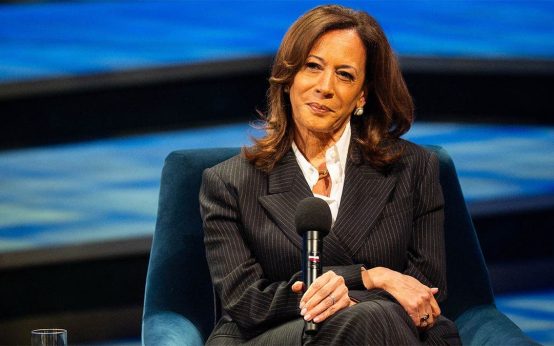 Debate Within Democratic Party on Kamala Harris’s Political Future
  Democratic Hopeful James Talarico Gains Celebrity Support in Texas Senate Race