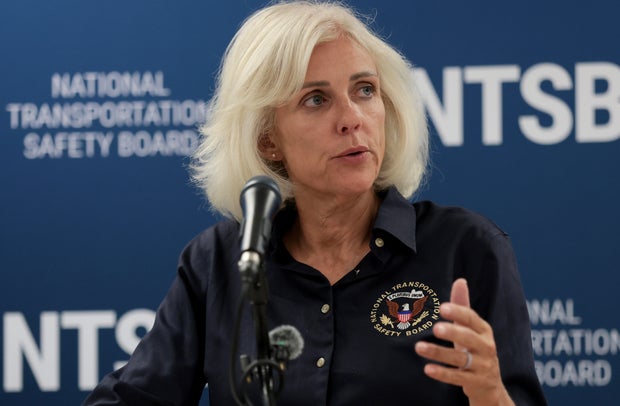
The National Transportation Safety Board (NTSB) updated its investigation on the Amazon cargo plane crash at Miami International Airport. The incident happened on Sunday with five fatalities and injuries to at least five others. All those who died were in the vehicles struck by the plane, noted NTSB Chair Jennifer Homendy. The plane’s flight data recorder and cockpit voice recorder have been recovered.
Details of the Crash
Amazon Air Flight 7598, operated by 21 Air LLC, was a Boeing 767-33 Alpha. It arrived from San Juan, Puerto Rico, after flights from Cincinnati to Miami and Miami to San Juan. The plane overran runway 30, hitting navigational aids and a van belonging to Professional Ocean Service Corporation. The van, which had seven people inside, was stationed inside the airport. The plane also vied through a perimeter fence and collided with a Toyota Corolla Cross LE on Northwest 67 Avenue. It ultimately stopped near Tesla robotaxis. The runway excursion extended about 1,300 feet past the runway surface.
Rescue and Response
Two injured individuals were taken to Jackson Memorial Hospital, with others taken to Jackson’s Ryder Trauma Center in critical condition. Quick action from first responders received commendations from local leaders for their 30-second response time.
NTSB Chair Homendy described the crash site as having extensive damage and debris from both vehicles and aircraft. Witnesses noted the alarming smoke and flames. CBS News Miami attempted to contact the owner of the impacted van, but there was no comment.
Investigation Insights
The NTSB is examining flight recorders and using other data sources to gather additional speed data. A team of 32 people remains on-site, but full access to the plane is restricted while fuel removal occurs. Several investigative groups will work on areas including human performance, airplane systems, and air traffic control.
Homendy raised the question of whether an Engineered Materials Arresting System (EMAS) could have prevented the crash. EMAS, made from crushable materials, is designed to stop aircraft that overrun the runway, though not mandatory everywhere.
Focusing on Safety
The investigative process will also consider the relationship between Amazon and 21 Air, scrutinizing contract details and safety provisions. The plane’s manufacturing date in 1994 implies age and ownership history will also be examined. Homendy made clear the purpose is to gather evidence at this stage, without determining probable cause, and plans another briefing for Tuesday. The NTSB seeks photos or videos related to the crash at [email protected].
 Union Workers Parade on Labor Day in Wilmington Amid Concerns
 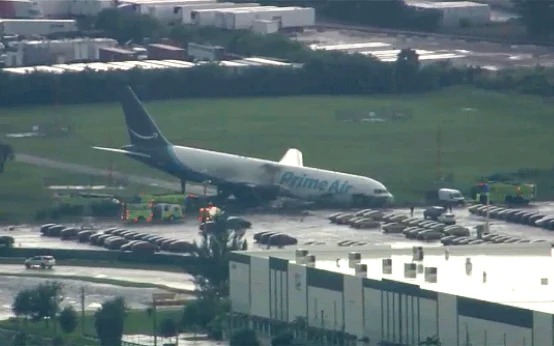 Amazon Cargo Jet Crash at Miami International Airport
 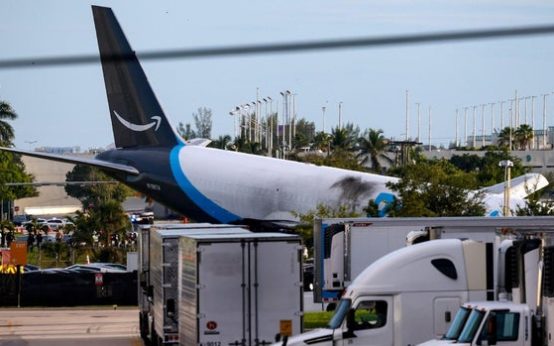 Investigation Underway After Fatal Amazon Cargo Plane Crash in Miami
 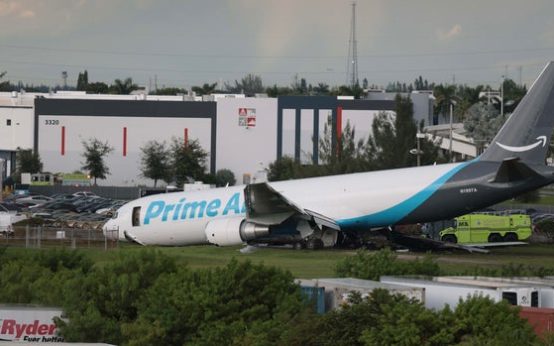 Fatal Cargo Plane Crash at Miami International Airport
 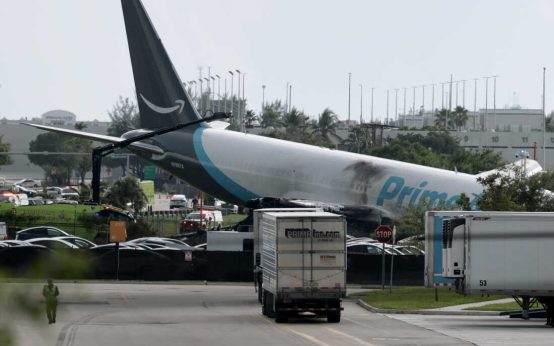 Amazon Cargo Plane Crash at Miami International Airport
  Explosion at Mexican Festival Causes Fatalities and Injuries