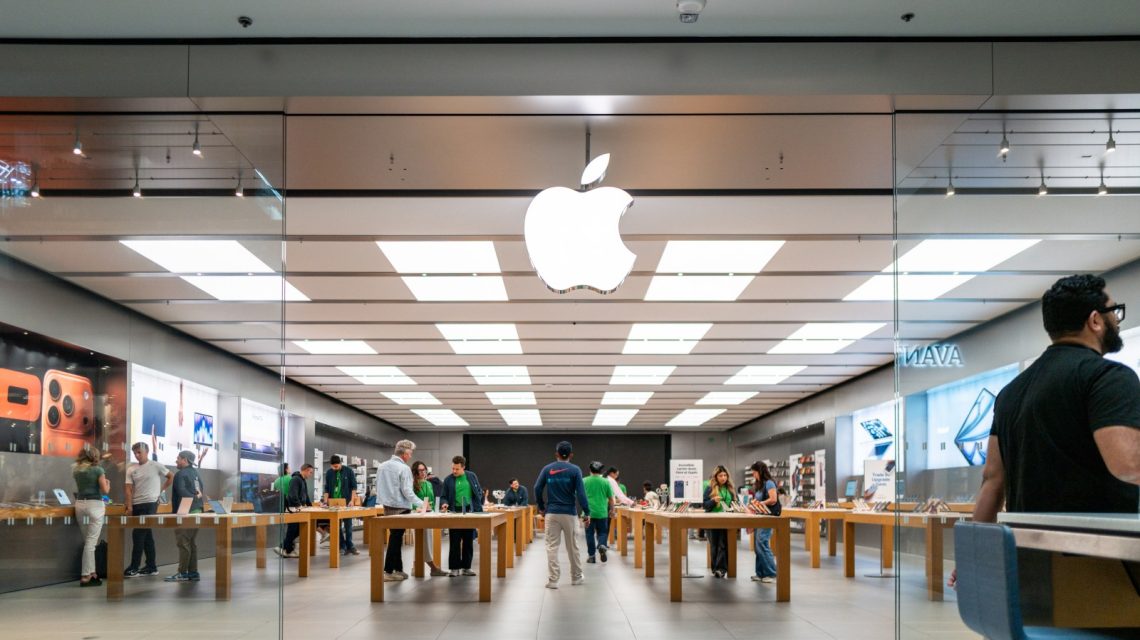
Apple has successfully recovered billions from recently annulled tariffs, but it’s doubtful that this financial boost will benefit its customers directly. On Thursday, Apple unveiled its third-quarter results, surpassing Wall Street predictions for both revenue and earnings per share. CEO Tim Cook declared it their “strongest June quarter ever.”
The company reported a $15 billion increase in net sales for the period ending June 27, alongside an enhanced quarterly net income of $29.8 billion. They revealed that diluted earnings per share rose 29% to $2.02, which included a beneficial influence of $0.11 from tariff refunds.
Analysts expected an EPS of $1.89 with revenues around $109 billion, implying the rebates significantly contributed to Apple’s forecast-exceeding performance. The company also noted a 2% gross margin rise for the quarter, solely due to the refund.
AppleInsider and the BBC estimated the total refund at $2.2 billion or $1.1 billion, respectively, while CNBC’s calculations indicated that, without the rebates, Apple’s earnings would have matched forecasts.
Newsweek reached out to Apple for comments via email on Friday.
Extent of Tariff Refunds
In February, the U.S. Supreme Court nullified much of the tariffs imposed by President Donald Trump, ruling that they were applied under an excessively broad interpretation of the 1977 International Emergency Economic Powers Act. Estimates from customs officials show that approximately $166 billion was spent on these invalidated duties by around 330,000 importers, which the government now needs to refund.
By late June, Customs and Border Protection had approved refunds exceeding $100 billion, although a notable portion remains suspended due to legal disputes, with appeals to avoid reimbursing certain finalized entries. Recent Treasury Department figures reveal nearly $80 billion in rebates have been disbursed this year, including $49.2 billion in June alone. However, the Cato Institute states that approximately $100.7 billion in duties is still owed.
Apple’s Approach to Tariff Challenges
According to CNBC, Apple paid around $3.3 billion in Trump-imposed tariffs. Unlike some companies, Apple never publicly indicated that these tariffs could inflate consumer prices. Instead, Apple focused on lobbying for exemptions, diversifying supply chains, and accepting lower margins, rather than raising retail prices.
Apple’s approach to securing tariff refunds also differs from other major corporations, which pursued legal avenues through the Court of International Trade. CEO Tim Cook expressed Apple’s intent to adhere to the “established process” for rebate claims. Cook emphasized during an April earnings call that all refunds would be channeled “back into U.S. innovation and advanced manufacturing.” On Thursday, he reiterated that Apple would reinvest the tariff refunds into the U.S., contributing to its $600 billion, four-year American investment plan.
Conversely, companies like Costco, UPS, and FedEx have committed to sharing rebate benefits with customers, who often absorbed tariff costs through higher prices. In May, Walmart CFO John David Rainey stated that their refund strategy would “prioritize price investment.”
 Congressional Inaction Amid AI Concerns
  Rising Demand for Data Centers Driven by AI Development
  Understanding AI’s Impact Compared to Historical Threats
  Debate Over AI’s Governance Amidst Fearful Predictions
  Navigating AI Responses: A Personal Experience with Google’s New Approach
  Concerns About AI Responses in Health Information