
The fluctuations in oil prices have been significant since the U.S.-Israeli military actions against Iran in early 2026, followed by Iran’s control of the Strait of Hormuz. This has intensified the focus on different energy sources, with some advocating for fossil fuels and others for renewable energy such as solar and wind. However, both are essential.
Similarly, China plays a major role in the global refining of critical minerals used for solar panels and manufactures a significant portion of lithium-ion batteries. U.S. shale oil production is reaching a plateau, and the future of energy post-transition is critical. The shale revolution marked a peak in American energy innovation, where advancements in horizontal drilling and hydraulic fracturing enabled the U.S. to lead in global oil and gas production. This contributed to economic recovery, strengthened geopolitical standing, and reduced emissions by replacing coal with natural gas in power generation.
Nonetheless, the finite nature of shale resources means production will eventually decrease. Extending shale production will require bipartisan reforms and investment in advanced technologies, such as enhanced recovery techniques and optimized drilling processes, along with improved permitting for energy projects.
As shale production wanes, some propose a shift to renewables like solar and wind. While wind and solar can complement other energy sources, they have limitations related to land use and the need for rare earth elements predominantly processed in China. Relying heavily on these technologies risks increasing dependency on China, which is not beneficial for the U.S. or Europe.
A resilient energy system relies on being affordable, reliable, and secure. Natural gas provides low-emission electricity while supporting industrial growth, and advanced nuclear energy offers consistent carbon-free power. The future may also benefit from geothermal systems that offer reliable low-emission electricity. These technologies should be seen as complementary to solar and wind.
The U.S. must pursue an energy strategy driven by innovation rather than ideology. This includes extending the responsible use of oil and gas while investing in nuclear, geothermal energy, and grid modernization. Additionally, rebuilding domestic mining and manufacturing capabilities ensures independence from geopolitical rivals. Energy security involves using a diverse range of fuels to maintain competitiveness across the entire energy sector.
If China continues to dominate material and technology manufacturing, the U.S. could lose its hard-earned security advantages from previous innovations. Avoiding a China-led energy future requires bipartisan support for innovation, science, and pragmatic policies akin to those that facilitated the shale revolution. The time bought by shale should be used strategically.
Scott Tinker is professor emeritus at the University of Texas-Austin. He hosts “Energy Switch” on PBS nationwide, and “Earth Date” on public radio weekly in all 50 states.
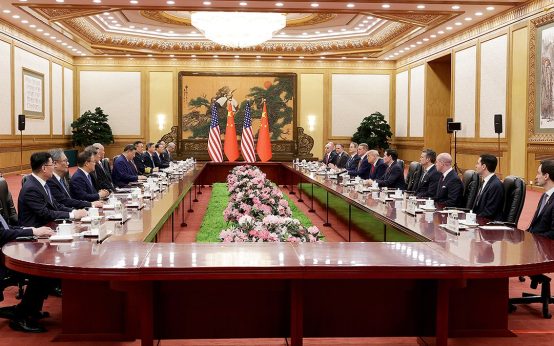 U.S.-China Tech Rivalry and the Battle for AI Dominance
  Protecting Your Finances from Increasing Cyber Threats
  Nvidia CEO Jensen Huang Talks AI, U.S.-China Competition, and Data Centers
  Legal Battles Over Sports Betting and Addiction Claims
  Concerns About Rapid Advancements in Artificial Intelligence
  Leading AI Companies Face Antitrust Lawsuit for Alleged Coordination