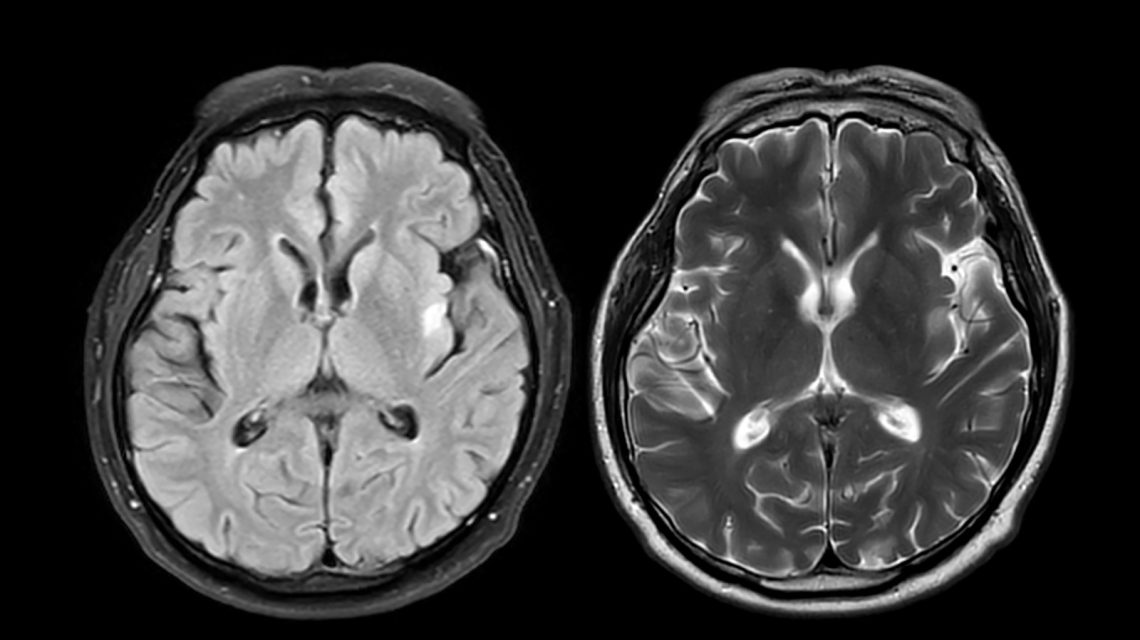
A new brain scan tool could improve predictions of how quickly early-onset Alzheimer’s disease progresses from mild cognitive impairment to dementia, according to recent research. Early-onset Alzheimer’s, which occurs before age 65, typically begins with mild cognitive impairment (MCI). MCI involves memory and thinking difficulties that are noticeable but fall short of dementia severity.
Researchers aimed to determine if brain shrinkage patterns predict progression speed from MCI to dementia. They developed the early-onset Alzheimer’s signature brain scan tool, which assesses atrophy in gray matter regions linked to thinking and memory. This tool focuses on eight specific brain areas, including parts of the parietal and temporal cortex.
Participants included 130 individuals with MCI living independently alongside 97 healthy counterparts, aged 40 to 64. All underwent MRI scans at the study’s start and had at least one annual follow-up over an average period of two years. Findings revealed that 65% of those with early-onset Alzheimer’s moved from MCI to dementia during this time. Greater gray matter shrinkage was tied to faster disease progression. Each increase of one standard deviation in shrinkage raised the risk of transitioning from MCI to dementia by 1.24 times.
The biomarker predicts progression more effectively than symptom evaluation alone. Lead researcher Alexandra Touroutoglou of Harvard Medical School highlighted that patients often ask about the timeline for losing independence. Current prediction methods for early-onset Alzheimer’s progression are limited, but this biomarker may function as a “timer,” assisting doctors in estimating dementia onset and progression speed.
Dr. Ronald Schwartz from Masonicare emphasized the tool’s potential. He noted the challenges in reliably predicting progression for individual patients with significant variability in clinical presentation. A reliable forecasting tool could aid in patient and family expectations and planning decisions regarding work, finances, and future care needs. Schwartz also stressed that this tool should enhance clinical conversations, not act as a definitive predictor.
The biomarker acts as a map of brain regions prone to shrinkage in early-onset Alzheimer’s, allowing researchers to apply this map to MRI scans and estimate progression speed. However, the biomarker’s development and testing have only involved a single study group, primarily non-Hispanic White participants. Its applicability to other populations remains unverified.
Future studies must address specific questions before widespread clinical adoption, including prediction accuracy across different demographics, disease stages, and clinical presentations. Moreover, researchers should ascertain whether these predictions improve patient care and family decision-making. Measuring gray matter shrinkage through MRI scans may enhance understanding for doctors and families, yet broader testing is essential.
 Musician’s Health Journey with Mitral Valve Regurgitation
  Supporting Strength Through Pregnancy Loss and IVF Challenges
  Challenges Remain Despite Decline in Global Hunger
  Importance of ECG Screenings for Student Athletes
  Rising Numbers of Young Women Forgo Cervical Cancer Screening
  RFK Jr. and the Controversy Over Measles Deaths in Pennsylvania