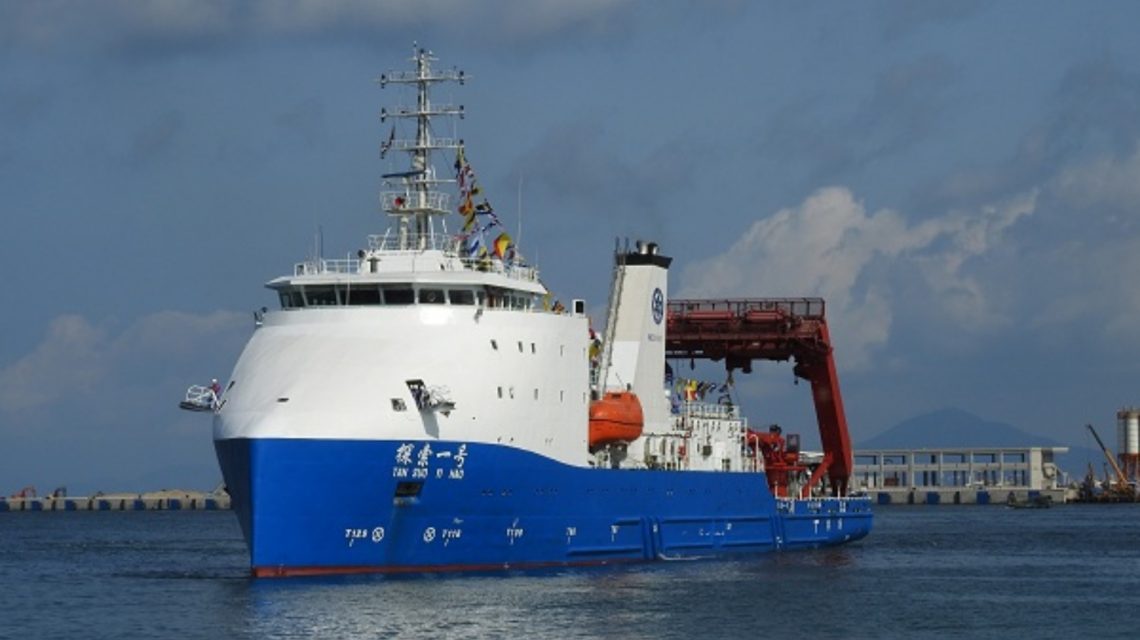
A Chinese research vessel has been observed hovering over undersea cables connecting the United States with Taiwan and the Philippines. Analysts suggest this behavior aligns with intelligence gathering activities.
The maritime analysis platform Windward monitored the 200-foot, China-flagged vessel moving at slow speed over the Pacific Light Cable Network. This is an 8,000-mile trans-Pacific fiber-optic cable system located in the Philippine Sea.
The vessel’s activity occurs amidst sustained Chinese pressure on Taiwan, which is self-ruled and a key trading partner of the U.S. Taiwan also produces over 90 percent of the world’s most advanced microchips. Despite Taiwan’s autonomy, Beijing asserts its claim over the island and has indicated potential forceful reunification.
Chinese officials have denied accusations of intentionally damaging undersea cables by Chinese ships. They have also accused Taiwan and certain Western administrations of hastily forming conclusions before investigations concluded. Newsweek sought comments from Windward and the foreign ministries of China and Taiwan via email.
Signs of Intelligence Gathering
Windward stated, “Slow-speed movement over critical undersea infrastructure is one of the clearest behavioral signals in maritime intelligence. Cables don’t move. Vessels that hover over them get noticed.” Submarine cables are essential for about 99 percent of intercontinental internet traffic.
Though the report obscured the ship’s name and identifying MMSI, Windward noted the same vessel’s repeated operations in areas such as the Paracel Islands, disputed by China and Vietnam, and the Spratly Islands, which involve territorial disputes with the Philippines and other governments. The ship has also been tracked near the Bay of Bengal and off the coast of Sri Lanka.
The cable became a geopolitical point of contention in 2020 when U.S. regulators blocked a planned connection to Hong Kong due to concerns over potential data exposure to Chinese intelligence. Consequently, the project was restructured to link only the U.S., Taiwan, and the Philippines.
The Chinese government has been suspected of using civilian research vessels for intelligence purposes and surveys within neighboring countries’ maritime zones. Information collected by these vessels can be shared with the People’s Liberation Army under Beijing’s military-civil fusion policy.
China’s Increased Pressure on Taiwan
Chinese vessels have been implicated in several cable incidents in recent years, including suspected sabotage in the Baltic Sea and cable damage around Taiwan. The presence of a Chinese survey ship over critical undersea cables comes at a sensitive moment concerning relations between Beijing and Taipei.
China has intensified its pressure campaign against Taiwan, which has a government skeptical of Beijing. This includes near-daily military flights across the median line of the Taiwan Strait and increased coast guard patrols near Taiwan’s Kinmen Islands.
Since June, Beijing has sent coast guard and research vessels into waters east of Taiwan. Analysts interpret this as an attempt to normalize China’s presence in areas previously considered part of Taiwan’s strategic rear.
Newsweek editors on this story: Frances Mao and Shakeema Edwards.
 Ontario Synagogue Shooting During Yom Kippur Leaves One Officer and Shooter Injured
  Pope Leo XIV’s Upcoming Visit to Latin America: An Overview
  Ukraine Deploys Ground Robots in ‘Operation Vivaldi’
  Understanding AI’s Impact Compared to Historical Threats
  State Department Alerts on Middle East Travel Amid Rising Tensions
  Iran’s Attacks on Bahrain: The Impact on Military Families