
The Democratic Party faces ongoing tension between its progressive and establishment wings. This divide was highlighted by Hillary Clinton’s recent comments criticizing the reluctance of the far-left to align consistently with establishment Democrats. She emphasized that Republican attacks targeting hard-left socialists could be highly effective.
In an interview on the ‘Pivot’ podcast with Kara Swisher, Clinton addressed the internal struggle within the Democratic Party. Swisher noted that the GOP has learned to capitalize on these divisions. Clinton remarked that the Democratic Party, unlike its Republican counterpart, consists of a broad cross-section with diverse beliefs and experiences, which she sees as an advantage. However, winning elections remains crucial.
Clinton pointed out the necessity for Democrats to support Michigan Senate candidate Abdul El-Sayed, a progressive, to defeat Republican opponent Mike Rogers. She also noted the importance of re-integrating supporters of the defeated Haley Stevens, who had been previously criticized by El-Sayed’s supporters.
2026 Midterms Key Races: El-Sayed vs. Rogers in Michigan
Clinton stressed that supporting candidates should not be a “one-way street.” When progressive candidates lose, Clinton argued, there is often reluctance to support the chosen nominee. She referenced hesitation around Kamala Harris and her own past nomination as examples.
She insisted the party must engage in conversations to bring other supporters over, especially to persuade independents and Stevens supporters. Mike Rogers has already shown openness to Democratic voters, indicating there remains hope for collaboration.
Clinton also remarked on Republican strategies branding opponents as “communists” or “socialists.” She noted such tactics appear effective, though they did not halt Zohran Mamdani’s rise as New York City Mayor.
Clinton emphasized the need for progressives to make moderates feel welcome when they pivot to support progressive nominees, underscoring the necessity of unity to defeat Republicans.
James Carville, a strategist instrumental in Bill Clinton’s 1992 election, stated that the 2028 primary would test the far-left’s influence within the party. He warned he might leave the party if extreme figures like Hasan Piker gain prominence.
 Karoline Leavitt Offers Insights on Trump’s Calls With Putin and Xi
 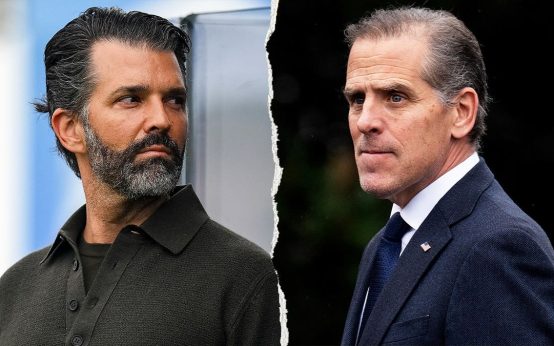 Curtis Pushes for Investigation into Trump Jr. and Biden
  Israeli Prime Minister’s Visit to the U.N. Amid Controversy
  Reader Perspectives on Social Security Reform and Competency-Based Degree Programs
  Republicans in Battleground States Urge End to Iran Conflict
  The Role of Consumer Choice in Restaurant Industry Dynamics