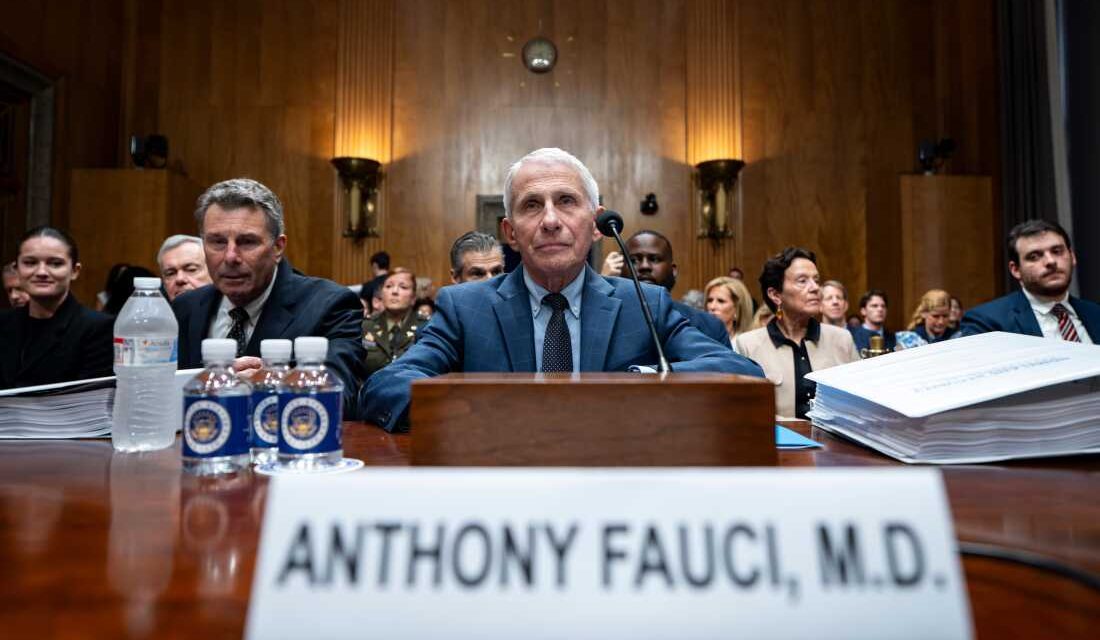
Anthony Fauci, the former director of the National Institute of Allergy and Infectious Diseases, faced a tense session at the Senate Homeland Security and Governmental Affairs Committee hearing in Washington, D.C. He repeatedly invoked his Fifth Amendment rights, refusing to address questions regarding the origins of the COVID-19 pandemic. Sen. Rand Paul, R-Ky., has threatened to hold Fauci in contempt for his defiance, amplifying claims that Fauci covered up a supposed lab leak origin of the virus—a charge he strongly denies.
These developments have sparked concern among Democrats, health workers, and researchers, who fear a negative impact on public health staffing and infrastructure. Andy Kim, D-N.J., voiced worry over the effects on future public servants. He emphasized the risks of demonizing those leading public health efforts, stating, “These firings and these cuts—they’re creating a chilling effect, honestly.”
Public health professionals assert that the events unfolding signal a broader deterioration of the field. Epidemiologist Katelyn Jetelina reflected on the country’s efforts to heal from COVID-19, arguing that recent actions have reopened deep societal wounds.
Katelyn Jetelina: “I thought that we were healing as a country around COVID-19. I think what yesterday did was open some really deep wounds.”
Health Freedom and Public Resistance
The pandemic witnessed a rise in the movement of ‘health freedom,’ where individuals rejected medical treatments and public health interventions. Nicole Huberfeld, a Boston University professor of health law, noted that objections to vaccination were often rooted in religious or moral grounds, not empirical evidence. Pandemic-related measures like masking and social distancing faced swift opposition, primarily during the Trump administration. Interest fluctuated under Biden and peaked again during Trump’s subsequent tenure, as political leaders influenced public sentiment.
Huberfeld highlighted that this week’s hearing contributed to devaluing the public health sector. She warned that undermined trust and public confidence complicate the future of healthcare delivery.
Huberfeld: “I think these hearings play into a larger picture, which is that the field of public health has been devalued significantly by leadership right now. And that devaluing will make it much harder to do the work of public health and will make it so that the public doesn’t trust public health professionals.”
The Impact on Public Health Outcomes
Dr. Georges Benjamin from the American Public Health Association is alarmed by repercussions already seen in public health outcomes. According to him, events like these deteriorate the ability to respond to health crises.
Nicole Huberfeld asserted that recent financing cuts to healthcare, exacerbated by current circumstances, will likely lead to increased disease incidence and preventable deaths.
Huberfeld: “I do think there will be more illness and injury, which leads to preventable death.”
Challenges and Future Risks
Benjamin emphasized the importance of public health professionals providing evidence-based advice to lawmakers, noting how fear of career threats might hinder their openness in vital discussions. Katelyn Jetelina, adjunct professor at Yale School of Public Health, shared concerns about dwindling enrollment numbers, citing challenges faced by those entering the field.
Facing public scrutiny and safety threats marks a drastic shift for scientists, propelling difficult career considerations. The vilification of figures like Fauci makes healthy career prospects less attractive, considering discussions surrounding the next emergency are ongoing.
Jetelina proposed creating platforms for health professionals to actively engage with communities to cultivate trust. She suggested forming a COVID-19 commission akin to a 9/11 review to prepare for future crises.
Jetelina: “People are demanding a far more participatory approach.”
Benjamin warned that challenging scientific credibility weakens national health security, increasing susceptibility to pathogens and pandemics.
 Understanding Rising Stroke Rates in Younger Populations
  Julie’s Sudden Medical Emergency: A Brain Aneurysm Case Study
  Growing Support for Government-Run Health Insurance Revealed by New Poll
  Resilience: Preparing Health Systems for Unexpected Crises
  President Trump to Discuss Health Alert with Putin Amid Pneumonic Plague Concerns in Siberia
  Barriers in Affording GLP-1s in America