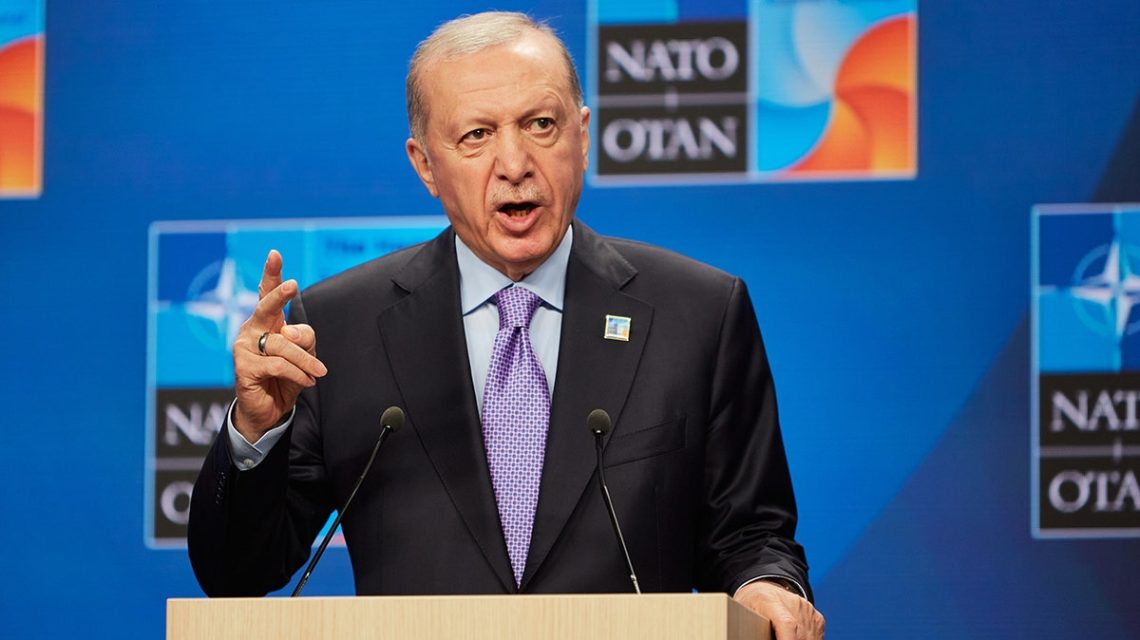
The United States State Department has criticized a recent maritime agreement between Turkey and Libya. The Eastern Mediterranean deal has caused significant upset among several countries, as it alters established sea borders in a region rich with potential gas resources.
In mid-October, the Eastern Libyan parliament, led by Khalifa Haftar, endorsed this maritime pact with Turkey. This agreement bypasses the internationally recognized Libyan government in Tripoli. A U.S. State Department spokesperson commented, “The ratification of the Turkish-Libyan delimitation memorandum has heightened regional tensions and is both unhelpful and provocative. Our stance remains unchanged.”
The spokesperson further stated, “We urge all nations, including those in the Eastern Mediterranean, to address maritime disputes through sincere negotiations and to avoid provocative actions. As Greece and Türkiye are both NATO allies, we encourage bilateral engagements to resolve disagreements. Peaceful resolutions can pave the way for beneficial commercial investments in the region.”
According to the Turkish news agency Anadolu, Turkish Foreign Minister Hakan Fidan described the maritime agreement as “entirely legitimate” and compliant with international laws. Despite international criticism, Fidan insisted the agreement stands on legal and political grounds.
The Greek Minister of Foreign Affairs, George Gerapetritis, publicly challenged the agreement, stating, “The memorandum holds no legal effect as it contradicts international law.” He accused Turkey of attempting to extend its influence in Libya to forward its own interests.
Endy Zemenides, from the Hellenic American Leadership Council, expressed concerns over the potential impact on U.S. security interests, explaining, “This memorandum infringes on U.S. companies and denies maritime rights near Crete, a strategic NATO base.”
The European Union has expressed a strong stance against the agreement, stating it violates maritime law and encroaches on the rights of other states. “The Türkiye-Libya Memorandum is null and void,” affirmed the EU.
Israel, allied with Greece and Cyprus, also condemned the pact. Israel’s foreign ministry described the agreement as disruptive to the region’s stability, citing it as an infringement on the rights of allies.
The situation remains a complex geopolitical issue with various nations voicing their positions and concerns.
 President Trump Comments on Jensen Huang and Chinese Spy Concerns
 Pope Leo XIV and His Unique Role in U.S. Elections
 Colombia’s President Leads Aggressive Anti-Cartel Campaign
 Cyberattacks on South Korean Banks Expose Thousands
 The Campaign for Pardoning Maidstone’s Convicted Witches
 United States and Canada Warn of Terror Threat in Moscow