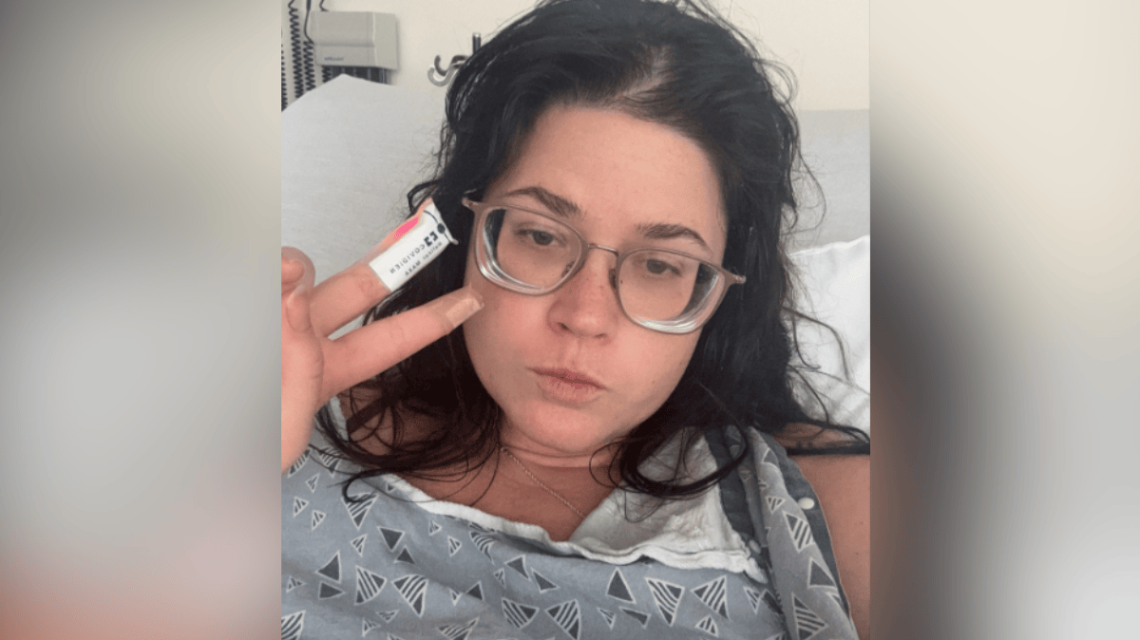
Destiny Amos, a resident of Jacksonville, Florida, initially visited the emergency room due to dizzy spells and brain fog, suspecting it was related to low blood sugar. However, the CT scan she had revealed unexpected findings.
Amos couldn’t pinpoint the exact start of her symptoms, but she noticed a significant increase in June. “I began experiencing dizziness, a feeling of swaying while stationary, persistent brain fog, pressure in my head’s lower left area, and numbness on the left side of my face,” Amos shared with Newsweek. She also felt unusually anxious, sensing something was seriously amiss within her body.
Matters reached a critical point one night when Amos awoke, disoriented and unable to recognize her surroundings.
“I was unsteady, dizzy, nauseous, and felt my heart was pounding,” she recalled. Her mother promptly called 911, resulting in her emergency transport to a nearby hospital.
Upon meeting her doctor, Amos described her symptoms as akin to “episodes of low blood sugar.” She suspected a link between her dizziness and nausea to previous blood sugar issues. Consequently, her doctor ordered CT scans of her abdomen and brain.
The results, as Amos recounts, shed light on her ailments: “The scan revealed a suspected 3 cm meningioma in the posterior fossa region of my brain, pressing against the cerebellum and causing mild mass effect,” she shared with Newsweek.
Meningiomas, tumors forming in the brain and spinal cord membranes, are typically noncancerous but represent the most common type of primary brain tumors in adults, making up 30 to 40 percent of cases in the U.S.
Women face a higher risk of meningiomas than men, especially as they age, according to the American Brain Tumor Association. These tumors develop not from brain tissue but from the meninges, the three thin layers covering the brain and spinal cord.
Following the scan, Amos was relocated to a larger hospital for an MRI to gain a clearer tumor view. She remained hospitalized for a month before undergoing surgery.
“I never had time to fully come to terms with the diagnosis because I never left the hospital,” Amos explained. “I felt shock and fear, yet suddenly many symptoms and experiences over the years started making sense.”
Throughout the years, Amos had symptoms attributed to anxiety, low iron, or thyroid problems. These included intense fatigue leading to prolonged sleep, blurry vision, heat intolerance, brain fog, pressure headaches, pins and needles in limbs, occasional numbness, forgetfulness, and clumsiness.
“I learned that a posterior fossa tumor near the cerebellum can impact coordination and balance and affect pathways involved in alertness and stress responses,” she said. It remains uncertain if the tumor caused all symptoms, yet its presence clarified a potential neurological involvement.
“Preparing for brain surgery was overwhelming, but finding an explanation also brought relief,” Amos expressed.
She underwent surgery on August 24, during which doctors partially removed the calcified tumor, indicating its prolonged presence. The surgeon confidently achieved complete removal. Biopsy results confirmed its benign nature, offering encouraging news.
Amos’s recovery, described as “a slow process,” allowed her to recognize the blessing in the surgery’s complications-free outcome.
“Sometimes concentration and short-term memory are challenging. I experience nerve pain around my incision, ear ringing, and headaches,” she described. “Some days, I feel progress, while others might seem like setbacks.”
Doctors assure her that within three months, she should feel more like herself. Processing the rapid sequence of events remains challenging for Amos.
“I occasionally have emotional moments, especially when overwhelmed by recent developments,” she shared.
Connecting with others who underwent brain surgery has been reassuring. Amos is hopeful that by sharing her story, she can offer comfort to others facing similar experiences.
“I’m still healing and learning, but if my story helps someone feel less frightened or isolated, it’s worthwhile,” Amos emphasized.
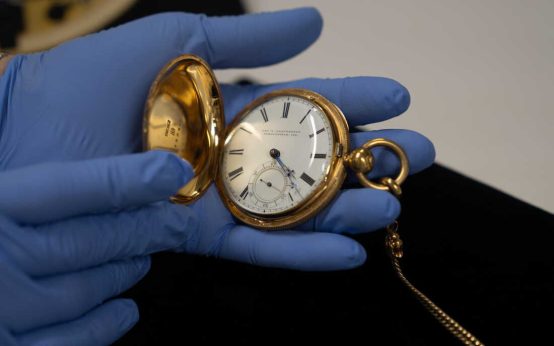 Abraham Lincoln’s Historic Pocket Watch and Its Secret Inscriptions
  Harriet Hancock: A Pioneer in LGBTQ+ Advocacy in South Carolina
  Los Angeles Forecasted to Experience Unusually High Temperatures
  Notable Events in Chicago’s History on October 3
  Record Number of Native American Candidates in Elections
  San Francisco 49ers Face Controversies Despite Strong Start to Season