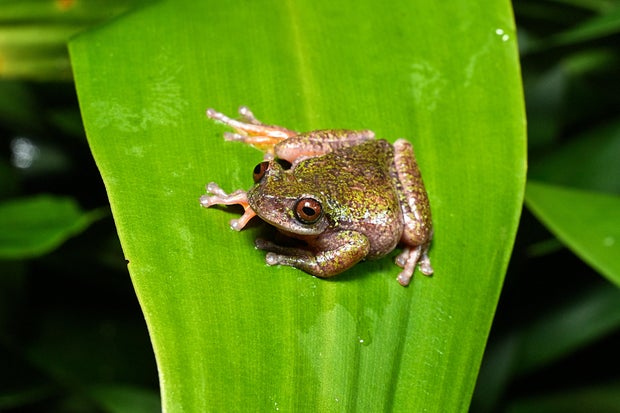
A small, greenish nocturnal frog known for living in coffee plantations has been identified in Costa Rica’s central Pacific area. Despite its discovery, this frog, less than 4 centimeters long, faces threats from agricultural chemicals used in the region.
This new species, referred to as the “spring frog,” was spotted in San Lorenzo de Tarrazu. It has dark green spots, and researchers highlight its uniqueness. “It’s a new species of tree frog for science and endemic to Costa Rica,” said Wagner Chaves-Acuna. This finding comes from collaboration between the University of Costa Rica and Argentina’s National Council for Scientific and Technical Research.
The “Rana de las nacientes” (Isthmohyla nacientes) was first seen in the 1960s, yet initially misclassified. Rediscovery and confirmation followed in 2021, thanks to genetic and morphological studies conducted by the Costa Rica’s National Alliance for the Conservation of Amphibians and Reptiles (ANCAR).
Also known as the “coffee frog,” males of this species possess a translucent throat that expands when they emit a short, high-pitched call. Chaves-Acuna adds, “At night, when they are most active, you can hear them singing and perched on coffee shrubs.” These frogs thrive by seeking out shade, moisture, and insects; they do not consume the coffee berries.
Environmental threats such as pesticide use on coffee plantations could impact these frogs. “These poisons travel through the air and seep into the soil, entering the aquatic systems where tadpoles develop,” warns Chaves-Acuna. Other dangers include waste dumping, growing tourism, and vegetation loss due to encroachment on protected lands, ANCAR emphasizes.
 Transitioning from Pig Farming to Mushroom Production in Iowa
  Tropical Storm Polo Threatens to Impact Southern California
  Preparing for California’s Super El Niño
 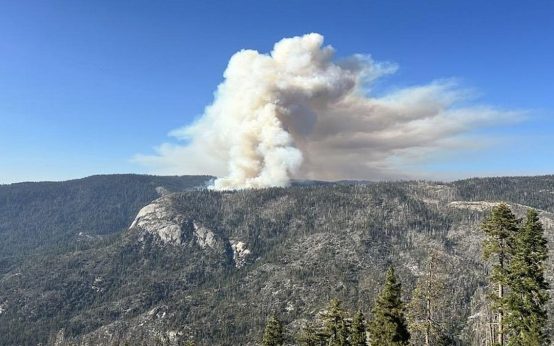 Helicopter Crash Claims Lives of Two Firefighting Pilots in Yosemite
  The Discovery of Incendiamoeba cascadensis: A Fire Amoeba
  Archaeological Discovery in Germany: Largest Hoard of Roman Coins Found