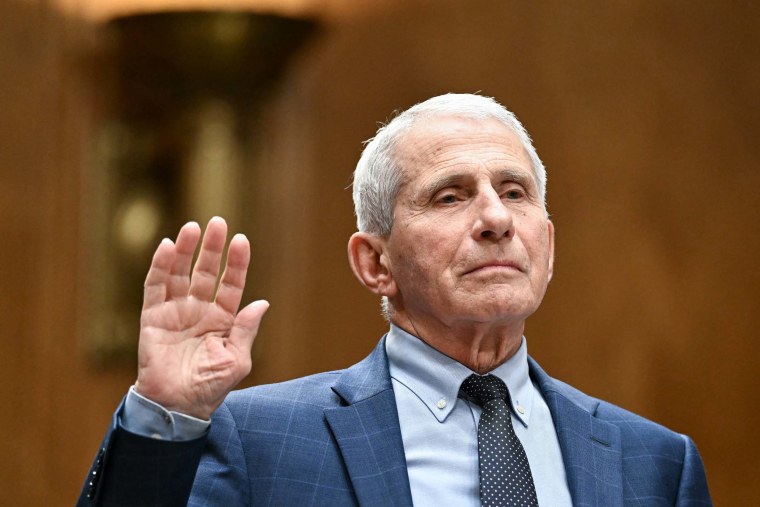
Dr. Anthony Fauci, a central figure in the government’s pandemic response, declined to answer questions at a Senate hearing on the origins of COVID-19 and federal actions during the pandemic. He stated he would utilize his Fifth Amendment right due to concerns that Republicans might leverage his testimony against him.
Fauci’s decision surprised attendees and heightened tensions at the hearing, especially considering his ongoing public disputes with Senator Rand Paul, who chaired the Senate Homeland Security and Governmental Affairs Committee meeting. Fauci cited Paul’s repeated calls for his prosecution, slanderous comments, and the public release of his personal journal as factors in his decision.
“Senator Paul’s obsession with targeting me is evident,” Fauci stated during his opening remarks. He further explained, “The sole aim of summoning me is to elicit any response that validates his frequent claims of wanting to see me jailed.”
Fauci emphasized his long-standing cooperation with Congress, noting his participation in over 200 congressional briefings throughout his nearly four decades with the National Institute of Allergy and Infectious Diseases. Despite his unwillingness to answer questions this time, he reaffirmed his respect for Congress and its oversight role.
Senator Paul, undeterred by Fauci’s refusal, continued to ask questions during the hearing. Fauci consistently replied, “On the advice of counsel, I respectfully decline to answer based upon my rights under the Fifth Amendment.”
Paul warned of potential consequences for Fauci’s noncompliance, stating, “The committee will have to determine suitable actions because it’s against the law to obstruct a congressional investigation. There will be repercussions.”
When Paul completed his questioning, he interrupted when Fauci’s lawyer attempted to speak, eventually ordering security to remove him from the room. The attorney later told NBC News about Fauci’s valid Fifth Amendment claim, stating, “That’s all I tried to communicate.”
The Democratic ranking member, Sen. Gary Peters, expressed his disapproval of the hearing’s direction, highlighting the adverse effects it could have on public service participation among scientific experts. He criticized the attempt to scapegoat a single individual for the pandemic’s handling, acknowledging death threats faced by officials.
Supporting Fauci, Sen. Richard Blumenthal used his speaking time to defend him, calling the hearing a “show trial” and praising Fauci’s contributions to public health. He described Fauci’s decision to use the Fifth Amendment as a careful choice.
Before the hearing, Paul indicated the possibility of legal action if Fauci were found to have lied. Fauci has consistently denied allegations of falsehood. Paul remarked, “There’s no risk of perjury in telling the truth,” adding that acknowledging past mistakes wouldn’t be criminal.
Fauci received a pardon from former President Joe Biden, addressing politically driven investigation threats. Fauci maintained he had “committed no crime.”
Prior to the hearing, Paul mentioned that he believed the American public would be disappointed if Fauci invoked his Fifth Amendment rights.
Fauci’s attorney, David Schertler, communicated that due to the circumstances, continuation of cooperation was unfeasible. Schertler criticized Paul’s aggressive pursuit of Fauci, characterizing it as retribution-fueled and resulting in harassment faced by Fauci and his family. He highlighted Fauci’s career dedication to global public health, rejecting Paul’s accusations as baseless.
 VP JD Vance Trails Potential Democratic Contenders in Early Polling for 2028 Election
  Rising Beef Prices: Causes and Policy Responses
 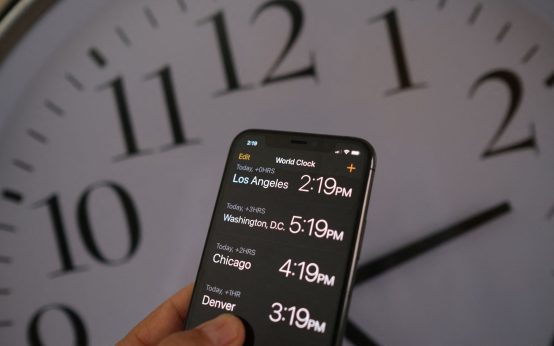 The Push for Permanent Daylight Saving Time
  Trump Visits New York Mayor Mamdani at Gracie Mansion
  Congressional Inaction Amid AI Concerns
 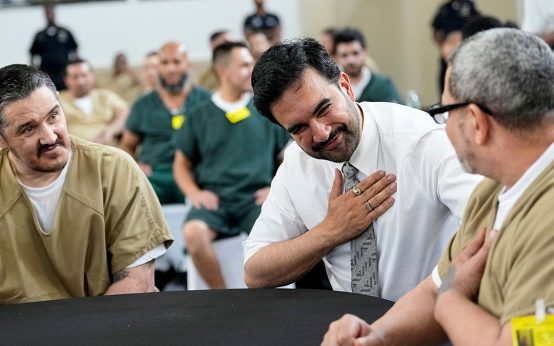 Zohran Mamdani Faces Backlash at Staten Island Event