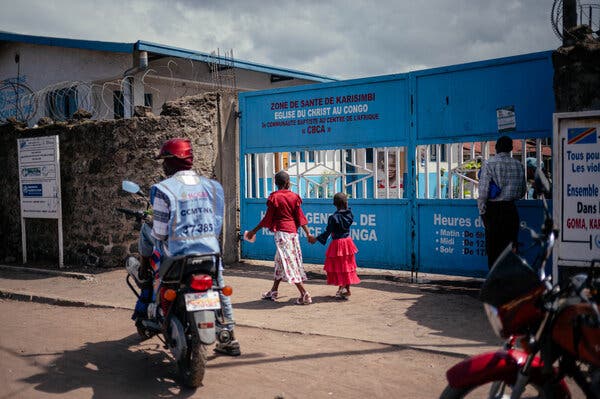
The World Health Organization (WHO) has declared a global health emergency following an Ebola virus outbreak in the Democratic Republic of Congo and Uganda. The outbreak has resulted in approximately 90 deaths in Congo.
As of Sunday, the Centers for Disease Control and Prevention (CDC) reported more than 330 suspected cases, with laboratory testing confirming only 10 cases. Additionally, two cases have been identified in Uganda.
The outbreak began in Congo’s northeastern Ituri Province and involves the Bundibugyo strain of the virus. This strain is rare, lacking targeted vaccines or treatments. It poses a significant challenge to containment efforts.
The WHO declared the situation a “public health emergency of international concern.” Efforts are underway to evacuate affected Americans from the region.
Understanding Ebola
Ebola is caused by a group of viruses known as orthoebolaviruses. It was first identified in 1976 near the Ebola River, which is located in the regions now known as South Sudan and the Democratic Republic of Congo. The Zaire Ebola virus is the most common strain.
 President Trump to Discuss Health Alert with Putin Amid Pneumonic Plague Concerns in Siberia
  Barriers in Affording GLP-1s in America
  Rising Support for Medicare for All in the United States
  Controversial Death in Russia Sparks Concerns
  10 Key Principles for Healthy Longevity
  Russian Scientist’s Death Raises Concerns Over Plague Exposure