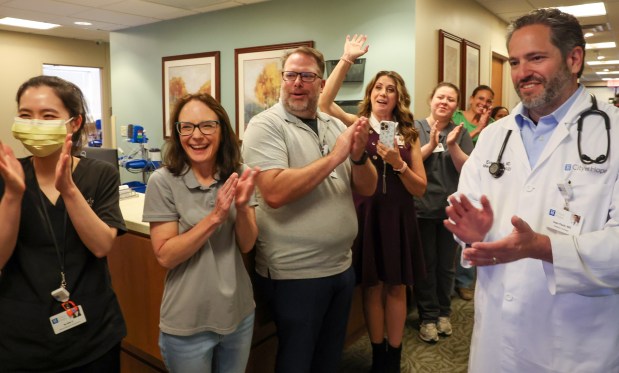
Rachelle Gardner kept her expectations in check when introduced to a new experimental drug for pancreatic cancer. Her concerns revolved around eligibility, hospital approval, and her own health timeline. By late July, these questions had answers. At City of Hope Cancer Center Chicago, Gardner began her journey with the medication, consuming three light blue pills with water. “To good health and getting rid of that cancer bug!” she exclaimed afterward. Gardner, a 59-year-old teacher from Milwaukee, now possesses a renewed sense of hope.
Gardner joins numerous patients across Illinois and the nation who have recently started on this medication, heralded as a breakthrough. Called daraxonrasib, it doesn’t cure pancreatic cancer, one of the toughest cancers to treat, but offers patients more time. Typically, once the cancer spreads beyond the pancreas, patients might only survive for several months. A recent clinical trial involved patients with metastatic pancreatic cancer who had previously received treatment. These patients lived for a median of about 13 months, compared to around six months for those who continued with additional chemotherapy.
Dr. Evan Pisick, medical oncologist at City of Hope Cancer Center Chicago, stated that it’s the biggest advance in decades for treating pancreatic cancer. “This is honestly a game changer,” Pisick said. “It’s the first targeted therapy we’re able to offer them beyond chemotherapy.”
While not yet approved by the FDA, the medication is being distributed under an expanded access program by Revolution Medicines for eligible patients who have tried other treatments. This program allows physicians to request the medication for their patients, who receive it free of charge. “Patients don’t have time to wait,” Pisick noted.
At City of Hope Cancer Center Chicago, Gardner is among seven or eight patients starting this medication. Other health systems in Illinois, like Advocate Health Care and University of Chicago Medicine, have also begun distributing it. Dr. Ardaman Shergill, leading the clinical trial at UChicago Medicine, described the drug’s life-extending ability as “unprecedented” for pancreatic cancer.
Mary Louise McAdams, an 84-year-old patient from Bronzeville, received her diagnosis in 2024, initially given six months to a year to live. She underwent chemotherapy and radiation, which took a toll on her health. The expanded access program presented a new opportunity, promising to extend her life beyond previous estimates.
Back in 2023, Gardner first noticed symptoms like a rash, leading to her Stage 1 pancreatic cancer diagnosis. She underwent grueling chemotherapy and the Whipple procedure, which removes parts of the pancreas and small intestine, among others. Seeking further opinions after a relapse, she decided to stay at City of Hope Cancer Center Chicago.
By May, Gardner’s options seemed exhausted, yet she refused to give in. Her resolve was strengthened by news of the hospital’s efforts to obtain daraxonrasib for her. According to Robert Stone, CEO of City of Hope, clinical research plays a crucial role in fast-paced development, sometimes presenting the best treatment option available.
Gardner’s current treatment with daraxonrasib—taken daily—has her looking forward to the future. She’s hopeful for more time with family, road trips with her fiancé, and continuing her work as a teacher. “There’s hope out there,” Gardner said.
 Professor Lin’s Dual Journey: Expert and Stage IV Patient
  The Impact of Private Equity on Hospital Operations
  Microplastics in the Great Lakes: A Growing Concern
  Federal Proposal Affects 7-OH Sales in Illinois Amid Rising Concerns
  Heidi Overton’s FDA Hearing on Vaccines and Abortion Pills
  Tomato Paste May Enhance Cognitive Function, Spanish Study Indicates