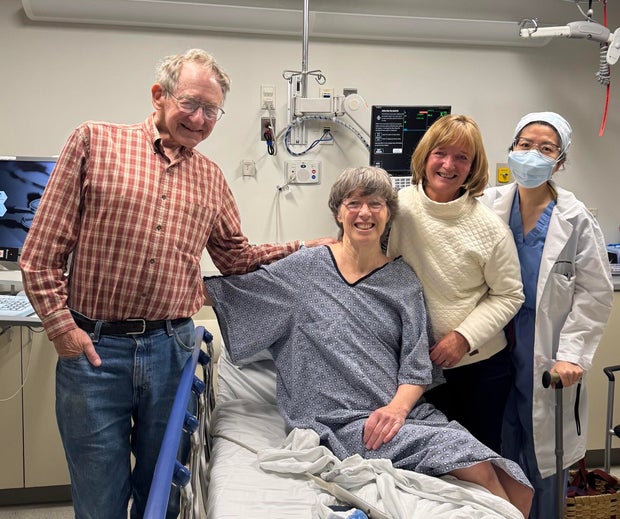
Vicky Titcomb, a bookstore owner on Cape Cod, received an unexpected call from her doctor while visiting New York City in March 2025. An abnormality on her pancreas was found during a heart scan at Mass General Brigham, announcing a likely pancreatic cancer diagnosis.
Despite the shock, Titcomb, who had previously battled breast cancer in 2012, chose to remain positive. She avoided researching her diagnosis, fearing the overwhelming information.
“I felt like my life just switched in that moment,” Titcomb shared.
Developing an Aggressive Treatment Plan
Pancreatic cancer has a grim survival rate, with only 13% of patients surviving more than five years. However, early detection allowed Titcomb to consider advanced treatment options. Besides pancreatic cancer, she needed to address stage 1 breast cancer and a mass on her ovary. Surgery confirmed the ovarian mass was benign.
At Mass General Brigham, specialists designed a treatment plan focusing on chemotherapy and radiation to shrink her pancreatic tumor. The goal was to transform the tumor from the size of a grape to a raisin.
“The goal, to me, was trying to make this cancer a raisin,” Titcomb noted.
If successful, Titcomb would undergo a Whipple procedure, a complex operation viable for only 20% of pancreatic cancer patients. Thanks to her early diagnosis, Titcomb was eligible.
Coping with Multiple Treatments
Titcomb began chemotherapy in June, followed by radiation and additional chemotherapy sessions. Dr. Thomas Clancy oversaw her treatment, noting her excellent tolerance to the procedures.
On November 4, she underwent surgery for her breast cancer, followed by the robotic Whipple procedure two weeks later. The operation, scheduled on World Pancreatic Cancer Day, was coincidental yet successful.
“I was sure that Dr. Clancy chose me for that day because he felt positive about the outcome,” Titcomb joked.
After her recovery, Clancy recommended two more months of chemotherapy due to the aggressive nature of pancreatic cancer.
The Luck Trumps All
In March 2026, Clancy informed Titcomb that there was no evidence of cancer remaining. Regular scans every three months will continue to monitor her health, but she is encouraged to return to normal life.
“The goal is to not be thinking about it all the time,” Clancy explained.
Titcomb has resumed working at her bookstore, supported by her family during her treatment. She now advocates for pancreatic cancer awareness, partnering with organizations like the American Cancer Society and the Pancreatic Cancer Action Network.
“There are advances being made that people who’ve worked a lifetime on pancreatic cancer have never seen. I feel so lucky. The luck trumps all,” Titcomb expressed.
 Understanding Family Estrangement
  A Pressing Solution for Alzheimer’s
  Understanding the Perils of Ectopic Pregnancy
  Nobel Peace Prize Awarded
  Concerns Over Medicaid Cuts for Autism Therapy in Georgia
  Addressing Poverty in Medical Practice