A federal appellate panel recently declined to halt President Donald Trump’s executive order that aims to restrict mail voting. This decision came after the administration sought input from the U.S. Supreme Court in a separate case.
The three-judge panel from the U.S. Court of Appeals for the District of Columbia confirmed a May ruling by U.S. District Court Judge Carl J. Nichols. Nichols stated that an injunction against the order was premature, as formal regulations had not yet been issued by the Trump administration. These regulations began to be released shortly thereafter.
The appellate panel, which included two judges appointed by former President Barack Obama and one by Trump, agreed with Nichols’ decision. No dissents were noted. The decision acknowledged the potential for future court intervention, especially if the administration attempted to implement substantial changes to mail voting procedures immediately before the upcoming November midterm elections.
The executive order would require a significant and unfunded overhaul of election procedures. It would involve implementing a nationwide reform of Postal Service mail-handling processes just before November’s election. The feasibility of implementing the order effectively remains uncertain, according to the ruling.
Separately, a federal judge in Massachusetts blocked the executive order for the current year’s elections. The judge ruled that the order forced states to rapidly revise their election procedures, despite the states’ constitutional control over their own elections. This decision was upheld by a Boston-based appeals court, but the Trump administration has since appealed to the U.S. Supreme Court.
The U.S. Postal Service has not immediately commented on actions related to Trump’s executive order. However, the American Postal Workers Union opposed the order, indicating that its members were directed to prepare an online portal for voter information submission. Jonathan Smith, the union president, mentioned this development in an interview.
President Trump has attempted to change voting procedures unilaterally since taking office, often being blocked by courts. The efforts are part of a broader narrative involving false claims of voter fraud aimed at explaining his defeat to Joe Biden in the 2020 presidential election.
In March, Trump’s executive order instructed the federal government to compile a list of eligible voters and tasked the U.S. Postal Service with delivering ballots only to those individuals. Legal challenges argue that election control lies with the states, not the president. While Congress can enact federal election laws, it has not done so. Additionally, Trump introduced another executive order last year, proposing nationwide voter ID requirements and demanding proof of U.S. citizenship for voter registration. This initiative, akin to a comprehensive voting bill, faces political opposition and has stalled in the Senate.
Contributions to this report were made by Associated Press writer John Hanna in Topeka, Kansas.
 Trump Administration Seeks to Influence NIH Grantmaking
 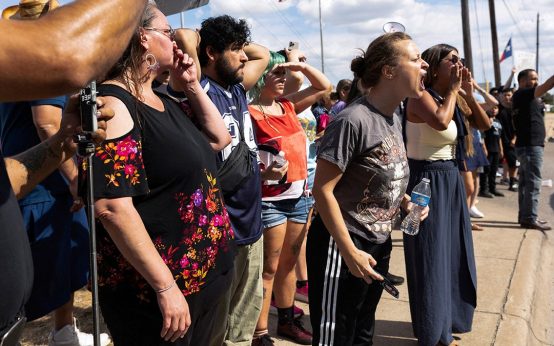 Protests in Austin: Analyzing the Coordination Behind Anti-ICE Demonstrations
  Controversy Surrounds Inglewood Mayor Amid Allegations
  White House Launches Trump TV Amidst Press Dispute
  Media Organizations Sue Trump Administration Over Press Access
  VP JD Vance Trails Potential Democratic Contenders in Early Polling for 2028 Election