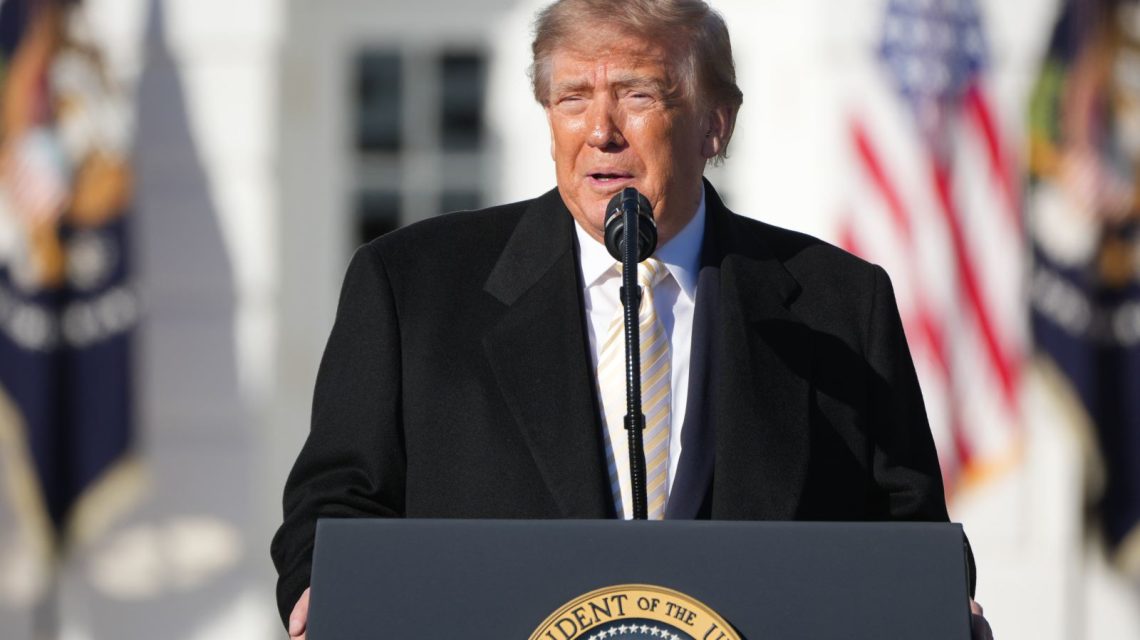
A federal judge has stopped an executive order from former President Donald Trump concerning birthright citizenship. This follows a class-action lawsuit filed in the U.S. District Court for the District of Columbia. The lawsuit, initiated in September, argued that the order contradicted the Fourteenth Amendment and federal law. It claimed the order unlawfully created new exceptions to the established rule that most individuals born on U.S. soil are American citizens.
Judge’s Ruling
U.S. District Judge Christopher R. Cooper delivered a decision on Wednesday. He stated, “Citizenship is man’s basic right, for it is nothing less than the right to have rights.” He emphasized that the Citizenship Clause assures citizenship to almost all children born in the United States. Earlier, the Supreme Court supported this assurance by invalidating EO1. Now, this court similarly enjoins the application of EO2 for the certified class. Consequently, the court approved the Plaintiff’s Motion for Class Certification and Motion for a Classwide Preliminary Injunction. A separate order follows this memorandum opinion.
Newsweek approached the White House for a statement.
Background on Birthright Citizenship
Current law guarantees birthright citizenship for anyone born on U.S. soil, with certain exceptions. This legal principle traces back to 1868, with the ratification of the 14th Amendment after the Civil War. Trump has sought to end birthright citizenship, previously issuing an executive order to deny citizenship to children born to individuals unlawfully or temporarily in the U.S. The Supreme Court rejected that attempt in June.
Recent Developments
Today’s judgment follows an injunction by U.S. District Judge Deborah L. Boardman in Maryland in September. She temporarily blocked the order until resolution of the class-action suit brought by immigrant families and advocacy groups.
Impact on Families
The lawsuit involved three families impacted by Trump’s August 6 executive order. This order instructed federal agencies not to recognize the citizenship of certain U.S.-born individuals when neither parent is American.
One plaintiff, a French mother living in Washington, D.C., gave birth to her son, “Nathan,” in August post-executive order. She and her husband, both on G-4 visas for work with international organizations, do not hold U.S. citizenship.
Another plaintiff, “Edward,” an Australian, resides in Australia with his wife. Their older daughter, born through U.S. surrogacy in 2021, is a U.S. citizen. They anticipate a second child via surrogacy in October in the U.S., a situation possibly affected by the new order.
The third plaintiff, “Patricia,” a Western European citizen, lives in the U.S. with her husband. Both hold G-4 visas and work for international organizations. They expect a child by April 2027, with neither holding U.S. citizenship.
The lawsuit argued the order’s impact extended beyond citizenship status. It suggested children viewed as noncitizens risk denial of U.S. passports and Social Security numbers. They could potentially face immigration consequences, such as arrest, detention, and deportation.
 New York Rent Freeze Upheld
 Justice Department Mobilizes Lawyers to Address Migrant Legal Filings Surge
 Republican Politician Introduces Voter ID Legislation
 Trump and El-Sayed’s Democratic Dialogue on Health Care
 Understanding Current Political Debates
 Podcaster’s Remarks on Melania Trump Spark Conservative Reaction