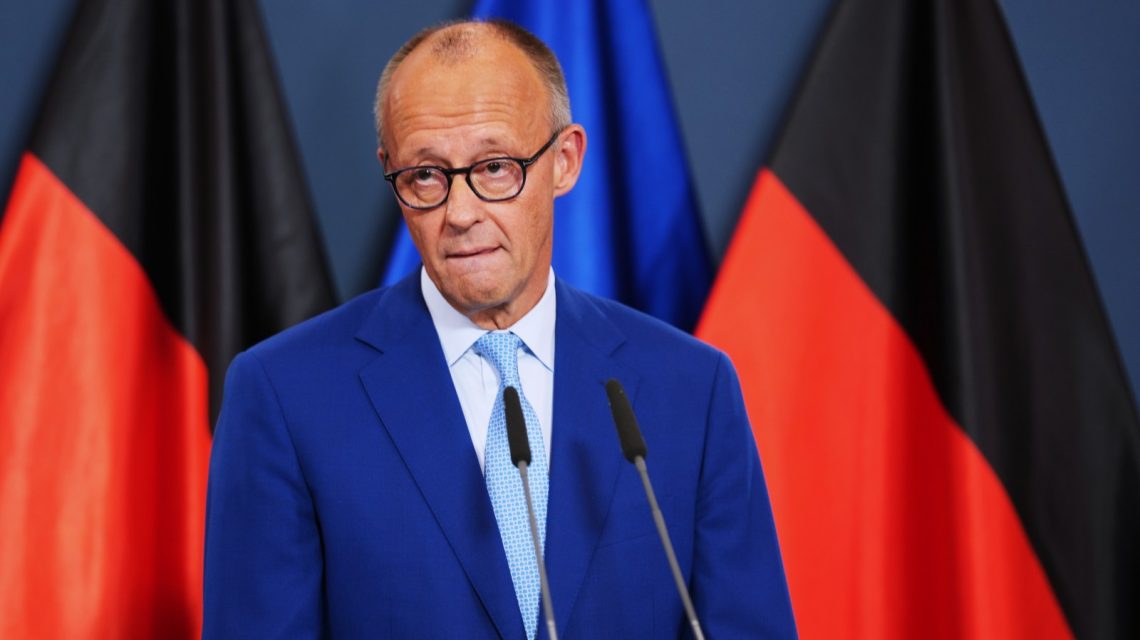
German Chancellor Friedrich Merz has committed to staying in office despite his conservative bloc facing setbacks in recent regional elections. The far-right Alternative for Germany (AfD) has gained momentum with its second consecutive state-level victory.
In Mecklenburg-Western Pomerania, the AfD secured 37 percent of the vote, and in Berlin, 15.7 percent according to exit polling by ARD. The Christian Democratic Union (CDU), led by Merz, saw its support plummet to 5.5 percent in Mecklenburg-Western Pomerania and came in second with 20 percent in Berlin. The socialist Left Party (Die Linke) won the Berlin election with 24.5 percent.
Merz labeled the election results as a “disaster,” but dismissed calls to step down. He affirmed his intention to continue leading the government amid criticism from opponents and some coalition members. “What needs to be done now requires backbone, steadfastness, and patience,” Merz stated. “I will demonstrate these qualities as chairman of the CDU and, above all, as Chancellor of our country.”
The rise of the AfD highlights voter dissatisfaction with traditional parties, amidst economic challenges and immigration debates in Germany. This trend has concerned political leaders across Europe, where populist and nationalist movements have gained traction.
This outcome may influence future elections in Germany, as observers question whether the AfD’s regional successes will translate to national support.
AfD’s Previous Win
The AfD entered the latest elections buoyed by a historic win in Saxony-Anhalt on September 6, where the party received 43.8 percent of the vote. This was more than twice the support garnered by the CDU, which took 17.2 percent. Although the AfD topped the poll, it did not achieve an outright majority, securing 39 of 83 seats in the state parliament.
This result represents the strongest performance by a far-right party in a German state election since World War II. Despite the AfD’s growing influence, mainstream parties in Germany have largely refused to cooperate or govern with the far-right party, raising questions about the exercise of political power in regions where the AfD leads.
 Trump Administration Seeks to Influence NIH Grantmaking
  Protests in Austin: Analyzing the Coordination Behind Anti-ICE Demonstrations
  Controversy Surrounds Inglewood Mayor Amid Allegations
  White House Launches Trump TV Amidst Press Dispute
  Media Organizations Sue Trump Administration Over Press Access
  VP JD Vance Trails Potential Democratic Contenders in Early Polling for 2028 Election