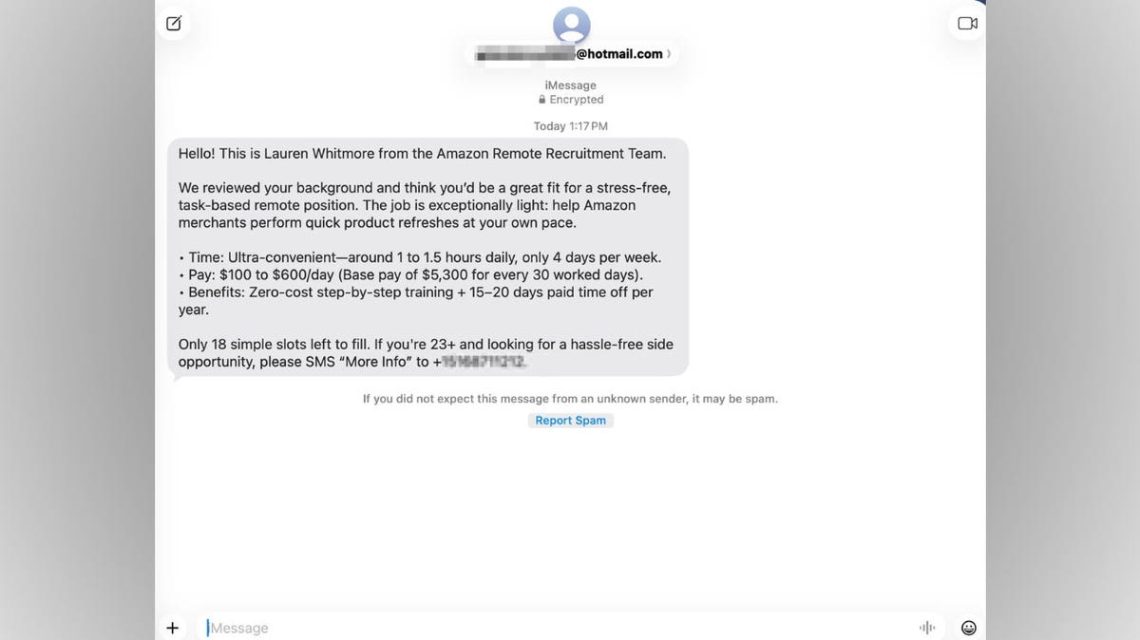
Imagine receiving a text offering a remote job with Amazon that you never applied for. The promise? Work an hour a day for up to $600. It sounds tempting. However, these messages often come from scammers. Let’s explore what these scams entail and how to protect yourself.
Signs of the Latest Amazon Job Scam
These scam texts usually claim to be from the Amazon Remote Recruitment Team, offering a role that involves “product refreshes” for $600 a day. Yet, these offers are scams. They often include the following characteristics:
- Work about 1 to 1.5 hours per day.
- Four workdays a week.
- Pay between $100 and $600 daily.
- $5,300 as a monthly base pay.
- Providing free training and up to 20 days of paid leave.
- Accepting only 18 applicants aged at least 23.
Such texts often request you text “More Info” to another number, which should be a red flag.
Similar Scams Confirmed by BBB
According to the BBB, similar Amazon scams have been reported. They promise high daily earnings for minimal work. Scammers change names and contact details but keep the rest of the offer the same.
Amazon’s Response to Scam Alerts
An Amazon spokesperson stated: “Scammers that attempt to impersonate Amazon put consumers at risk. We encourage consumers to report suspected scams to help secure their accounts.”
Do not engage with suspicious messages. Follow up with official Amazon channels instead.
Understanding the Scammers’ Techniques
Scammers alter their pitch by changing recruiter names, emails, and phone numbers. Scams promise simple tasks for high pay but lack official job details. Warning signs of these include:
- The message originates from a generic email account like Hotmail.
- No mention of a job application having been submitted.
- The pay offer is excessively generous.
- Lack of detailed job descriptions.
- Pressure tactics stating only a few positions are available.
- Requests to contact a different phone number.
- A shifting minimum age requirement.
Potential Risks of Responding
Responding to these messages could lead to requests for personal information such as Social Security numbers or bank details. Some victims may become targets of “task scams,” where scammers trick individuals into sending money.
How to Protect Yourself from Scams
Consider these defenses:
- Verify job opportunities directly on Amazon’s official site.
- Do not reply to suspicious messages.
- Safeguard personal information.
- Use strong antivirus protection.
- Limit available personal data through removal services.
- Never pay upfront fees for job opportunities.
- Report suspicious offers to Amazon and the FTC.
Enable iPhone’s spam reporting features to help identify scams.
Kurt’s Key Takeaways
Kurt “CyberGuy” Knutsson warns that scammers are adept at changing details to keep a fraudulent campaign alive. Always verify job offers with the company’s official resources. If uncertain, do not share personal details. Taking a moment to validate a job can save much trouble later.
For additional advice on spotting scams or to report your experience, visit Cyberguy.com.
 AI Chatbots and Mental Health: A Tragic Story Reveals Risks and Concerns
  Netflix Gameday Welcomes Tom Pelissero as NFL Insider
  ByteDance and MPA Strengthen AI Copyright Protections
  Congress Proposes Tax on Data Center Electricity Usage
  Growing Noise Complaints from Data Centers
  PureTalk Offers Affordable Phone Plans with Special Discounts