Defense Challenges Prosecution’s Psychiatric Assessment
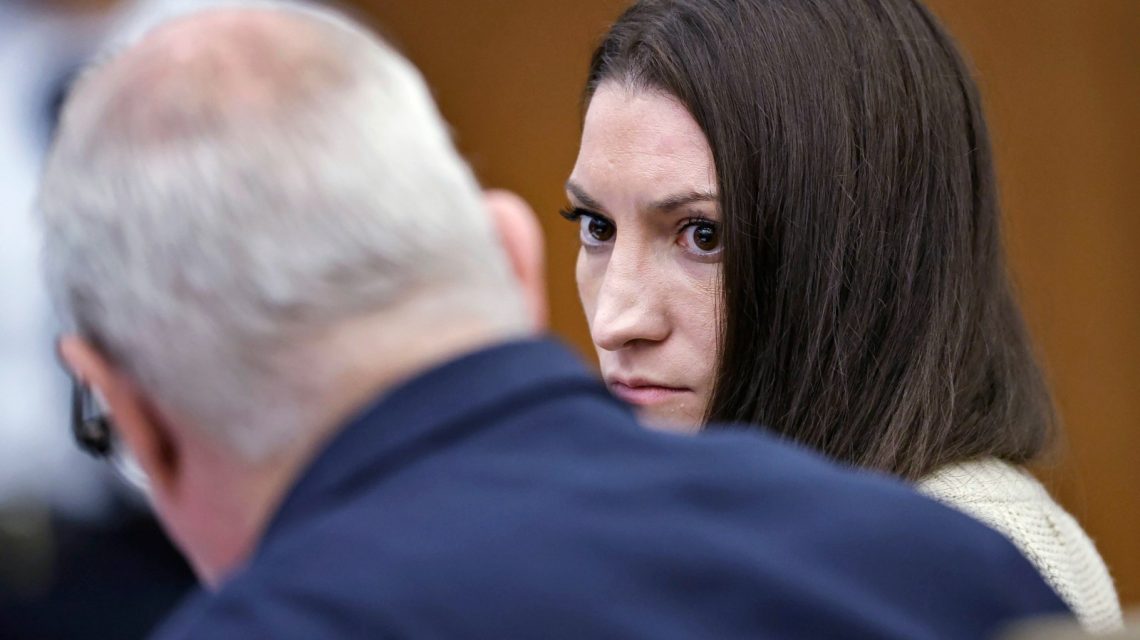
The final phase of Lindsay Clancy’s murder trial saw tense exchanges on Monday. Defense attorney Kevin Reddington aggressively disputed prosecution psychiatrist Dr. Avram Mack’s opinion that Clancy was severely depressed, but not psychotic, when she killed her three children. The courtroom drama unfolded as the prosecution pushed back against the defense’s argument that Clancy was suffering from postpartum psychosis, including a command hallucination, which rendered her not criminally responsible for the killings.
Dr. Mack resumed his testimony on Monday morning, facing cross-examination after his previous assertion that Clancy exhibited major depressive disorder without psychosis. He emphasized that psychosis doesn’t inherently impair one’s ability to distinguish right from wrong. “There’s no reason why psychosis in and of itself inhibits a person from knowing right from wrong,” Mack stated.
Courtroom Clash Over Dr. Mack
Reddington persistently questioned Mack about his credentials, prior case testimonies, and the evaluation process he used for Clancy. He highlighted cases from Pennsylvania, New Jersey, and Florida where Mack’s testimony faced criticism or rejection, to challenge the jury’s acceptance of Mack’s opinion.
“I don’t agree with your conceptualization,” Mack countered when Reddington referenced those cases. The defense inquiry moved to postpartum psychosis, with Reddington probing whether Mack truly understood the condition purportedly responsible for Clancy’s actions while scrutinizing the psychiatrist’s approach to the period following childbirth.
The heated exchange required judicial intervention, as Mack’s responses occasionally turned technical. Observers noted jurors’ meticulous attention, many taking notes during the confrontation. In one sharp exchange, Reddington retorted, “What are you smiling for? This is not funny, sir,” after Mack appeared amused while discussing psychological tests conducted on Clancy.
The defense also suggested confirmation bias, questioning if the prosecution expert might unconsciously seek evidence aligning with the state’s theory. “You are hoping to help them out?” Reddington asked. Mack replied, “No.”
Prosecution’s Experts Diverge on Diagnosis
Among the notable revelations was the disagreement between Mack and Dr. Kirk Heilbrun, another prosecution expert. Though both interviewed Clancy simultaneously, their diagnoses varied—Heilbrun identified bipolar II disorder, while Mack saw major depressive disorder without psychosis. Despite conducting interviews together, they developed their reports independently.
While both experts rejected the defense’s suggestion of acute psychosis during the killings, the jury was presented with differing psychiatric interpretations.
Defense Seeks Mistrial Over Religious Testimony
A contentious moment followed Heilbrun’s mention of Clancy’s Catholic faith, discussing her belief in reaching heaven with her children and questioning suicide as a “mortal sin.” The defense rapidly objected, alleging prosecutorial misconduct and requesting a mistrial.
Judge William Sullivan denied the mistrial appeal but criticized the religious testimony, directing jurors to ignore it. “The religion that the defendant was raised with is absolutely an inappropriate area of testimony,” Sullivan told the jury. “It is to be stricken. It is not to be considered.”
The incident marked the second religious dispute in the trial, enhancing tension as it nears closing arguments.
Prosecution’s Interpretation of Clancy’s Actions
Heilbrun, representing the prosecution, disputed the notion of Clancy obeying a psychotic directive. Rather, he argued Clancy’s actions reflected an extensive suicide attempt, motivated by the desire to prevent her children’s suffering if left behind. “She wanted kids to be with her so they wouldn’t suffer when she was gone,” Heilbrun testified.
He highlighted Clancy’s response to her husband Patrick’s inquiry upon his return home. According to Heilbrun, Clancy admitted attempting suicide, a reply Heilbrun deemed inconsistent with an immediate denial or external command causing the children’s deaths.
The Core Issue: Psychosis or Extreme Depression?
Testimonies face the jury with a challenging decision. Defense experts assert Clancy experienced postpartum psychosis, describing a command hallucination driving her actions. Forensic psychiatrist Dr. Phillip Resnick described Clancy as “frankly psychotic,” portraying her as manipulated by external forces.
In contrast, prosecution experts outline Clancy as suicidally depressed and possibly bipolar, yet capable of reality recognition and behavior control. Mack highlighted her “normal thinking, ability to think ahead and navigate the world,” illustrating her function preceding the killings.
Though not denying her severe illness, the prosecution maintains Clancy’s criminal responsibility despite profound mental distress.
Another Consideration: Medication Effects?
The trial predominantly focuses on psychosis; however, Edward L. Jones III, author of Medication, Mental Illness, and Murder: What Really Killed the Crespi Twins, suggested medication as another factor. He drew parallels to David Crespi’s case—where Crespi killed his children amid depression and insomnia while on psychiatric medication, including an SSRI.
Jones’s research into Crespi’s case and current psychiatric writings leads him to propose examining Clancy’s medication history along with her reported insomnia, agitation, and intrusive thoughts. Clancy’s medication list encompasses Zoloft, Prozac, Seroquel, Klonopin, Ativan, and Remeron, noting issues related to behavioral changes and agitation in Canadian drug warnings.
FDA data records multiple adverse-event reports tagged as “homicide” or “homicidal ideation,” associated with medications Clancy received, but these do not establish causation. Jones calls for deeper scrutiny of medication effects amid Clancy’s psychiatric evaluations.
Upcoming Proceedings
The trial is entering its final segment. Heilbrun is set to continue testifying Tuesday, preceding another prosecution rebuttal witness. The jury was dismissed Monday amid the religious testimony controversy.
Judge Sullivan indicated closing arguments for Wednesday. Jury deliberations will follow. After extensive testimonies, the verdict may hinge on discerning the authenticity of Clancy’s supposed psychotic break against an intensely suicidal but rational crisis.