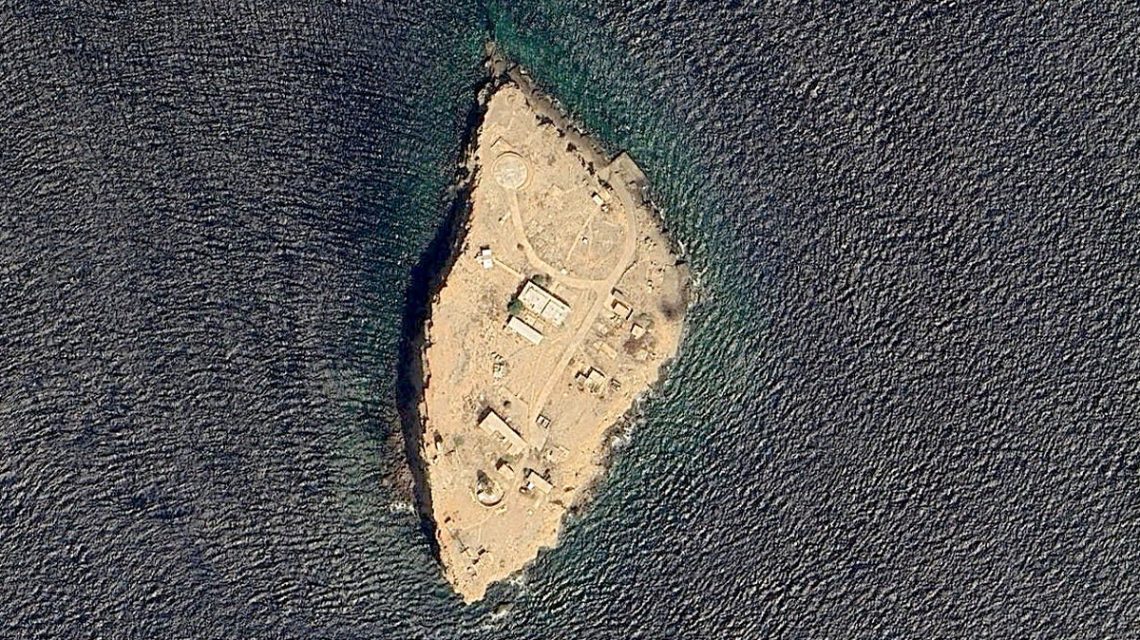
Iran recently attacked a small island in the Strait of Hormuz, impacting oil tanker navigation infrastructure. This move comes as CENTCOM manages its blockade of Iranian ports and ensures commercial shipping safety along the southern route.
Three sources confirmed to Reuters that Didamar Island, also known as Little Quoin Island, faced attacks targeting its navigation and communication equipment. This incident raises concerns about vulnerabilities in maritime infrastructure that supports oil shipments through the Gulf.
Iran’s semiofficial Fars News Agency reported that the Islamic Revolutionary Guard Corps (IRGC) navy targeted the island. They alleged that these systems aided vessels in transiting the strait without Tehran’s authorization.
Iranian state television added that personnel and equipment on the island assisted in oil smuggling activities. The IRGC confirmed conducting the strikes, according to Reuters. A video published by Reuters showed smoke rising from the rocky location.
The Institute for the Study of War (ISW) identified the attack date as November 8, with Iranian state media claiming responsibility two days later. ISW questioned the overall impact of the attack, noting continued commercial vessel use of the southern route afterward.
Satellite imagery from the European Union’s Copernicus Sentinel-2 program, cited by Reuters and dated November 8, displayed blackened marks near radar and radio equipment on the island.
The strike occurred as U.S. forces were on missions escorting ships through the Strait of Hormuz. This strategic waterway links the Persian Gulf with the Gulf of Oman and the Arabian Sea.
The U.S. Navy initiated a blockade on Iranian ports in April after Iran closed the Strait in February amid escalating tensions. The blockade lifted in June after a temporary ceasefire but was reinstated in July.
Commercial and allied shipping now take the southern route via Omani territorial waters. This area lies outside Tehran’s direct military control and is monitored by CENTCOM.
The Didamar Island incident happens while Gulf oil exporters strive to restore shipments disrupted by the conflict. Reuters reports that regional oil exports have recovered to more than 80% of prewar levels, thanks in part to CENTCOM’s involvement and increased Saudi exports through the Red Sea.
Shipping companies have turned to offshore tanker-to-tanker transfers near Oman and the United Arab Emirates to maintain their operations.
Didamar Island belongs to Oman, making this attack particularly sensitive as Tehran disrupts regional maritime activities. The uninhabited rocky island is 10 nautical miles north of Oman’s Musandam Peninsula, near a key commercial shipping route.
An important navigational landmark, the island has featured a lighthouse since 1914. Its infrastructure reportedly includes a radar system on a 25-meter tower and radio equipment essential for vessel navigation through the narrow passage.
The island is associated with the Hormuz Control Centre, managing maritime traffic in the region. Arabian Maritime and Navigation Aids Services (AMMAS) provides crucial navigational support infrastructure, including maritime lights and buoys.
This attack follows U.S. military operations targeting Iranian sites elsewhere in the waterway.
U.S. forces conducted strikes on Iran’s Qeshm Island on November 2. Officials described these actions as defensive, aimed at Iranian missile threats.
Qeshm Island hosts Iranian naval facilities and military structures related to the Revolutionary Guard.
President Donald Trump mentioned on November 6 that U.S. forces are executing limited strikes against Iranian targets. When questioned, Trump stated, “I don’t want to talk about it. We do minor strikes. They built a little bit of an anti-aircraft device, and we knocked it out in about 15 minutes, maybe five.”
 Russia and Ukraine Agree to Major Prisoner Exchange Amid Ongoing Conflict
 Russia, Ukraine Resume US-Mediated Peace Talks
 Senior US Army Soldier Arrested for Espionage in UK
 Bomb Threats Disrupt European Schools, Spur Investigation
 Ukraine and Russia Agree on Prisoner Exchange Amidst Complex Talks
 Grizzly Bears Identified in Fatal Canada Attack