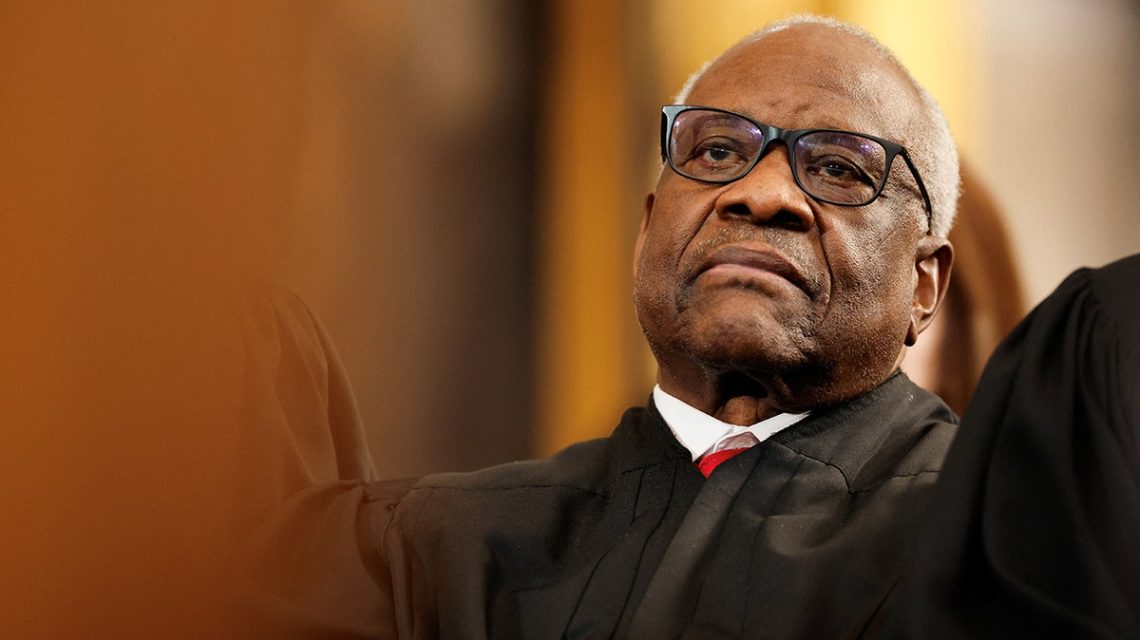
Justice Clarence Thomas expressed concern on Monday that the Supreme Court’s decision not to review a challenge to a California law could allow states to compel speech from individuals. The focus of the case was a California physician who claimed the state forced her to speak against her beliefs while teaching a mandatory course for doctors.
The Supreme Court declined to hear the petition, despite Thomas and Justice Samuel Alito’s dissent. They argued that this decision might have broader implications beyond the medical field.
The issue arose from California’s policy requiring all licensed doctors to complete 50 hours of state-approved continuing education biannually. These courses must address implicit bias, which affects medical treatment and outcomes, or offer strategies to mitigate such biases.
“When, as here, the government does not issue its own messages but instead requires private speakers to communicate the government’s viewpoint, the First Amendment applies,” Thomas wrote. “A State cannot regulate its way out of First Amendment scrutiny. We should not permit the government-speech doctrine to be wielded as ‘a cover for censorship’ or a cloak for compelled speech.”
Dr. Azadeh Khatibi, an educator in California, sued the state with the nonprofit Do No Harm. She argued that the requirement forces instructors to promote a government-favored message, breaching the First Amendment.
Khatibi’s legal team emphasized that she prefers not to discuss implicit bias, as it’s irrelevant to her topics and consumes valuable time for more pertinent issues. They also contested the notion that implicit bias primarily drives healthcare disparities.
California responded that while implicit bias must be discussed, instructors aren’t required to endorse it and may express disagreement. The state argued that it possesses broad authority to determine doctors’ licensing requirements.
Last year, the Ninth Circuit ruled that these courses represent government speech due to California’s medical regulation, rendering them exempt from First Amendment scrutiny. Thomas disputed this, asserting the state compels instructors to affirm its views on implicit bias.
Thomas further questioned the potential impact on other professions licensed by California. He speculated whether legal professionals, among others, might face similar compelled messaging under extensive regulation.
Justice Neil Gorsuch also dissented from the Court’s decision not to hear the case, but he didn’t align with Alito and Thomas’s argument. His reasoning remains undisclosed.
The Supreme Court’s decision leaves the Ninth Circuit’s ruling in place, but does not conclusively address whether California’s requirement violates the First Amendment.
 Texas Authorities Investigate Death of Cowboys Fan
 Tomasz Kosowski Sentenced to Death for Murder of Stephen Cozzi
 Murdaugh Defense Challenges Grand Jury Testimony
 Student Faces Charges After Alleged Assault
 Controversial Execution in Texas Raises Concerns
 Massachusetts Supreme Judicial Court to Hear Lindsay Clancy’s Appeal in 2027