
Lake Mead, the largest reservoir in the United States, has reached its lowest water level since its creation nearly 90 years ago. This development highlights the ongoing issues within the Colorado River system. On Friday, water levels at Lake Mead were recorded at 1,040.4 feet (317.1 meters) above sea level, marking a slight drop from 1,040.58 feet (317.27 meters) observed on July 28, 2022. The reservoir is situated on the border of Arizona and Nevada, near Las Vegas.
This record low follows a winter that saw the worst snowpack recorded in the Colorado River Basin. Melting snow is crucial for the river, which serves over 40 million people, including farmers, industries, and wildlife, across seven U.S. states, tribal nations, and Mexico. Recently, federal officials introduced a short-term proposal to address the crisis affecting this critical waterway. This intervention came after the states dependent on the river—California, Colorado, Arizona, Nevada, New Mexico, Wyoming, and Utah—could not agree on a long-term resource-sharing plan.
Under the new proposal, water cuts will be shared among California, Nevada, and Arizona. The combination of overuse, drought, and rising temperatures has severely depleted both Lake Mead and Lake Powell, the nation’s second-largest reservoir. Currently, both reservoirs have not been this low in almost 70 years. To maintain the hydropower generation capability of the strained system, officials decided against releasing cool Lake Powell water through the Glen Canyon Dam in northern Arizona. This decision is also meant to protect a threatened native fish inhabiting the area between the two reservoirs.
The severe drought in 2022 prompted by conditions on Lake Mead exposed human remains and led water officials in Las Vegas to draw water from deeper within the reservoir. This measure was necessary to sustain water supply for millions of people.
For more comprehensive reporting on water and environmental issues, visit AP’s environmental coverage.
 Climate Change Impacts Social Connections
  Challenges to Protecting Midwest Wildlife
 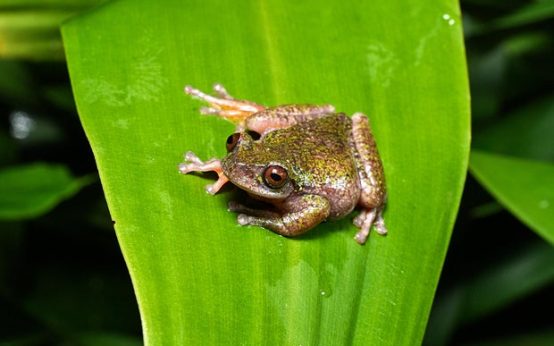 Discovery and Risks Facing Costa Rica’s New Frog Species
  Florida Business Owners Charged for Deterring Nesting Birds with Mothballs
  Tariffs on Polysilicon Impact Green Energy Transition
 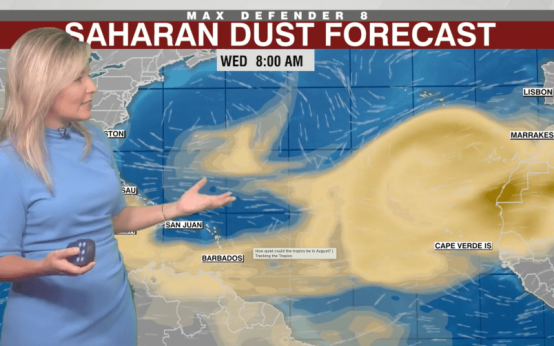 The Effects of Saharan Dust on U.S. Weather