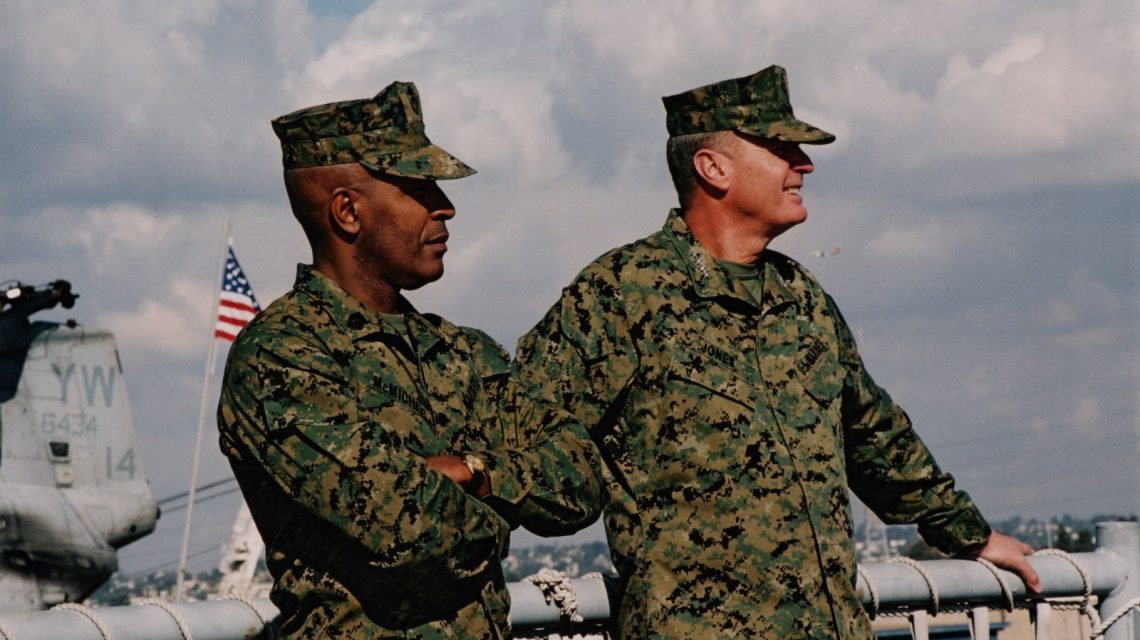
In 1999, Sergeant Major Alford L. McMichael began his day with a run, only to be told by his boss, a three-star general, to expect a call from General Jim Jones. When informed, McMichael showered and missed the first call but soon received another. Jones asked him to become the 14th Sergeant Major of the Marine Corps, an opportunity McMichael accepted. This position is a dream for many enlisted Marines.
At that time, General James L. Jones had just been nominated as the 32nd Commandant of the Marine Corps. He chose McMichael after interviewing several candidates, later describing the choice as one of his best decisions. On the Marine Corps’ 251st birthday, just before Veterans Day, Jones and McMichael discussed their experiences with Newsweek in Washington.
They highlighted their efforts to connect with Marines across different ranks. This included bringing younger noncommissioned officers (NCOs) to Washington to voice their concerns. Jones emphasized that changes inspired by these officers tend to last longer than any single commandant’s term. He learned from early experiences in Vietnam how much officers depend on enlisted personnel. McMichael described his role as a crucial link between different levels, expanding the bridge to include a symposium for younger NCOs. By doing so, they heard more issues that could have been addressed earlier. McMichael believed in these Marines, which helped him gain their trust.
McMichael addressed several issues as sergeant major, including the Exceptional Family Member Program, housing, affordable uniforms, and education for active-duty Marines. He explained that while these concerns might not seem as significant as military hardware, they are essential to maintaining morale and effectiveness.
Jones pointed out the practical reasons for listening to feedback. Orders might be followed during one’s tenure, but without lasting impact, they can be abandoned. Instead, gathering ideas from others before enforcing regulations ensures longevity.
Both veterans visited Camp Lejeune, recalling an environment where enlisted Marines openly communicated with generals, bridging the gap. They also promoted Veteran Strong, a program empowering veterans with tools like savings and education, moving beyond simple gratitude.
This collaboration extended beyond their military careers. In 2003, six months before his term as commandant ended, Jones became NATO’s supreme allied commander. This role was historic for a Marine. Jones and McMichael further worked together, with Jones calling McMichael to a new position in Belgium. McMichael likened their partnership to Batman and Robin. His role fostered a network of senior enlisted leaders within NATO, with broad acceptance of this initiative.
Two calls from Jones significantly impacted McMichael’s life, defining a path of leadership and collaboration. He values the lessons learned under great leadership, shaping his ability to both lead and follow.