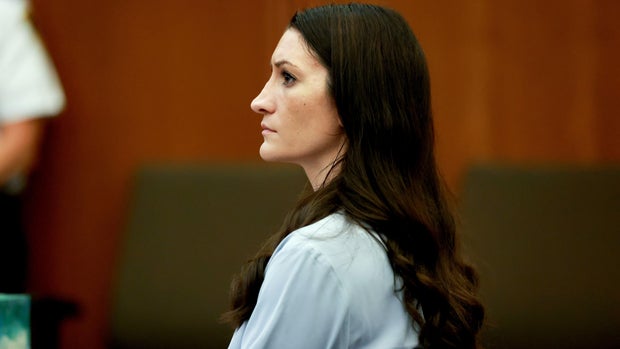
The trial of Lindsay Clancy continues, moving into its 12th day. The proceedings are available for live stream through CBS News Boston and YouTube. Clancy, aged 36, is charged with the murder of her three children, Cora (5), Dawson (3), and Callan (8 months), in their home in Duxbury on January 24, 2023. She has denied first-degree murder charges.
Prosecutors Jennifer Sprague and Shanan Buckingham argue Clancy meticulously planned the deaths and faked a suicide attempt. Her attorney, Kevin Reddington, contends that Clancy was overmedicated and experiencing postpartum psychosis, impacting her mental state.
Mental Health Counselor’s Testimony
Testimony from Latiesha Dukes, a mental health counselor, continued. She interacted with Clancy in late 2022. Initially, she partnered with psychiatric nurse practitioner Rebecca Jollotta, who completed her testimony earlier. Dukes reported symptoms including anxiety, sleep issues, suicidal ideation, and a general desire not to exist.
Dukes described Clancy’s condition primarily as postpartum anxiety. She proposed outpatient therapy, medication continuation, and regular therapy sessions. After a difficult weekend in early December, Clancy experienced intrusive thoughts about dying. Dukes then advised partial hospitalization. By mid-December, Clancy appeared to show signs of improvement, appearing more engaged during a telehealth session.
Testimony from State Police Investigator
Earlier, Sgt. Dan Lawlor of the Massachusetts State Police gave his account. On the night of the children’s deaths, he encountered Clancy at South Shore Hospital. She was unable to communicate due to injuries from a second-floor window fall.
Lawlor visited Boston Children’s Hospital to learn about Callan’s condition and later moved to Brigham and Women’s Hospital, where Clancy was admitted. Reddington, Clancy’s lawyer, interrogated Lawlor about the circumstances preventing access to Clancy’s hospital room. Eventually, Reddington secured a court order for psychologist Paul Zeizel to visit Clancy.
The prosecution objected to further questioning, leading to private discussions with the judge. Reddington sought to prove that investigators believed Zeizel instructed Clancy to tell her husband, Patrick, about hearing voices. Lawlor acknowledged these discussions occurred with fellow investigator Josh McKelligan.
Questioned by the prosecution, Lawlor stated he never conferred with them about case theories. His testimony was guided by personal observations and discussions with colleagues. The court resumed proceedings, and Lawlor confirmed that theoretical changes occur as investigations proceed.
Additional Testimonies
On a previous day, psychiatric nurse practitioner Rebecca Jollotta provided insights into Clancy’s mental health. She worked with Clancy in the months preceding the tragedy. As the 62nd witness, she reinforced the complex mental health narrative central to Clancy’s defense.
Judge William Sullivan noted the trial’s timeline remains on track, slightly ahead of schedule. If convicted, Clancy faces life imprisonment without the possibility of parole. Conversely, a verdict finding her not criminally responsible would see her assigned to a state psychiatric facility in Massachusetts.
If you or someone you know is in emotional distress or a suicidal crisis, you can contact the 988 Suicide & Crisis Lifeline by calling or texting 988. You can also chat with the Lifeline service online.
For additional information regarding mental health support, contact the National Alliance on Mental Illness HelpLine at 1-800-950-NAMI (6264) or via email at [email protected].