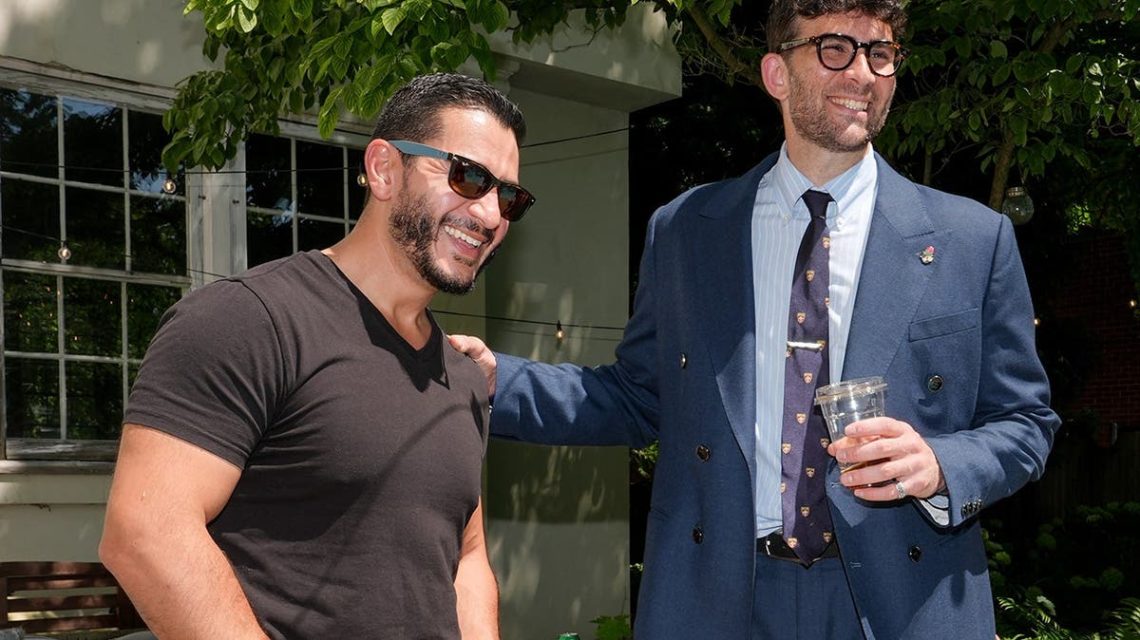
The recent primary triumph of Abdul el-Sayed in the Michigan Senate race underscores a significant observation: Democrats and their media partners often fail to pinpoint radical left-wing elements. This is evident in their unwillingness to distance el-Sayed from Hasan Piker, a radical Twitch streamer and podcaster el-Sayed campaigned with during the primary phase.
El-Sayed now faces Republican Mike Rogers in the general election. The networks tend to protect Democrats from accusations of extremist associations. Piker has openly expressed controversial views, such as claiming America deserved the 9/11 attacks and praising Mao Zedong as an esteemed leader. Recently, he appeared at a College Democrat meeting in a Mao-style suit, yet the media avoids labeling him a communist.
Shaquille Brewster of “NBC Nightly News,” however, highlighted on Aug. 5 that “He’s also been criticized for campaigning with controversial left-wing podcaster Hasan Piker, who said America deserved the 9/11 terror attacks. El-Sayed stated disagreement but did not denounce Piker’s views.”
Most coverage on el-Sayed’s campaign has been vague. NBC’s Garrett Haake mentioned Republicans portraying him as an extremist, backing this with a Trump quote dismissing extremist ideologies. Abdul El-Sayed positions himself as a unique candidate, countering criticisms with: “They’re going to point at me and go point at other names, like, well, he’s different. That’s the best you got?”
The PBS News site and an Associated Press piece minimally portrayed Piker’s profile, describing him merely as “a progressive and controversial influencer online.” Former Obama strategist David Axelrod suggested NPR listeners focus on Republican candidate Mike Rogers’ ties to Trump instead of el-Sayed’s associations.
CNN’s Kaitlan Collins, in a recent interview, referenced criticism from Pennsylvania Democrat Sen. John Fetterman: “I can’t come together with someone embracing Hamas supporters or claiming America deserved 9/11.” Though Collins addressed this to el-Sayed, his response was evasive: “I’m less focused on folks who are campaigning with me, more focused on the folks I’m campaigning to.”
Despite media neglect, Piker continues to draw attention. The New York Times recently praised his influence and physique in an article. He appeared on their podcast discussing “social murder” by healthcare CEOs, referencing communist literature to substantiate extreme actions.
The networks often downplay leftist violence while eagerly spotlighting Republican missteps. Notably, in 2012, when Republican Richard Mourdock expressed contentious views on life and God during a debate, media scrutiny extended to Romney and other Republicans. Broadcast networks often discuss overarching political trends but refrain from specific race details unless a Republican commits a significant faux pas.
 Trump Administration Reverses Fuel Economy Standards Amid Rising Oil Prices
  Discussion on U.S. Government Spending and Voter Opinions
  President Trump and AI Executives Convene at White House
  Scrutiny on Attorney General’s Political Appearances
  Discussion on Political News and Analysis
  Political Push for Insulin Price Cap